Iran's army chief said on Thursday police forces had already quelled anti-government unrest but that his troops were ready to intervene if needed, state media reported.
A total of 21 people died in five days of unrest that began on December 28 as protests against economic grievances quickly turned against the government as a whole, with attacks on government buildings and police stations.
"Although this blind sedition was so small that a portion of the police force was able to nip it in the bud ... you can rest assured that your comrades in the Islamic Republic's army would be ready to confront the dupes of the Great Satan (United States)," Major General Abdolrahim Mousavi was quoted as saying.
Iran's political establishment has closed ranks against the unrest, with even reformists condemning the violence.
But many have also called on President Hassan Rouhani to address the economic grievances that drove the initial protests.
TRT World speaks to Mohammad Marandi, professor from Tehran University for his analysis on the latest situation.
Pro-government rallies
Iran saw another day of large pro-government rallies on Thursday after authorities declared the end of deadly unrest and turned attention to addressing economic concerns that fuelled protests.
Thousands rallied in support of the government in various towns and cities, including in the northeastern city of Mashhad, where the protests began last week and extended to other cities.
"We are together behind the leader," chanted the crowds, in reference to Supreme Leader Ayatollah Ali Khamenei.
The TV also broadcast footage of similar pro-government gatherings in the cities of Shiraz, Isfahan, Ardabil, Birjand and Yasuj.
"The revolutionary Iranian people have responded in time to the enemies and trouble-makers by coming out on the streets," Ali Akbar Velayati, an adviser to Khamenei, told the semi-official ISNA news agency.
"The people's main demand now is for the government and officials to deal with the economic problems." he added.
State television repeatedly broadcast nationalistic songs and described the pro-government rallies as an "answer to rioters and supporters to the riot." That appeared to be a reference to President Donald Trump who tweeted in support of anti-government rallies.
'End of sedition'
General Mohammad Ali Jafari, the head of Iran's Revolutionary Guard, on Wednesday announced the "end of the sedition."
Jafari said the Revolutionary Guard only intervened "in a limited way" against fewer than 15,000 "troublemakers" nationwide, adding that a large number had been arrested.
"Today we can announce the end of the sedition," Jafari said, quoted on the Guard's website.
"A large number of the troublemakers at the centre of the sedition, who received training from counter-revolutionaries ... have been arrested and there will be firm action against them," he said.
Jafari added those behind the protests had "intervened massively on social media" but that "once restrictions were started, the troubles reduced."
Trump's 'numerous absurd tweets'
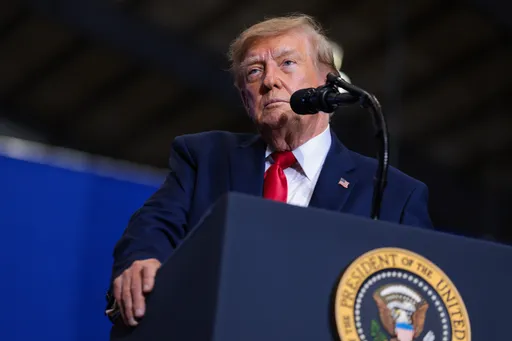
Trump, who has repeatedly tweeted his backing for Iranian protesters, wrote: "You will see great support from the United States at the appropriate time!"
In a letter on Wednesday to UN officials, Iranian Ambassador Gholamali Khoshroo complained that Washington was intervening "in a grotesque way in Iran's internal affairs." He said Trump and Vice President Mike Pence were personally stirring up trouble.
"The president and vice-president of the United States, in their numerous absurd tweets, incited Iranians to engage in disruptive acts," the ambassador wrote to the UN Security Council president and UN Secretary-General Antonio Guterres.
Trump's UN envoy, Ambassador Nikki Haley, has called for an emergency UN Security Council meeting on Iran, saying the UN needed to speak out in support of the protesters. As yet, no meeting has been scheduled.
Social media ban
Late on Wednesday, senior Trump administration officials acknowledged their surprise that the protests took hold so quickly.
"This was not on our radar," said one official, who like the others spoke on condition of anonymity to discuss intelligence matters.
The officials said internet suppression by Iranian authorities made it difficult for protesters to publish their videos, with an upload sometimes taking the entire day.
They said the US government was still looking at its options at helping open up the internet, though no decision had been taken yet.
Online messaging and photo sharing platforms Telegram and Instagram remained blocked on mobile phones, having been interrupted soon after protests began.
Telecoms Minister Mohammad Javad Azari Jahromi said Telegram would only be unblocked if it removed "terrorist" content.
Further sanctions on Iran
A White House official, who asked for anonymity, said on Wednesday that Washington would look for "actionable information" to try to bring fresh sanctions on those responsible.
The question now is whether Trump will continue to waive nuclear-related sanctions that were suspended under the 2015 nuclear deal between Iran and world powers.
Under the deal, Trump must actively waive certain sanctions every few months and the next deadline falls on January 12.
Iran - which has long accused the United States and Sunni Arab rivals led by Saudi Arabia of interference in its affairs – said external "enemies" were behind recent unrest.
Parliament responds
As Washington suggested it may be looking to impose fresh sanctions on Tehran, Iranian authorities were weighing options including blocking unpopular measures in Rouhani's recent budget.
There have already been moves in parliament to block the unpopular budget measures announced last month, which included cuts to welfare and fuel price hikes.
"As concerns petrol prices, we must absolutely take into account the situation of the people because the tensions are absolutely not in the interests of the country," parliament speaker Ali Larijani said on Wednesday.
"Officials must acknowledge the deplorable situation of the country as the first step to hearing the protesters," tweeted Mohammad Taghi Karroubi, whose father Mehdi Karroubi has been under house arrest for almost seven years for helping lead the 2009 demonstrations.
The head of Lebanon's powerful Tehran-backed Hezbollah movement Hassan Nasrallah said that "there is nothing to worry about and what happened in Iran is well contained."