Baba Umar
Foreign ministers from 20 nations will discuss North Korea's ballistic missile and nuclear weapons programmes in Vancouver on Tuesday, though China's absence cast doubt over the effectiveness of any deal.
The full-day meeting, co-hosted by Canada and the US, is designed to increase diplomatic and financial pressure on Pyongyang to scrap its nuclear programmes.
The meeting comes amid signs of easing tensions on the Korean peninsula, after the North and South met for the first time in two years and Pyongyang agreed to sent athletes to the Pyeongchang Winter Olympics.
And tensions between Washington and Pyongyang, which claimed it had successfully tested ballistic missiles that could deliver atomic warheads to the United States, appear to have calmed as well.
But the United States, which will review with allies at the summit the effectiveness of current sanctions against the hermit kingdom and explore adding more, remains skeptical that North Korea is ready to negotiate away its weapons programme.
Over the weekend, a false alarm in Hawaii warning of an incoming ballistic missile rattled nerves, while US President Donald Trump and North Korea's Kim Jong-un have traded bluster over who has the bigger nuclear launch button at his desk.
TRT World'sJoseph Kim has more from Seoul.
Vancouver Group
The so-called Vancouver Group is formed by 20 countries that fought in the 1950-53 Korean War. They include Australia, Britain, France, India, Japan, the Philippines and South Korea. Military officials will also be present at the meeting.
Many have questioned the utility of a conference where China — Pyongyang's main ally — and Russia are absent.
But officials said both countries, which hold veto power at the United Nations Security Council, would be briefed afterward.

China and Russia "absolutely will play an important role in moving toward peace on the Korean peninsula," Canadian Prime Minister Justin Trudeau said last week.
On Monday at his annual press conference, Russian Foreign Minister Sergei Lavrov repeatedly attacked the US, accusing Washington of issuing ultimatums and failing to recognise "the reality of the emerging multipolar world."
Pope Francis, meanwhile, admitted that he was frightened by the prospects of an accidental nuclear war.
Sending warships to Sea of Japan?
The Vancouver meeting kicked off late Monday with a dinner and several bilateral meetings, before a full gathering on Tuesday to hammer out next steps in the standoff.
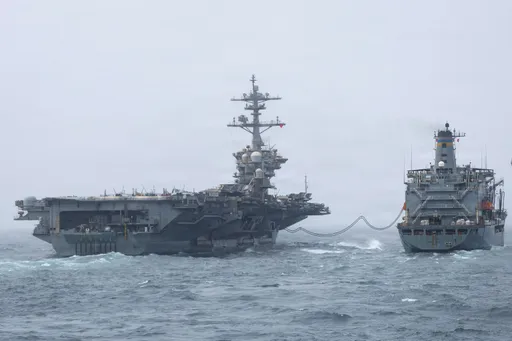
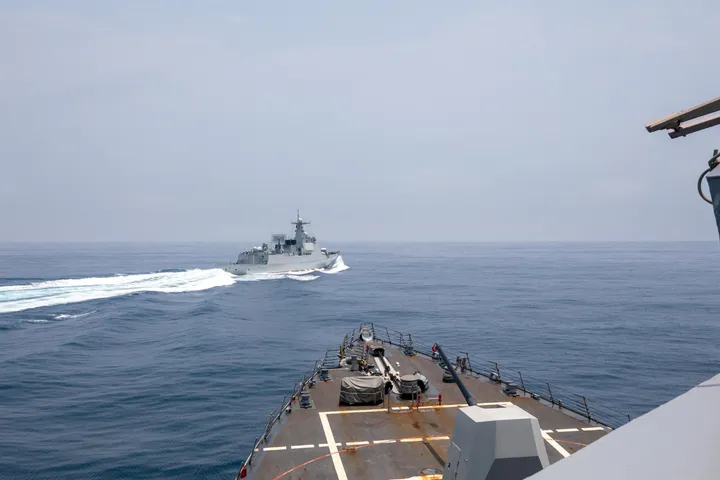
Among the proposals to be considered is sending warships to the Sea of Japan to stop and inspect suspect ships bound for North Korea in order to enforce sanctions.
South Korea already seized two ships carrying oil to the North in December.
Some countries, however, have warned that such methods could increase military tensions or be interpreted as an act of war by Kim's isolated regime.
South Korean President Moon Jae-in, who advocates dialogue with the North but remains critical of Pyongyang's weapons drive, said last week he was willing to have a summit with Kim "under the right conditions", but added that "certain outcomes must be guaranteed."
Seoul also touted the recent inter-Korean talks as a potential first step to bringing the North into negotiations over its nuclear arsenal.
Further bilateral talks between the North and South are scheduled for Wednesday, after the Vancouver meeting.