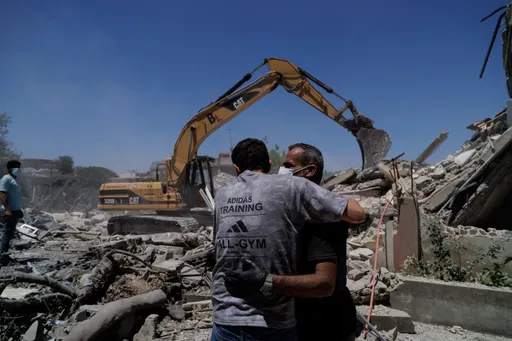
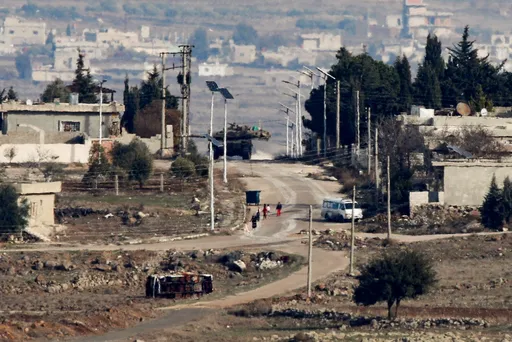
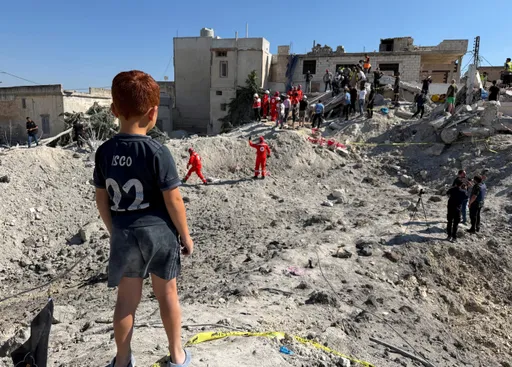
At least 38 more civilians were killed by the Syrian regime in besieged eastern Ghouta region on Sunday, Syrian Civil Defense sources said.
Sources from the Syrian Civil Defense, also known as the White Helmets, said 31 civilians were killed in the Duma district in airstrikes and missile attacks.
Seven people were also killed when regime forces attacked a residential area between the Misraba and Duma districts with rocket and mortar shells.
The death toll in the region may rise as the attacks are still ongoing.
Backed by Russia and Iran, the regime's ground and air attacks continued to strike civilians in the opposition-held area near capital Damascus, despite decisions to implement a ceasefire made separately by Russia and the UN Security Council.
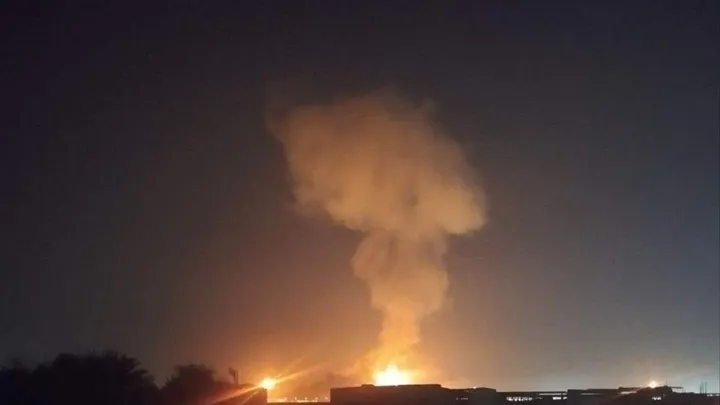

Late Saturday, regime forces and its supporters advanced into opposition-held areas, capturing the town of al Nashabiya, and the villages of Otaya and Hazrama.
The Syrian Observatory for Human Rights says that the regime now controls about a quarter of the Damascus suburb.
The number of casualties in eastern Ghouta since February 19 has reached 756.
Last Saturday, the UN Security Council adopted a resolution calling for a 30-day ceasefire in Syria without delay.
Eastern Ghouta, a Damascus suburb with a population of about 400,000 has been under siege for the last five years, the longest-lasting siege in modern history. In the past eight months, the regime has intensified its siege of the district.
Humanitarian access to the areas has been completely cut off, leaving thousands of people with little to no access to food, medicine, or other supplies.