The White House said on Wednesday that the US military mission in Syria was coming to "a rapid end" but offered no firm timeline for a withdrawal, even as President Donald Trump has insisted it's time for American troops to return home.
With allies anxious about a hasty US withdrawal, the Trump administration said it would stay in war-torn Syria to finish off the job of defeating Daesh and was committed to eliminating the militants' "small" presence that "our forces have not already eradicated."
But White House press secretary Sarah Sanders suggested that would not be a long-term endeavor, and she described the extremist group that once controlled vast swaths of Syria and Iraq as "almost completely destroyed."
There were clear signs the United States was narrowing its mission in Syria, still in the throes of a long-running civil war, and would focus only on defeating Daesh and not on the broader task of stabilising the country and ensuring that the extremists cannot re-emerge.
Daesh never comes back
"We will continue to consult with our allies and friends regarding future plans," Sanders said in a brief written statement. "We expect countries in the region and beyond, plus the United Nations, to work toward peace and ensure" that Daesh never comes back.
Trump and his national security team are having a contentious debate about the future US role in Syria, where an American-led coalition has been fighting Daesh since 2014. Roughly 2,000 US troops are currently in Syria.
The president met with top aides on Tuesday before telling reporters that he wanted to "get out" and "bring our troops back home." CIA Director Mike Pompeo, who has been nominated to be secretary of state and other advisers strongly advised Trump against too quick a withdrawal, according to US officials who spoke on condition of anonymity to discuss internal talks.
US officials and foreign governments have been concerned that without a continued American military presence, Daesh could re-constitute itself or others could fill the void. There are fears, too, that Iran could gain further ground in the country.
Quick decision
Before that meeting, Trump said he expected to decide "very quickly" whether to remove US forces and that their primary mission was to defeat Daesh. "We've almost completed that task," he said.
At a news conference with the leaders of the Baltic nations, Trump was asked whether he still favored pulling US troops out of Syria.
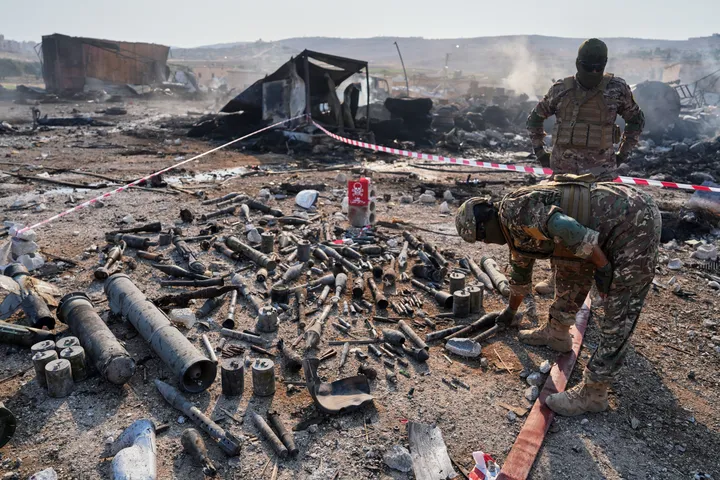


"As far as Syria is concerned, our primary mission in terms of that was getting rid of ISIS," Trump said, using an acronym for Daesh. "We've completed that task, and we'll be making a decision very quickly, in coordination with others in the area, as to what we will do."
The mission is "very costly for our country, and it helps other countries a hell of a lot more than it helps us," Trump said.
"I want to get out. I want to bring our troops back home. I want to start rebuilding our nation," he said.
Yet some of his military advisers spoke at a separate event in Washington about the need to stay in Iraq and Syria to finish off Daesh, especially remnants of Daesh in eastern Syria.
"The hard part, I think, is in front of us, and that is stabilizing these areas, consolidating our gains, getting people back into their homes, addressing the long-term issues" such as reconstruction. "There is a military role in this, certainly in the stabilization phase," said Gen. Joseph Votel, commander of US Central Command, which oversees US military operations across the Middle East, including Syria.
Stabilisation
Another lingering question is the fate of some $200 million in US stabilisation assistance for Syria that the White House put on hold after Trump said last week that he wanted to leave Syria "very soon." The State Department was to have spent the money on building up the country's infrastructure, including power, water and roads.
Trump in recent weeks has asked Saudi Arabia to contribute $4 billion for reconstruction in Syria, according to a US official, as part of the president's effort to get other countries to pay for stabilising the country so the US isn't on the hook. The US is awaiting a response from the Saudis, said the official, who wasn't authorised to discuss the conversations publicly and spoke on condition of anonymity.
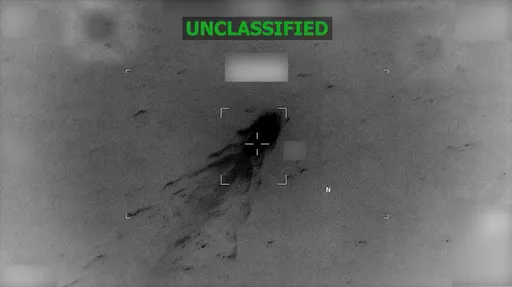
The main Daesh holdout in Syria is in the eastern province of Deir Ezzor, where the momentum against Daesh by US-backed forces has stalled in recent weeks.
Pentagon officials have publicly raised concerns over this giving Daesh the breathing room it needs to regroup.
Many have warned that a premature US withdrawal from Syria would cede the country to Iran and Russia, which have supported Syrian President Bashar al Assad. Iran's continued presence in Syria is especially troubling to neighbouring Israel, a US ally that regards Iran as an existential threat.