An Iranian-backed Iraqi militia vowed Monday to retaliate for US military strikes in Iraq and Syria that killed 25 of its fighters and wounded dozens, raising concerns of new attacks that could threaten American interests in the region.
The Iraqi government said it will reconsider its relationship with the US-led coalition, the first time it has said it will do so since an agreement was struck to keep some US troops in the country. It called the attack a “flagrant violation" of its sovereignty.
Death toll rises to 25
An Iranian-backed militia said on Monday that the death toll from US military strikes in Iraq and Syria against its fighters has risen to 25, vowing to exact revenge for the "aggression of evil American ravens".
The announcement in Baghdad came a day after Secretary of Defence Mark Esper said Washington had carried out military strikes targeting the Iranian-backed Iraqi militia blamed for a rocket attack that killed a US contractor in Iraq last week.
Secretary of State Mike Pompeo said the strikes send the message that the US will not tolerate actions by Iran that jeopardise American lives.
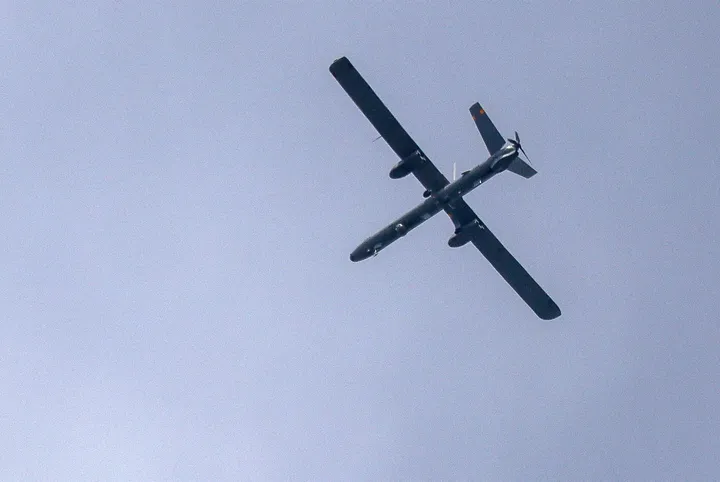
The US military said "precision defensive strikes" were conducted against five sites of Kataib Hezbollah, or Hezbollah Brigades in Iraq and Syria.
Kataib Hezbollah comes under the umbrella militia group Hashd al Shaabi or the People's Mobilisation Units. Many of them are supported by Iran.
"Our battle with America and its mercenaries is now open to all possibilities," Kataib Hezbollah said in a statement around midnight Sunday.
"We have no alternative today other than confrontation and there is nothing that will prevent us from responding to this crime."
The US blames the militia for a rocket barrage Friday that killed a US defence contractor at a military compound near Kirkuk, in northern Iraq. Officials said as many as 30 rockets were fired in that attack.
Iraq's Kataib Hezbollah is not part of the Lebanese militant group Hezbollah.
The Popular Mobilisation Units said on Sunday that the US strikes killed at least 19 of Kataib Hezbollah's members. But Kataib Hezbollah spokesman Mohammed Mohieh said on Monday that the death toll rose to 25.
At least 51 militiamen were wounded and some of them were serious condition, he said, adding that the militia group's commanders would decide on the retaliation.
US strikes 'obvious case of terrorism'
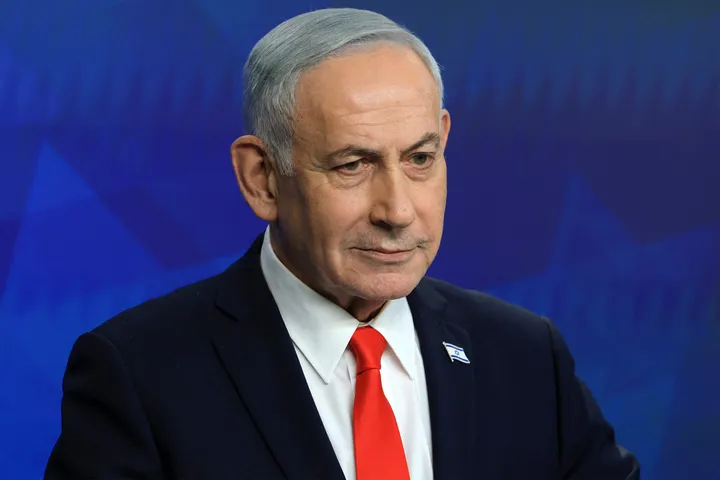
In Tehran, foreign ministry spokesman Abbas Mousavi condemned the US strikes against Kataeb Hezbollah as an “obvious case of terrorism” and accused Washington of ignoring Iraq's sovereignty.
Iran's Foreign Minister Javad Zarif also hit back against the US on Monday.
"Though Americans are thousands of miles away, under a pretext of defending their rights, [US] drowns people of Iraq and Syria in blood.”
Zarif was speaking from Moscow where he was meeting Russian Foreign Minister Sergei Lavrov.
Lebanon's Iran-backed Hezbollah also blasted the "brutal American aggression", saying those who took the decision to carry out the attack "will soon discover how stupid this criminal decision was".
Who runs Kataib?
Kataib Hezbollah is led by Abu Mahdi al Muhandis, one of Iraq’s most powerful men.
He once battled US troops and is now the deputy head of the Popular Mobilisation Units.
In 2009, the State Department linked him to the elite Quds Force of Iran’s Revolutionary Guard, designated a foreign terrorist organisation by President Donald Trump earlier this year.
The US maintains some 5,000 troops in Iraq, at the invitation of the Iraqi government to assist and train in the fight against Daesh.
The attack that killed the American contractor and US counter-strikes come as months of political turmoil roil Iraq. About 500 people have died in anti-government protests, most of them demonstrators killed by Iraqi security forces.
The mass uprisings prompted the resignation last month of Prime Minister Adil Abdul Mahdi, who remains in a caretaker capacity.
In a statement, Abdul-Mahdi said Esper had called him about a half-hour before the US strikes on Sunday to tell him of US intentions to hit bases of the militia suspected of being behind Friday's rocket attack.
Abdul Mahdi said he asked Esper to call off the US plan.