 Noureldein Ghanem
Montenegrins head to the polls for a snap election, which many hope will bring in a new government to implement economic reforms, improve infrastructure, and take the NATO member state closer to European Union membership.
The parliamentary vote is the first in the small former Yugoslav republic since Milo Djukanovic, former leader of the Democratic Party of Socialists [DPS], lost the presidential election in April and stepped down after 30 years in power.
Polling stations for the 540,000-strong electorate open at 7 am on Sunday and close at 8 pm.
The state election commission said 15 parties and alliances will compete for 81 parliamentary seats in the nation of just over 620,000 people.
Over the years, Montenegro has been divided between those who identify as Montenegrins and those who see themselves as Serbs and are opposed to the country's 2006 split from a union with neighbouring Serbia.
A poll by the Centre for Democracy and Human Rights [CEDEM] last month put the pro-European Movement Europe Now [PES] party - which also favours closer ties with Serbia - in the lead with 29.1 percent of the vote.
The PES's Jakov Milatovic won the April presidential vote.
During the election campaign, PES party chief and former Finance Minister Milojko Spajic pledged to rejuvenate an economy plagued by mismanagement and graft, and heavily dependent on revenues from Adriatic seaside tourism.
"We're the only ones talking about infrastructure, about tax reforms," he said last week.
The CEDEM poll put the pro-EU DPS under acting chief Danijel Zivkovic in second place with 24.1 percent support, with the Serb nationalist, pro-Russia Democratic Front [DF] in third place on 13.2 percent.
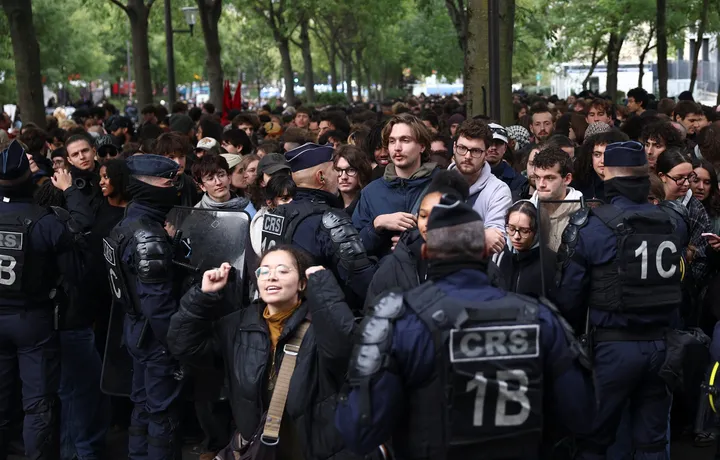
Zivkovic has said his party would seek to end a period of political paralysis in which two governments that came to power on the back of 2020 protests backed by the influential Serbian Orthodox Church were felled by no-confidence votes.
Montenegro is a candidate to join the EU, but it must first root out corruption, nepotism and organised crime.
Polls suggest that no party or coalition will be able to form a government on its own, with concerns rising that another unstable administration could raise new obstacles in Montenegro's increasingly distant prospects for EU membership.
Voters, on the other hand, want a government without "crises" and a country steadily advancing toward the EU.
In 2017, the country joined NATO, a year after a botched coup attempt that the-then government blamed on Russian agents and Serbian nationalists.
Moscow dismissed such claims as absurd and the Serbian government denied involvement.
After Russia's invasion of Ukraine last year, Montenegro - unlike Serbia - joined EU sanctions against Moscow.
The Kremlin has placed Montenegro on its list of unfriendly states.
According to a 2011 census, Montenegrins and Serbs form the largest ethnic groups in the country, followed by Bosniaks, Albanians, Romanians, Croats, and smaller ones.