Isra W. Almodallal
The United Nations has begun transferring one million barrels of oil from a rusting supertanker off war-torn Yemen, in a bid to avert a catastrophic spill.
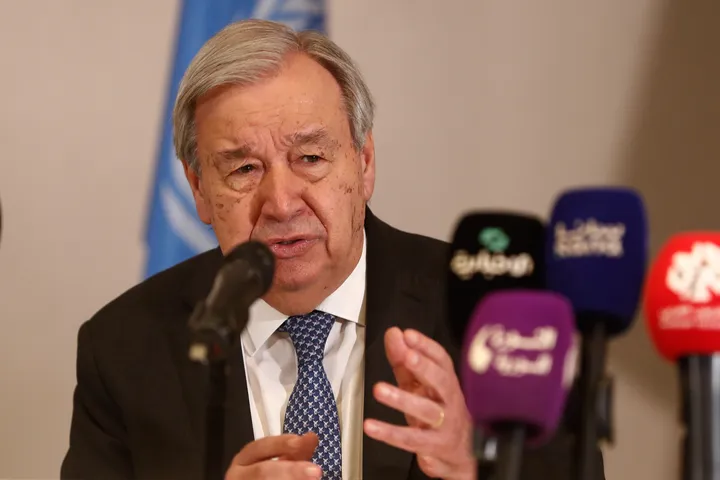
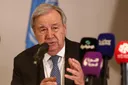
UN Secretary-General Antonio Guterres said in a statement that the operation to defuse what might be the world's largest ticking time bomb began at 10:45 am Yemen time (0745 GMT) on Tuesday.
"A complex maritime salvage effort is now underway in the Red Sea off the coast of war-torn Yemen to transfer one million barrels of oil from the decaying FSO Safer to a replacement vessel."
The transfer of 1.14 million barrels of Marib light crude from the 47-year-old FSO Safer to the new vessel is expected to take "less than three weeks," David Gressly, the UN's resident coordinator for Yemen, said on social media.
The UN hopes the $143 million operation will eliminate the risk of an environmental disaster that it estimates would cost $20 billion to clean up.
Because of the Safer's position in the Red Sea, a spill would also cost billions of dollars per day in shipping disruptions through the Bab al Mandab Strait to the Suez Canal, while devastating coastal fishing communities, ecosystems and lifeline ports.
Averting massive oil leak
The Safer, a floating storage and offloading facility, has been moored around 50 kilometres (30 miles) from the port of Hodeida since the 1980s.


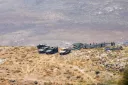
It has not been serviced since war broke out eight years ago between Yemen's Houthi rebels, who control the capital Sanaa and the waters where the Safer is positioned, and a Saudi-led coalition backing the internationally recognised government based in the southern Yemeni city of Aden.
The ageing vessel, with its corroding hull, is carrying four times as much oil as was spilt in the 1989 Exxon Valdez disaster off Alaska.
For years, a skeleton crew of workers remaining on the ship, numbering no more than seven or eight at any given time, have strained to prevent the kind of leak or on-board explosion that would send a thin slick of oil across the Red Sea.
In March, the UN purchased a replacement vessel, the Nautica, with an eye towards getting the oil off the Safer.
Two months later, experts from the private company SMIT Salvage arrived to ensure the Safer could withstand the transfer operation.
Last week, the UN engaged in a symbolic handover of the Nautica to "the people of Yemen", though the shipping firm Euronav will continue to administer it on the UN's behalf for at least six months.
Even if the transfer succeeds, the Safer "will pose a residual environmental threat, holding viscous oil residue and remaining at risk of breaking apart," the UN has warned.
Disputes are also expected over ownership of the oil and the Nautica, which has been renamed the Yemen, pitting the Houthis against the Aden-based government.