European olive oil producers are sounding the alarm as this summer’s heat waves are expected to cause the second bad harvest in a row.
Unusual droughts are the heart of a brewing crisis for the sector, which may result in gaps in shelves and rising prices of olive oil, industry figures warn.
“We are very worried,” says Andrea Carrassi, director general of the Italian Association of Olive Oil Producers.
“Indeed, the numbers are clear,” adds Carrassi.
Olive oil production in Europe is estimated to drop by 40 percent in the 2022-23 season compared with the previous one, according to data published in July by the European Commission. Spain, which accounts for roughly half of the world’s total output of olive oil and is the largest producer globally, recorded a 56 percent slump.
Greece’s output dropped by 47 percent, Portugal’s by 39 percent, and Italy recorded a 27 percent drop. Outside Europe, Tunisia’s production is down by a quarter, while the global decline is around 26 percent.
Türkiye has been the only bright spot with an increase of 17 percent. Carrassi said problems caused by droughts have been compounded by the rise of energy and raw material costs spurred by the Russia-Ukraine war.
For instance, he said paper and glass needed for the packaging of olive oil had “crazy prices” throughout most of last year. These factors, he added, will also likely have a negative impact for the next season.
“The mix of the impact of the war and that of climate change makes us foresee another very complex campaign,” says Carrassi.
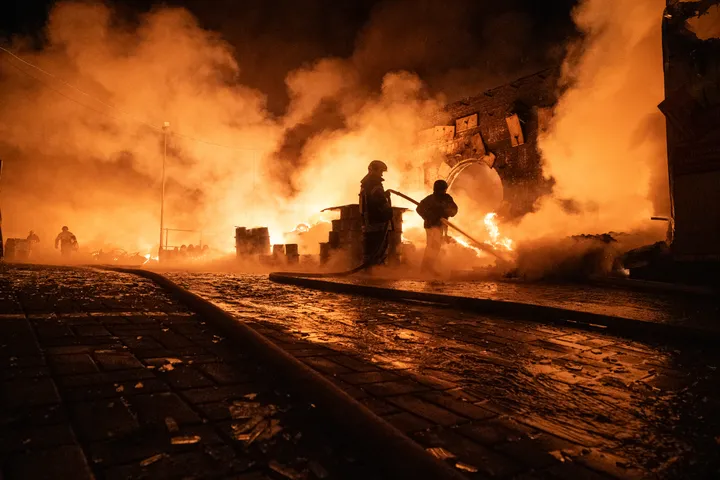
The Mediterranean, Europe's main olive production area, faces ongoing droughts and heatwaves.
According to the Italian farmers’ group Coldiretti, Italy endured record July heat and 43 extreme weather events, doubling the previous year's count.
Spain's southern Andalusia region, a significant olive producer, grapples with extreme drought causing water supply restrictions for nearly 9 million residents.






Recently, Greece also experienced its hottest July weekend in 50 years. Europe’s stock of olive oil at the end of the 2022-23 season dropped by almost 60% to 280,000 tons, compared with the previous period, according to European Commission data.
Antonio Raguso, a fourth-generation olive farmer and oil producer from the southern Italian region of Puglia, has seen a 30 percent decline in production and worries there will be a similar drop next season.
“I fear this is going to be a trend and that we will experience scenarios unseen before,” he said. In particular, the general drop in production, especially in Spain, where other countries including Italy buy olives or olive oil to bolster their own production, is making matters even worse, said Raguso.
Despite expectations driven by a good harvest in Türkiye and the attractiveness of the EU market, EU imports are not expanding at a much faster rate compared to the last marketing year, the European Commission’s July report said.
As a result, the combination of all these factors is rapidly pushing up olive oil prices. The reduced availability keeps producer prices high and further fuels their upward trends, the commission said.
Extra virgin olive oil's top-tier quality price surged 75 percent to €5.92 ($6.50) per kilogram by May 21, compared to last year, as per International Olive Council.
The price of Italian extra virgin olive oil was up 46 percent to €6.33 ($6.97) for a kilogram, while the spike was 70 percent to €5.6 ($6.17) per kilogram for Greece.
Producers worry about lower olive oil consumption due to these conditions, expecting a shift to alternatives like sunflower seed oil.
In addition, European exports of olive oil to the US declined by 20 percent during the last season, while those to China fell by 31 percent, Canada by 18 percent, and the UK by 17 percent, according to the European Commission report.
“This paints a general negative picture and there won’t be a magical remedy in the upcoming season,” said Carrassi.
“The drought, unfortunately, isn’t over and the wave of price increases hasn’t ended.”