Sena Serim
A stand-up comedian and a renowned musician in India are the unlikely faces of petitions challenging laws restricting online speech and expression in the country, a rare sign of dissent from public figures that digital rights groups have welcomed.
Kunal Kamra, who for nearly a decade has satirised politics and social norms in his routines, is fighting an amendment to the IT rules that allows the government to order social media platforms to take down any news that its fact-checking unit identifies as "fake or false or misleading".
Kamra - with more than 2 million subscribers to his YouTube channel and 2.4 million followers on X - risks having his content "arbitrarily blocked, taken down, or his social media accounts being suspended or deactivated, thereby irreparably harming him professionally", says his petition at the Bombay High Court.
Separately, musician TM Krishna is challenging sections of the IT rules that he says "offend my right as an artist and cultural commentator by both imposing a chilling effect on free speech, and by impinging on my right to privacy".
Increasing curbs on free expression
The writ petitions come at a time of increasing curbs on online speech and expression, and a widening crackdown on dissent in India, where Prime Minister Narendra Modi is likely to win a third term in general elections next year.
While the petitions by Kamra and Krishna are not guaranteed to succeed, they are significant as they draw attention to critical issues, said Tanmay Singh, a senior litigation counsel at the non-profit Internet Freedom Foundation, which is providing legal assistance on both cases.
"There are benefits beyond just the judgment: every time there's a fresh hearing, there's a new conversation around these issues," he told the Thomson Reuters Foundation.
"At a time when dissent itself is viewed as unacceptable, it's very important that these public figures are reminding citizens of their constitutional rights and their right to exercise them," he said.
In an affidavit in response to Kamra's lawsuit, the government said the new fact-checking rule was "in the larger public interest", and that the content checked would be limited to government policies and regulations, and not "opinion, satire or artistic impression".
Making social media platforms 'more accountable'
India is responsible for among the most requests for information and content removal on Facebook and X, their data show.

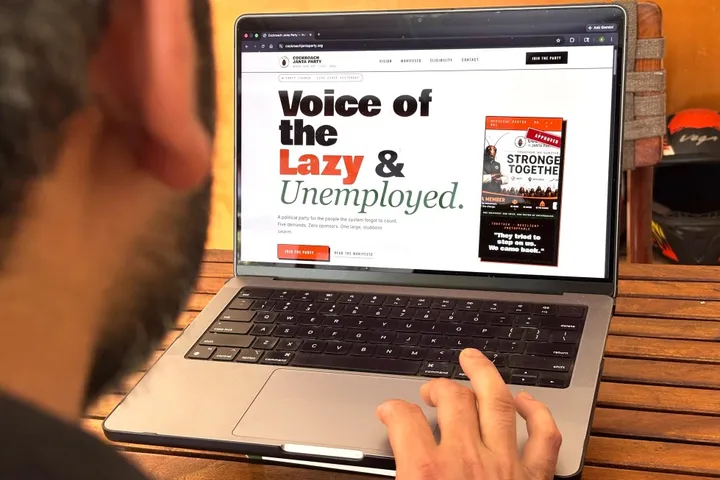

In June, an Indian court dismissed a plea from X filed before Musk's takeover, that challenged government orders to block tweets and accounts, including some that were critical of the government's handling of farmers' protests in 2021.
In its ruling, the Karnataka high court said that the government has the power to block tweets and accounts, that they can be blocked indefinitely, and that the user does not have to be informed, alarming digital rights groups.
X has appealed the court's decision, arguing that the government "will be emboldened to issue more blocking orders" and broaden the scope for censorship.
Government-mandated censorship
Authorities from Brazil to Indonesia have introduced so-called fake news laws in recent years aimed at curbing misinformation, requiring social media platforms to remove content quickly and suspend accounts when ordered to, with some countries including India also arresting users.
Krishna, who received the Ramon Magsaysay Award in 2016 for attempting to break Carnatic music's artistic hierarchy, in his petition said that the vagueness of the IT rules will "lead to a chilling of the creative process".
"In the absence of clarity, publishers will block not only speech that is illegitimate, but also perfectly acceptable speech that seeks to stretch the boundaries of social, religious and cultural constructs," his petition said.
Kamra, who often takes potshots at Modi in his stand-up routines, said in his petition that the IT rules, in making the federal government the "sole arbiter of truth ... and obliging social media intermediaries to impose that version of the truth" upon users, amounts to government-mandated censorship.
Separately, a new law passed earlier this month to repeal the 163-year-old Indian Penal Code, may criminalise various kinds of online speech, including dissent and political satire, according to digital rights groups.
Under the law, publishing "false or misleading information" that jeopardises India's sovereignty, unity, integrity and security, is punishable with imprisonment of up to three years.