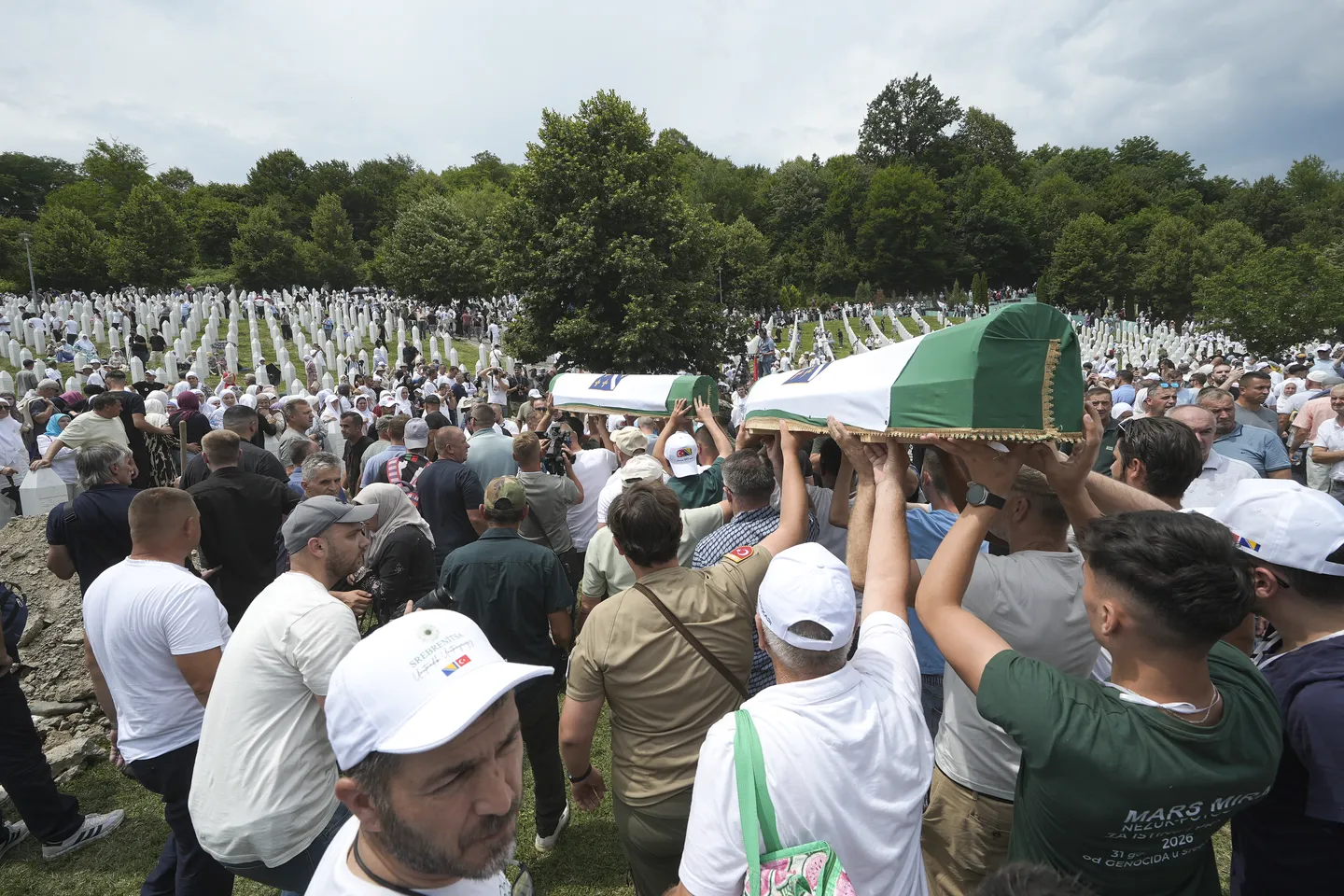
Thousands of mourners, survivors, foreign dignitaries, and religious leaders have gathered at the Srebrenica-Potocari Memorial Centre to mark the 31st anniversary of the Srebrenica genocide as the remains of 10 newly identified victims were laid to rest.
The collective funeral, held every July 11, remains one of Bosnia and Herzegovina’s most solemn commemorations, as families continue burying loved ones whose remains are recovered from mass graves and identified decades after they were killed.
With this year’s burials, the number of genocide victims interred at the Potocari Memorial Cemetery rose to 6,782.
Around 250 victims were buried in local cemeteries at the request of their families, while more than 1,000 people remain missing.
The youngest victim buried this year was 20-year-old Senad Jusic, while the oldest was 56-year-old Ramo Dautovic.
The other victims were Muriz Barakovic, Hamed Music, Ramo Alic, Muhidin Osmanovic, Huso Cerimovic, Nuko Nukic, Ahmet Guster and Asim Kunic.
Their remains were recovered between 1997 and 2022 from locations including Kamenicko Brdo, Budak, Rahunici, Glogova, Kamenica-Cancari, Jelovacka Cesma and Turalici. Several were recovered from secondary mass graves after their bodies had been moved in an organised attempt to conceal evidence of the killings.
Nuko Nukic, who was 38 when he was killed, was buried alongside four of his first cousins, all victims of the genocide.
The Podrinje Identification Project in Tuzla still holds the remains of identified victims whose families have not yet consented to burial, as well as the remains of 36 victims identified through DNA analysis but still awaiting formal family identification.
Many families continue postponing burials because only partial remains have been recovered, hoping additional bones will be found in newly discovered mass graves.
Bosnia and Herzegovina’s Missing Persons Institute continues searching for the remains of around 900 genocide victims.
Calls to preserve truth
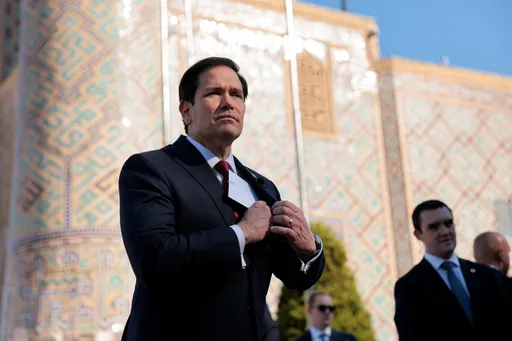
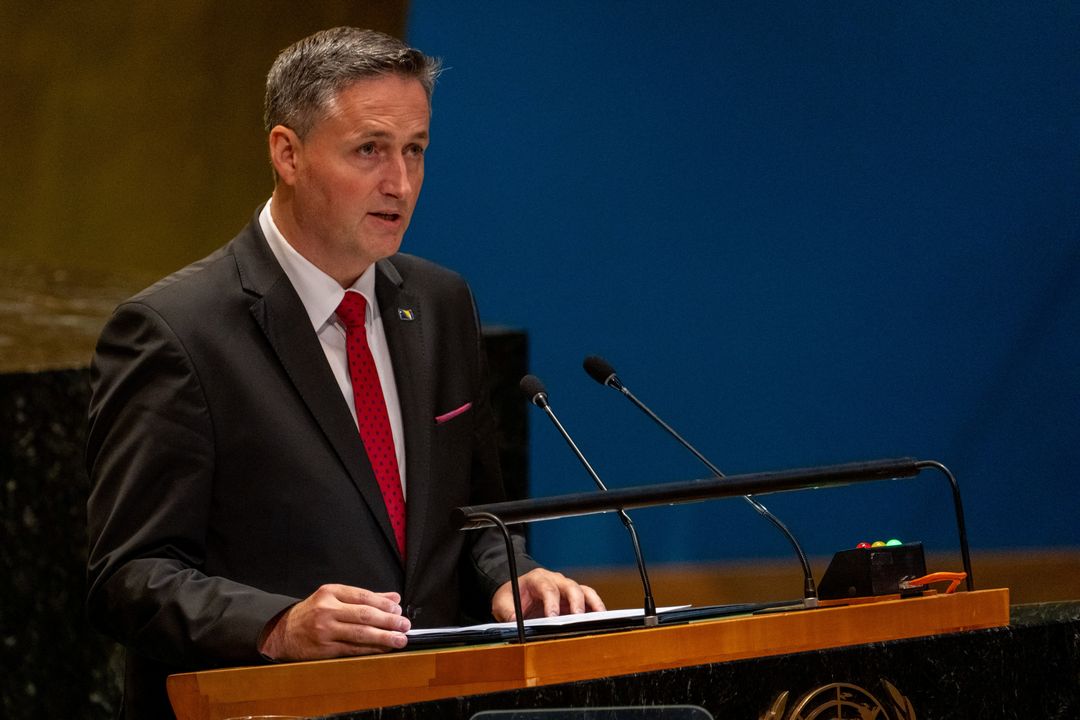
Addressing the commemoration, Chairman of the Presidency of Bosnia and Herzegovina Denis Becirovic described Srebrenica as a global warning against hatred, dehumanisation and the failure to confront crimes before they escalate.
“If we fail to preserve the truth about our past, we will have neither a present nor a future,” he said.
Becirovic said the mass executions were not spontaneous acts of violence but were deliberately planned and carried out before the eyes of the international community.
He stressed that international court rulings had conclusively established that genocide was committed against Bosniaks in Srebrenica and said preserving that truth remained a responsibility toward both the victims and future generations.
Türkiye reaffirms support for Bosnia and Herzegovina
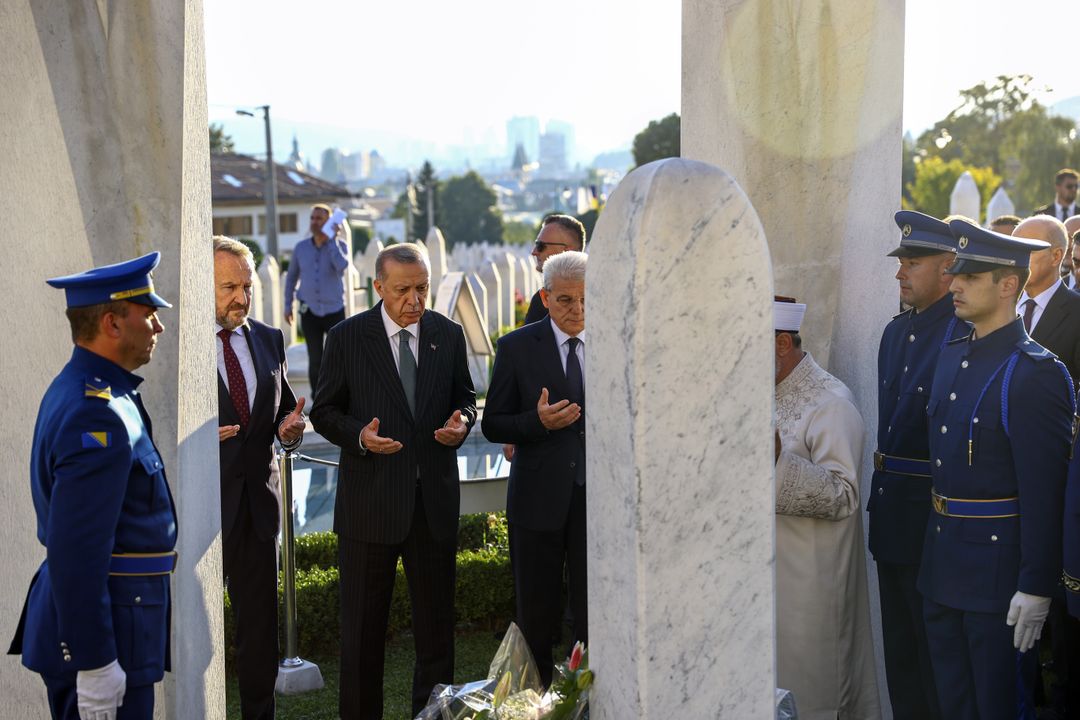
In a message read at the ceremony by Turkish Family and Social Services Minister Mahinur Ozdemir Goktas, President Recep Tayyip Erdogan described the Srebrenica genocide as one of the darkest and most shameful chapters of modern history.
Erdogan condemned genocide denial, the glorification of convicted war criminals and attacks against returnees in Bosnia and Herzegovina, calling for a stronger response from the international community.
He reaffirmed Türkiye’s support for Bosnia and Herzegovina’s sovereignty, territorial integrity and constitutional order.
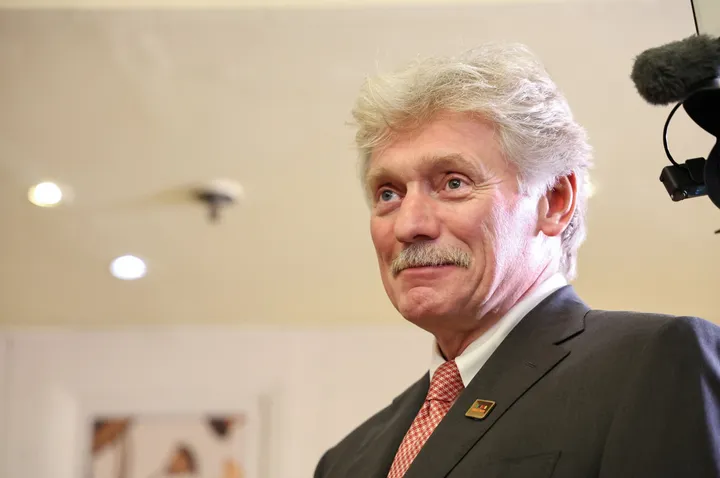


“The path to peace in Europe passes through the Balkans, and the path to peace in the Balkans passes through the stability of Bosnia and Herzegovina,” Erdogan said.
The Turkish president also said the humanitarian catastrophe in Gaza demonstrated that the international community has still not fully learned the lessons of Srebrenica.
International messages of solidarity
Pakistani Prime Minister Shehbaz Sharif described the genocide as “a crime against humanity,” paying tribute to the Bosniak men and boys who were killed and to the Mothers of Srebrenica while reaffirming Pakistan’s support for Bosnia and Herzegovina.
Officials from Albania and Montenegro said the facts surrounding the genocide have been conclusively established by international courts and cannot be reduced to political interpretation.
They warned that genocide denial and the glorification of convicted war criminals represent attacks on truth, justice, and the dignity of the victims.
Messages were also delivered by officials and representatives from other countries and international organisations.
UN remembrance day
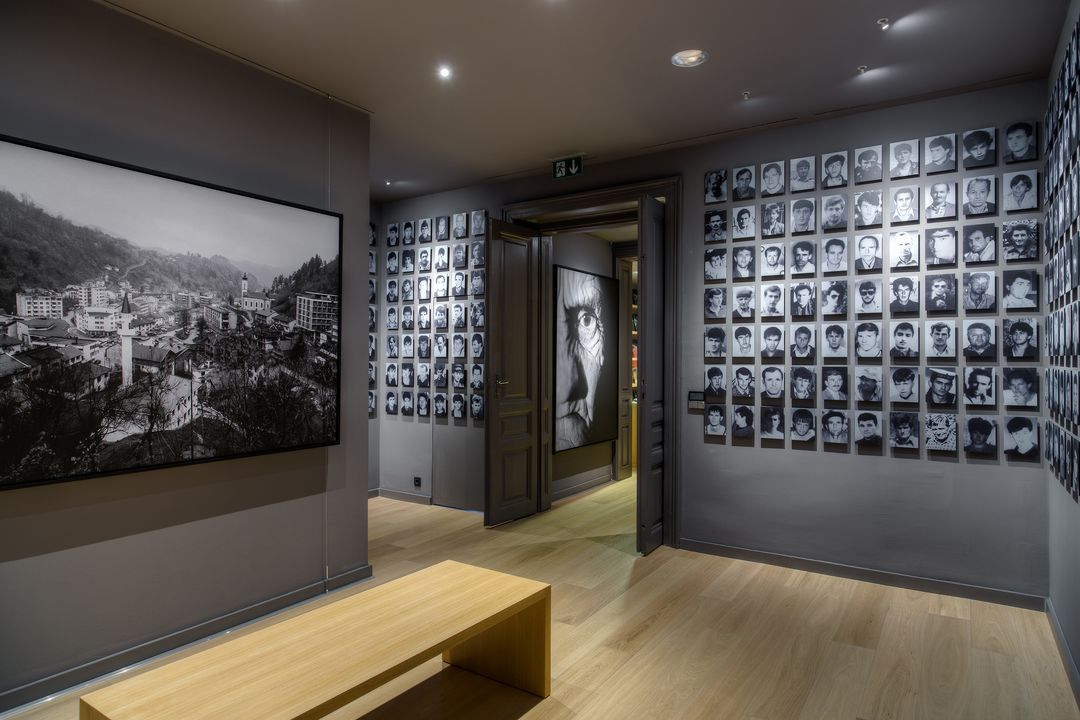
The commemoration took place during the second observance of the International Day of Reflection and Commemoration of the 1995 Genocide in Srebrenica, established by the UN General Assembly through a resolution adopted in May 2024.
The resolution condemns genocide denial and the glorification of those convicted of genocide, crimes against humanity, and war crimes, while calling for education and remembrance initiatives to preserve the established historical facts.
Commemorative events marking the anniversary were also held across Bosnia and Herzegovina and in cities around the world.
Srebrenica genocide
In the spring of 1993, the UN Security Council declared Srebrenica a protected “safe area.”
Bosnian Serb forces under the command of Ratko Mladic overran the enclave on July 11, 1995, despite the presence of Dutch UN peacekeepers.
Women, children and elderly people were forcibly transferred from the enclave, while more than 8,000 Bosniak men and boys were detained and later killed in forests, schools, factories and warehouses in and around Srebrenica.
The International Court of Justice ruled in 2007 that the killings constituted genocide. The International Criminal Tribunal for the former Yugoslavia and its successor court also convicted senior Bosnian Serb political and military leaders, including Radovan Karadzic and Ratko Mladic, sentencing both to life imprisonment.
Victims’ remains have been recovered from dozens of primary and secondary mass graves across eastern Bosnia. Many bodies were exhumed from primary graves and reburied in secondary sites in an organised effort to conceal evidence of the crimes.
Identified remains continue to be buried each July 11 at the Potocari Memorial Cemetery, while the search for more than 1,000 missing victims continues.