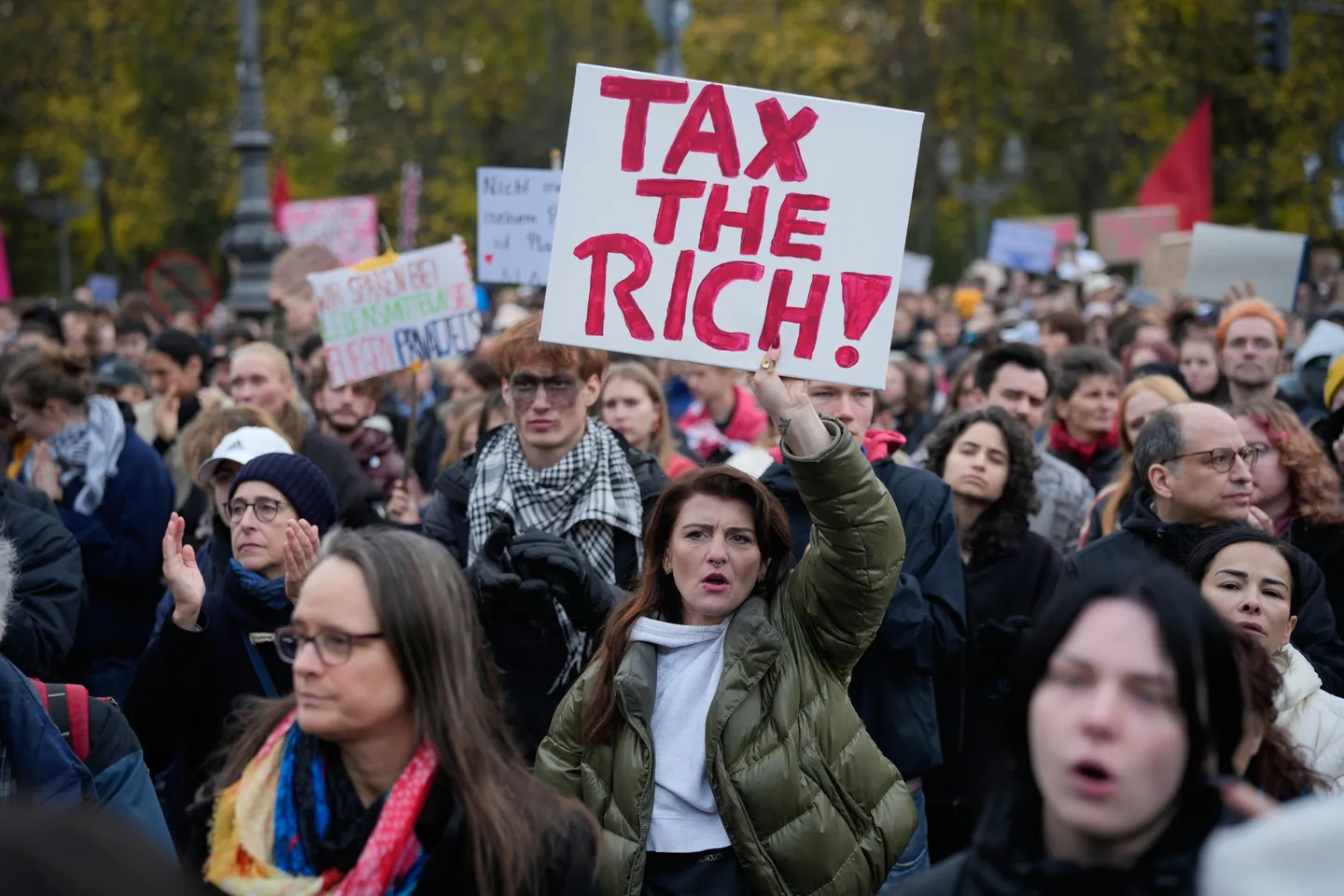
Thousands of young Germans have taken to the streets nationwide to protest against political leaders they accuse of ignoring their concerns, with police reporting arrests in Hamburg and unrest in Stuttgart.
Protesters gathered in Berlin, Frankfurt, Cologne and dozens of other cities on Saturday for rallies organised by “GenZ regelt!”, or “Gen Z has got this”.
Demonstrators carried signs reading “Time for resistance” and “Merz must go”, referring to conservative Chancellor Friedrich Merz.
“We’re taking to the streets for a life that everyone can afford,” said movement spokeswoman Veronika Dinter.
“Hardly anyone still believes in a better future if everything just continues as it is.”
The movement’s grievances include high living costs, poorly maintained schools, government spending cuts and insufficient climate action, alongside a broader belief that politicians disregard the younger generation.
Protesters also oppose sharply increased military spending and fear a new voluntary military service model intended to boost troop numbers could pave the way for conscription.

Arrests in Hamburg, unrest in Stuttgart
More than 10,000 people joined the march in Hamburg, where police said at least two men were arrested on Saturday afternoon.
One was apparently carrying a fake firearm in the upscale Jungfernstieg neighbourhood. Officers overpowered both men, with no immediate reports of injuries or information about their motives.
Police used tear gas and pepper spray to disperse protesters. Drones and water cannons were also deployed as part of a large-scale security operation.
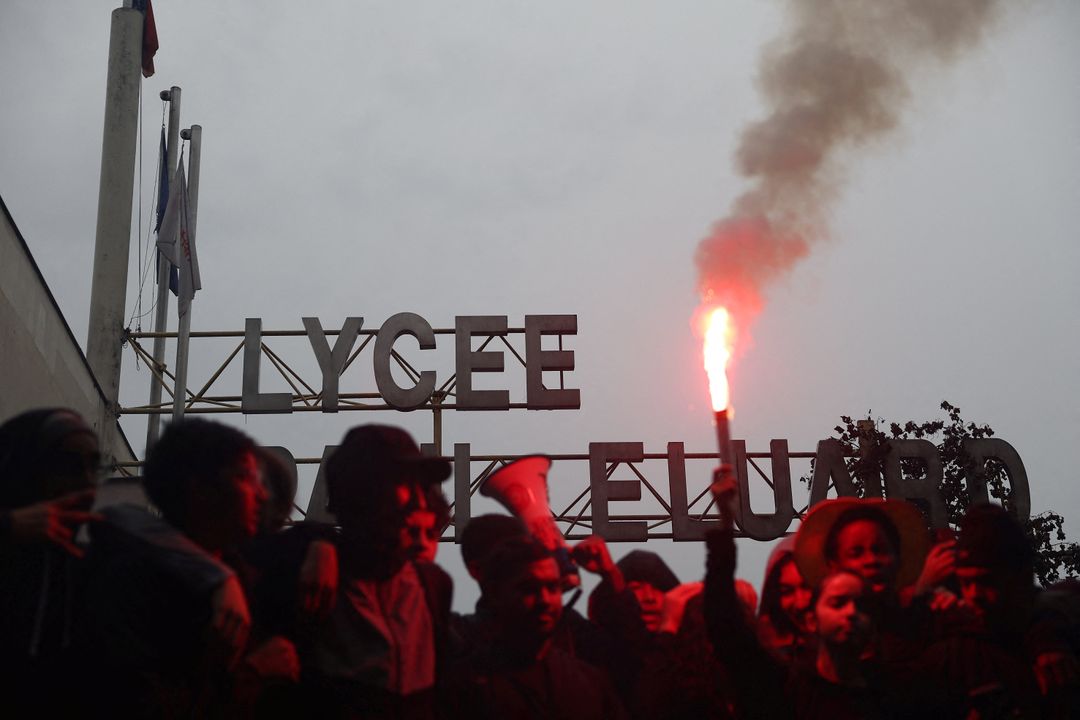
In Stuttgart, police said pyrotechnics were apparently fired at officers from within the march. They also reported scattered vandalism along the route, including graffiti and burning litter bins, which officers extinguished.
The march was halted several times over masked participants and the use of pyrotechnics. At least 3,000 people took part, according to police.


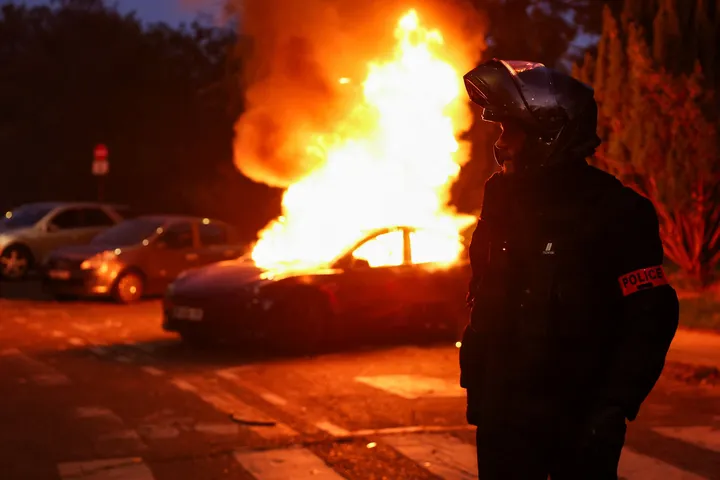


Despite these incidents, demonstrations nationwide appeared mostly peaceful by early evening.
Turnout below expectations
Attendance in several cities appeared lower than organisers had hoped, after more than 170,000 people registered to participate nationwide.
Police in Cologne said turnout was significantly below the 15,000 who had registered, without providing a precise figure.
Around 2,700 people attended in Berlin, 1,800 in Munich and 1,000 in Frankfurt.
Thousands of police officers were deployed across Germany, while some shops boarded up their windows amid fears of unrest.
The German movement has drawn inspiration from similar protests in France and Italy. Demonstrations were also taking place in France for a third consecutive weekend, following some of the country’s worst rioting in years on October 17.
German authorities had feared the protests, coinciding with Halloween, could see similar violence. Berlin has been in contact with French and Italian officials amid concerns that radicals from abroad could join the demonstrations.
Before the rallies, however, authorities said they had found no evidence of concrete plans for violence.
“GenZ regelt!” explicitly rejects violence, saying extremist groups, anti-constitutional symbols, racism and hate speech have no place in its movement.
Christian Volk, a protest researcher at Berlin’s Humboldt University, said Germany had the potential for a major protest movement.
But he told AFP that France had a “completely different tradition when it comes to confrontational forms of protest”.