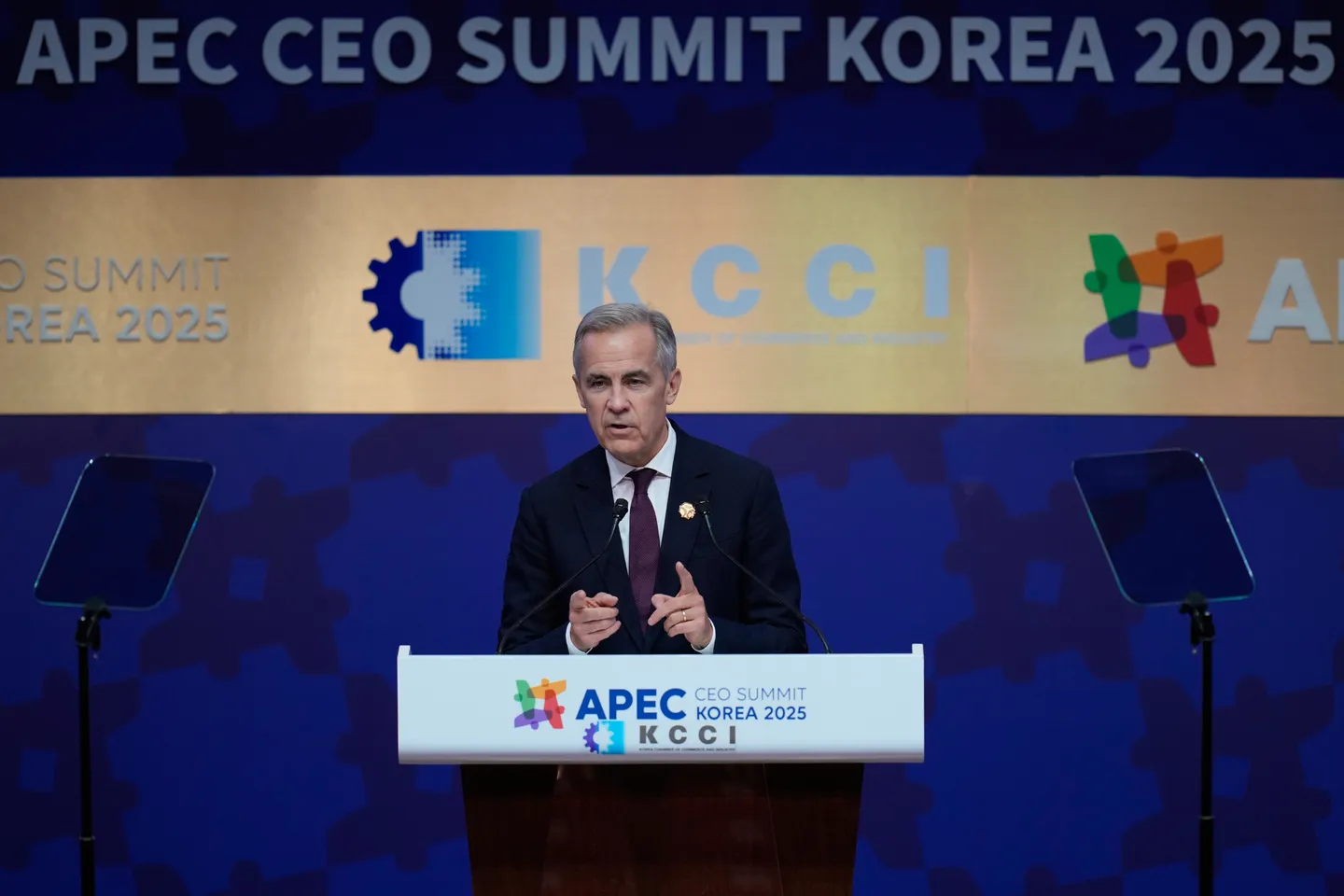
Canada's Prime Minister Mark Carney said on Friday that the world of rules-based liberalised trade and investment had passed as the global economy was going through one of the most profound changes since the fall of the Berlin Wall in 1989, as he prepared to meet with Chinese leader Xi Jinping.
"(The) old world of steady expansion of rules-based liberalised trade and investment, a world on which so much of our nations' prosperity — very much Canada's included — (is based), that world is gone," Carney said while speaking at a business event at the Asia-Pacific Economic Cooperation (APEC) summit in South Korea.
Carney is set to meet with the Chinese President Xi on the sidelines of the summit, marking the first formal talks between China and Canada since 2017, Chinese state media reported.
Carney said that Canada aimed to double its non-US exports over the course of the next decade.
Ahead of the meeting, President Xi said that currently, changes unseen in a century are accelerating across the world, and the international situation is fluid and turbulent.
"We must practice true multilateralism, and enhance the authority and effectiveness of the multilateral trading system with the WTO at its core," Xi said at the APEC summit, according to a transcript issued by the Chinese Foreign Ministry.
Xi outlined five proposals, including building an open regional economy, stabilising supply chains, promoting digital and green transformation in trade, and ensuring inclusive development.
The Chinese leader also reaffirmed Beijing’s commitment to further opening its markets, noting that China has remained the world’s largest trader in goods for five consecutive years.



Reviving relations
Canada's relations with China are among the worst of any Western nation but both have been at the sharp end of Donald Trump's tariff onslaught, even after Xi and the US leader's deal Thursday to dial back tensions.
Ties fell into a deep freeze in 2018 after the arrest of a senior Chinese telecom executive on a US warrant in Vancouver and China's retaliatory detention of two Canadians on espionage charges.
In July, Carney announced an additional 25 percent tariff on steel imports that contain steel melted and poured in China.
Beijing announced the following month it would impose a painful temporary customs duty of 75.8 percent on Canadian canola imports.