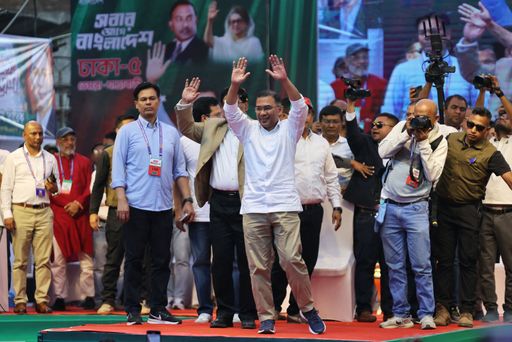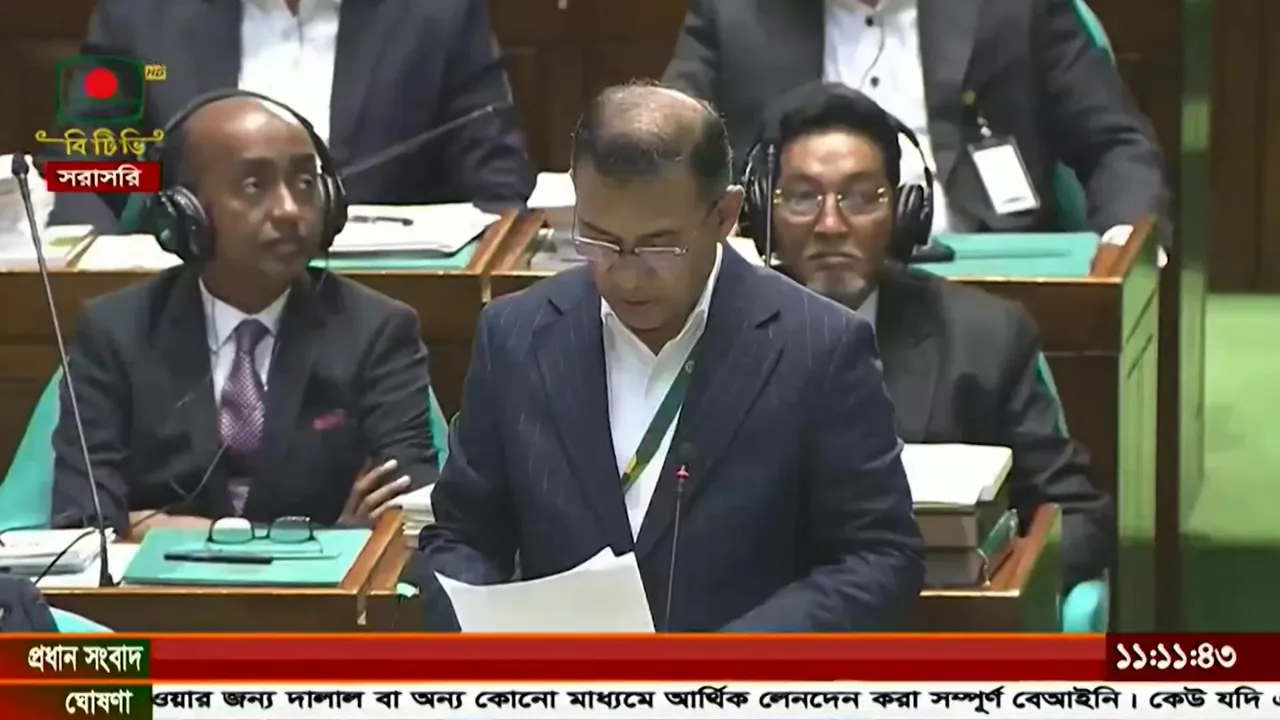
Bangladesh’s 13th parliament opened its first session on Thursday, the first since the July 2024 uprising that ousted the government of former prime minister Sheikh Hasina and dissolved the legislature.
The Bangladesh Nationalist Party (BNP) secured a two-thirds majority with 209 seats on its own and 212 seats with its allies. A bloc led by Bangladesh Jamaat-e-Islami became the main opposition with 77 seats.
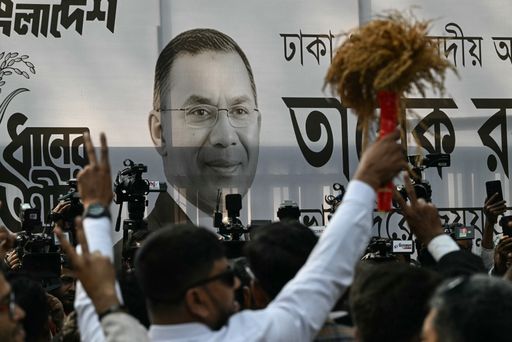
Prime Minister Tarique Rahman, in his first address to parliament, said the country was beginning a new chapter in parliamentary democracy.
“Through the tears of countless victims of the brutality of fascism and the sacrifice of thousands of lives, a truly representative National Parliament accountable to the people through the people’s votes is finally going to begin its journey again from today,” he said, referring to Sheikh Hasina’s more than 15 years in power since 2009.
About 1,400 people were killed, and more than 20,000 were injured in the uprising that ousted Hasina in 2024, according to the United Nations.
Parliament leader Tarique Rahman, Jamaat-e-Islami Ameer (chief) and also opposition leader Shafiqur Rahman, along with 225 others, are first timers in the parliament.
Usual procedure






The parliament has 300 elected seats and 50 additional seats reserved for women, which are not filled through direct elections.
Because most members of the previous 12th parliament fled the country or went into hiding — including the speaker and deputy speaker — after Hasina fled to India on August 5 2024, the new parliament began its session without a speaker, breaking long-standing tradition.
Rahman said the usual procedure could not be followed because lawmakers from the former government had fled, gone into hiding or were in jail.
“Therefore, a senior lawmaker will chair the session in line with previous instances,” he said.
The previous parliament had been dominated by lawmakers from the Awami League, elected in a controversial January 2024 election that was boycotted by opposition parties, including the BNP.
Lawmakers later elected BNP Standing Committee member Hafiz Uddin Ahmad as speaker and Kayser Kamal as deputy speaker. President Mohammed Shahabuddin administered the oath of office to both officials.
Under reforms approved in a referendum held alongside the February 12 national election, a second deputy speaker was expected to come from the opposition Jamaat-e-Islami. The BNP said the change would be implemented later as part of its constitutional reform agenda.