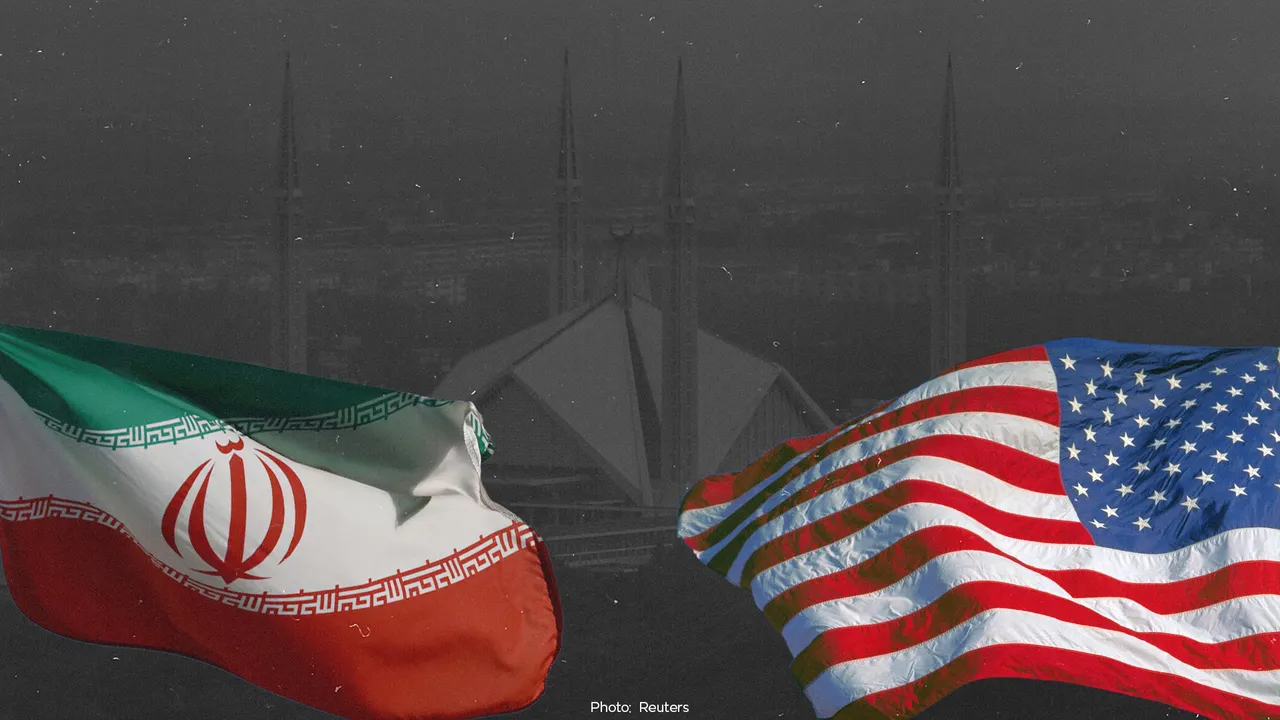
Iran and the US will hold first direct, in-person negotiations on Saturday in Islamabad after Pakistan brokered a two-week ceasefire on April 7.
The talks will build on Iran’s 10-point proposal and address core issues, such as the future of the Strait of Hormuz, sanctions relief, nuclear programme, and regional de-escalation.
Latest media reports from Pakistan say that Islamabad is on high alert ahead of the arrival of key negotiators from Iran and Pakistan for the two-day talks.
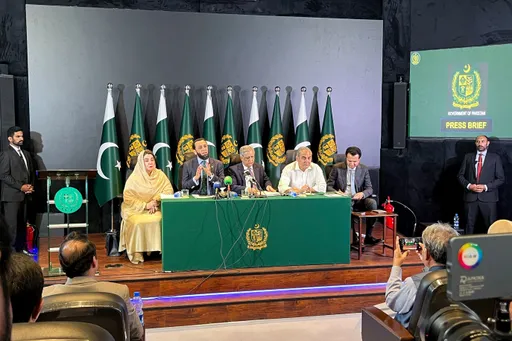
Pakistani Prime Minister Shehbaz Sharif, who played a key role in brokering the two-month ceasefire along with Chief of Defence Forces Asim Munir, visited the five-star hotel that will host the talks and reviewed the security arrangements.
Officials remain tight-lipped as to who from Pakistan will be present in the room during the high-stakes negotiations.
Here are the names and brief profiles of five main negotiators from Iran and the US who will take part in the Islamabad talks.
JD Vance – US vice president, head of the US delegation
A former US Marine who took part in the Iraq War in a non-combat role, JD Vance will lead the US delegation.
He has been a hard-line Republican favouring the “America-First” agenda of President Donald Trump.
Despite this, however, Vance has been consistently supporting Israel’s war on Gaza – an issue that has otherwise divided US President Donald Trump’s support base that seeks an end to the use of taxpayer money to serve Israeli interests in the Middle East.
During the US-Israeli war against Iran, however, Vance seems to have cultivated a reputation as a pragmatic leader looking for an off-ramp to avoid yet another endless American war in a faraway country.
His scepticism towards prolonged wars stems from his early political views where he criticised neoconservative wars in the Middle East that drained American resources without clear victories.
He seems to have emerged as the most sceptical senior voice in Trump’s inner circle on the Iran issue. News reports indicate he privately urged President Trump to pursue an off-ramp rather than full-scale war to topple the Iranian government.
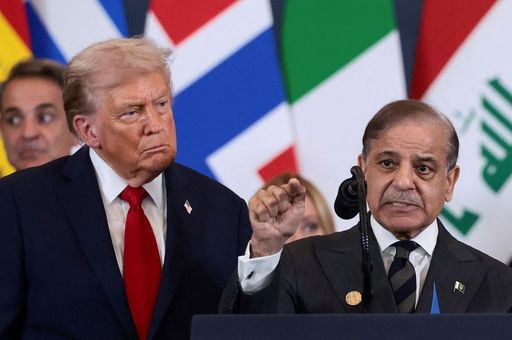
In a “tense call” with Israeli Prime Minister Benjamin Netanyahu, Vance reportedly took the Israeli leader to task for overly optimistic predictions about a quick government collapse in Iran.
Vance’s restraint-oriented stance, combined with public warnings to Iran not to “lie” or “cheat”, while stressing economic leverage, has positioned him to act as a representative of the MAGA isolationist movement trying to pull the US out of a potentially long war.
In other words, Vance’s leading role in the negotiations will help Trump sell any firm agreement with Iran to his MAGA base without appearing weak.
On the other hand, Vance’s anti-interventionist posture also signals seriousness to Tehran, which has already shown its wariness of the two key US negotiators that led talks just before the start of the war on February 28.
In other words, Vance combines public toughness and private preference for de-escalation to push for a quick resolution of the crisis that Trump can frame as an outright US victory.
Steve Witkoff – US president’s special envoy for the Middle East
Steve Witkoff is widely viewed as a business-style deal-maker rather than an ideologue with deep convictions.
A successful real-estate developer and long-time Trump confidant with no prior government or foreign policy experience, Witkoff is known to focus on transactional outcomes rather than old-school diplomacy.
He lacks the military or neoconservative background that defines many hardliners. Instead, he brings to diplomacy a businessman’s mindset developed through high-stakes property deals, where compromise and incentives – rather than ideology or set-in-stone foreign policy norms – drive results.
Witkoff, called Trump’s “real secretary of state” instead of Marco Rubio, became crucial to the Iran team because of his proximity to Trump.
The White House tapped him as special envoy to the Middle East, apparently to check the role of the entrenched State Department or national security bureaucracy that usually favours the process over the outcome.
However, Iranians have accused Witkoff of backstabbing because the country came under US and Israeli attacks as he co-led negotiations from the American side in February.
Yet his inclusion in the US delegation underscores Trump’s preference for loyalists – Witkoff is the president’s gold buddy – who can think outside conventional diplomatic boxes.
In the Islamabad talks, Witkoff is expected to handle the economic side of negotiations, such as the lifting of sanctions.
Jared Kushner – businessman, Trump’s son-in-law
Jared Kushner is frequently characterised as a hawk with strong pro-Israel leanings, often accused of acting as an apologist for Israeli interests in US policy.

This reputation intensified during the 2026 Iran crisis, as reports indicated that he and Witkoff advised Trump that pre-war nuclear negotiations with Iran were not bearing fruit – a move that reportedly contributed to the decision by the US and Israel to launch a full-scale war against Iran on February 28.
Trump publicly credited Kushner with helping persuade him to launch military operations, accusing Iran of bad-faith bargaining.
Critics have labelled Kushner an “Israeli asset”, pointing to his close friendship with Israeli Prime Minister Benjamin Netanyahu, his endorsement of illegal settlements in the occupied West Bank in the 2020 peace plan, and reported fundraising for his private equity firm from regional actors, a potential conflict of interest.
Kushner’s importance to the negotiation team originates from his unmatched personal access to the US president as his son-in-law.
The Abraham Accords, which were signed during Trump’s first stint in power and were meant to normalise Israel’s relations with the Arab world, put Kushner on a global pedestal: in the eyes of Trump and Israelis, the accords showed Kushner’s ability to deliver tangible results without resolving core conflicts like Palestine.
In the current talks, his inclusion is meant to provide continuity with the so-called diplomatic success of Trump’s first term, while bypassing the bureaucratic caution practised by career diplomats at the State Department.
But Kushner’s Israeli connection has caused serious pushback from Iran, which has indicated its preference for Vance-led talks instead.
In Islamabad, he is expected to present economic incentives to Iranian pragmatists while protecting US and Israeli interests, such as uranium enrichment and support for Iran-backed groups in the wider region.
Mohammad Bagher Ghalibaf –head of Iranian delegation, parliament speaker
Mohammad Bagher Ghalibaf, who will lead the Iranian delegation, is regarded as a hardline hawk – or a “principlist” – because of his leadership roles and deep roots in the Revolutionary Guard (IRGC), the most powerful branch of the Iranian armed forces that directly answers to the supreme leader.
His reputation as a defender of Iran’s resistance to Western pressure stems from his military and security background, including past command roles as chief of air force and police.
He is reported to be in complete agreement with hardliner factions that don’t want to give any concessions to the US.
During the war, Ghalibaf issued strong warnings about Iranian readiness to fight, made fun of US setbacks, and highlighted national resilience.
He repeatedly reinforced his image as someone who prioritises strength and nationalist posturing over diplomatic compromise.
He was selected to lead the delegation after the 39-day war killed a large part of the Iranian top leadership.
As speaker of parliament, he commands respect among conservatives and can deliver buy-in from key power centres, including the IRGC, which reportedly resisted the ceasefire until the last minute.
In a system where revolutionary credentials define one’s credibility and status in the hierarchy, Ghalibaf’s presence ensures that any agreement with the US will have legitimacy at home.
His hawkish reputation will also help balance the Iranian team by preventing accusations of compromising integrity for economic gains.

Abbas Araghchi – Iranian foreign minister
Abbas Araghchi is known as a pragmatic diplomat who prefers engagement and technical negotiations over confrontation.
He played a central role in the original 2015 Joint Comprehensive Plan of Action (JCPOA) talks as chief negotiator. He advocated for sanctions relief in exchange for limits on Iran’s nuclear programme, which is a politically divisive issue within Iran.
Araghchi has consistently pushed for diplomacy as the best path to protect Iranian interests, even after the US withdrawal from the JCPOA.
His calm, professional style contrasts with harder-line figures in the Iranian government.
As current foreign minister, he can speak authoritatively on behalf of his government on key issues like the nuclear programme, verification mechanisms, and sanctions relief – areas critical to any lasting deal between Iran and the US.
His inclusion will allow Iran to present detail-oriented positions rather than blanket proposals. Working alongside Ghalibaf, Araghchi will balance revolutionary firmness with diplomatic nuance.
More than 3,600 people, mostly Iranians, have been killed in the US-Israeli war against Tehran since February 28.
The outcome of these talks will determine whether the region slides back into open conflict or moves towards de-escalation.
A successful outcome will save Iran and the wider Gulf region from further death and destruction, while restoring roughly one-fifth of global oil that usually transits through the Strait of Hormuz, bringing down oil prices and the risk of a spike in worldwide inflation.