 Kazim Alam
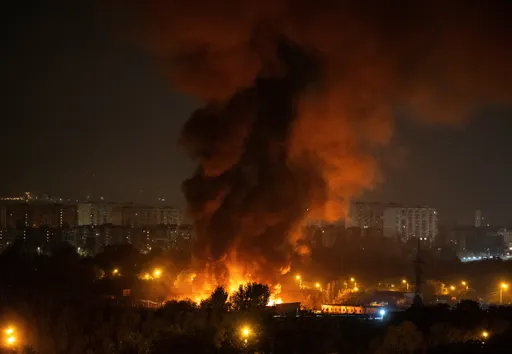
More than a month into the US-Israeli war against Iran, American military losses have begun to accumulate, forcing the White House to seek the largest expansion in military spending since World War II.
The proposal will take defence spending to $1.5 trillion, up 42 percent from a year ago. The budget plan comes with simultaneous cuts across domestic agencies that handle climate, housing and education programmes.
Separately, the Pentagon is seeking an additional $200 billion for the war in Iran, whose incremental cost through March 19 had already clocked in between $16.2 billion and $23.4 billion.
The damage to US military hardware seems to have shattered Washington’s early confidence that Tehran’s military capabilities stood obliterated.
What began on February 28 with a statement from US President Donald Trump that he could “end it in two or three days” seems to have settled into a war of attrition, where Iran is attempting to wear down the US by inflicting small doses of nonstop military and economic losses.
In more than a month since the beginning of the war, Iran has not only survived but mounted a number of successful retaliatory strikes against US, Israeli and Arab targets.
Meanwhile, Tehran has restricted maritime traffic through the Strait of Hormuz, the narrow waterway connecting the Persian Gulf to the Gulf of Oman through which roughly one-fifth of global oil trade passes.
Iran’s strategy has triggered a global energy crisis, sending oil prices well above $100 a barrel and raising the spectre of inflation worldwide.
Experts say that while US air power retains overwhelming advantages, even the numerically small losses point to a flaw in American assumptions about Iranian defence systems.
Ozan Ahmet Cetin, a non-resident research fellow at the Washington DC-based think tank SETA, tells TRT World that battlefield successes by the US have not translated into the decisive political outcome it once envisioned.
“Operationally, the US has achieved substantial success… But even the most capable air force does not operate without friction, losses, or setbacks,” he says.
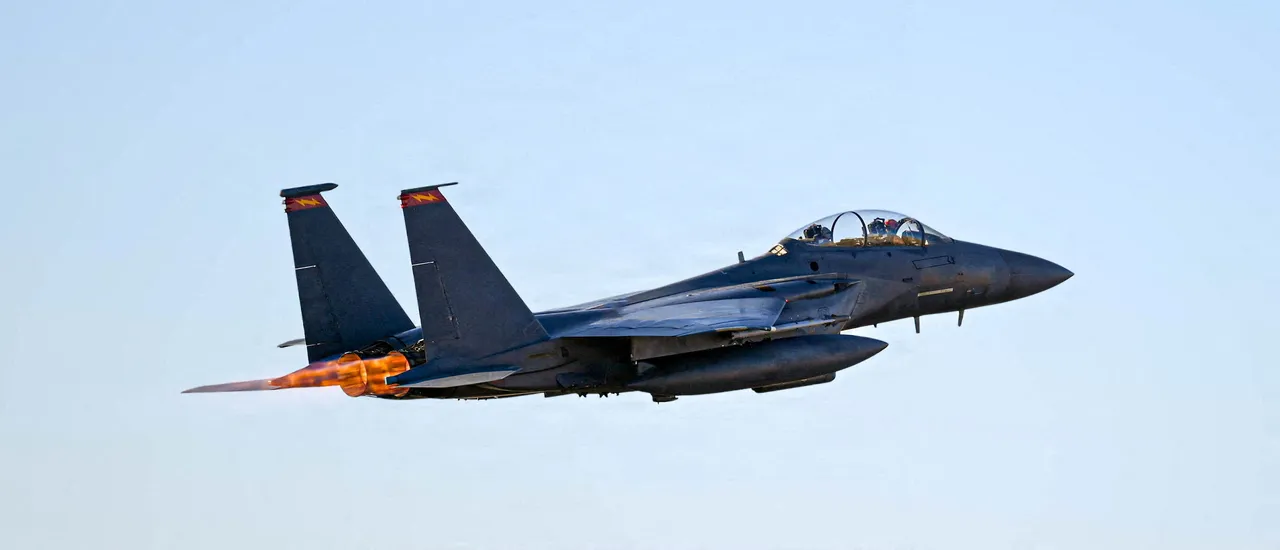
The confirmed US military losses include one F-15E fighter jet shot down, a second combat loss of an A-10 attack aircraft, reported damage to an F-35, an F/A-18 incident whose details remain unclear, and roughly a dozen Reaper drones destroyed.
At least 13 US troops have so far been killed in the war and hundreds others have been injured.
Against the scale of operations – more than 13,000 combat flights and strikes on over 12,000 targets – the combined loss-and-damage rate remains well below 0.04 percent, according to Mauro Gilli, professor of military strategy and technology at Berlin’s Hertie School.
Gilli tells TRT World that these figures do not necessarily signal a fundamental flaw in US doctrine.
“Air superiority does not mean zero risk. It means the ability to operate systematically while denying the same to the adversary,” he says.
He points to the successful US combat search-and-rescue mission deep inside Iran that recovered the F-15E crew as stronger evidence of dominance than the losses themselves.
Iranian forces, by contrast, could only approach the crash site by land.
Yet both analysts acknowledge that residual threats remain.
Iran’s mobile air defences and man-portable systems, hidden and redeployed across mountainous terrain, force US pilots into riskier low-altitude flights, exposing them to threats that can’t be fully eliminated, Gilli says.
Cetin insists that the lesson is not that American air power has failed. “The lesson is that air dominance and force protection have to be treated as active problems every day in a war like this,” he says.
Losses on economic front
Initial US pronouncements had projected a far quicker end to the war via regime change. But Tehran’s survival beyond a month of full-blown war has belied the US narrative.
In addition to limiting maritime traffic, Iran has hit targets in Israel and Arab countries hosting US forces well into the second month of the war.
Analysts say the war’s economic toll is compounding the military one.




The effective closure of the Strait of Hormuz has reduced world oil supply by one-fifth, forcing many Asian economies reliant on Middle Eastern energy to adopt rationing measures.
At the same time, the war is taking a toll on the US defence industrial base.
Highlighting the unfavourable cost-exchange ratio, Cetin says the US and its allies used “thousands of precision-guided munitions and interceptors” to counter Iranian launches in the first month of the war.
The cost-exchange ratio compares an attacker’s cost to bypass defences versus a defender’s cost to neutralise that threat.
In simpler words, Iran’s relatively cheap drones and missiles have forced far more expensive US responses.
“The broader implication is that defence industrial bases can no longer rely solely on small numbers of advanced platforms that are slow to replace,” Cetin says.
The US should aim to produce large quantities of “lower-cost, adaptable, and rapidly manufacturable systems” to prevail in attrition warfare against Iran.
According to Gilli, the war is having a direct effect on the stockpiles of key munitions, both missile interceptors for air and missile defence and cruise missiles for precision strikes.
For Western nations, the price is not the most relevant factor, he says.
“What matters is the time required to produce and restock them, and access to the raw materials, including rare earths and critical minerals, that go into them,” he says.
Reports in Western media show US strikes have rapidly depleted interceptor and cruise-missile inventories, prompting emergency White House meetings with defence contractors to accelerate output.
Beyond the battlefield and factory floor, Cetin points to societal and historical headwinds that can erode political support for war at home.
“Several deeper forces seem to be driving this shift, and they suggest that the war is politically sustainable only under fairly narrow conditions”, he says, while referring to the “long shadow of Iraq and Afghanistan” on the psyche of the American public.
Scarred by those conflicts, Americans are far more sceptical than they were in the early 2000s that military force in the Middle East can produce a “clear and lasting” political outcome, Cetin says.
Recent polls show the public distinguishes between containing Iran and embarking on another open-ended war. Support for limited action coexists with strong resistance to escalation, he notes.
Adding to the scepticism is the growing perception that the US is fighting “Israel’s war,” a narrative gaining traction across party lines and further distancing the conflict from direct American national interests, Cetin adds.
Gilli warns of two particularly consequential unintended effects in case the war drags on.
The first is already visible: global economic disruption arising from the closure of the Strait of Hormuz, which can lead to “domestic malaise, protests or even instability” in many countries.
The second is “cross-theatre deterrence”: US munitions expenditures in the Middle East risk undermining US credibility and readiness in the Indo-Pacific, where China watches closely.
A leadership shake-up at the Pentagon seems to have compounded the challenge for US policymakers.
A number of senior generals were ousted by Secretary of War Pete Hegseth as part of a broader MAGA makeover, raising concerns about continuity and expertise precisely when the Iran war demands steady command.
According to Cetin, military performance can create leverage, but it can’t guarantee “closure, political submission, or a clean exit”.
“If Iran remains willing to absorb punishment rather than concede… then Washington faces a serious problem. No amount of operational brilliance can by itself solve that,” he says.