 Kazim Alam
With the US-Israeli war against Iran entering its fourth week, US President Donald Trump issued an ultimatum to Tehran: Open the Strait of Hormuz, or be ready for a complete wipe-out of the Iranian electric grid
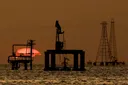
Iran has kept the Strait – the narrow waterway connecting the Persian Gulf to the Gulf of Oman through which roughly one-fifth of global oil trade passes – partially closed since March 2 in response to the US-Israeli attacks.
“If Iran doesn't fully open, without threat, the Strait of Hormuz, within 48 hours from this exact point in time, the United States of America will hit and obliterate their various power plants, starting with the biggest one first,” Trump posted on social media on March 21, with several words in all-caps in his usual style.
Instead of caving to pressure, Iran responded with its own vow: any attack on its energy infrastructure would trigger retaliatory strikes on Gulf power plants and water desalination facilities.
Trump postponed the planned strikes on Monday for another five days after what he called “very good and productive” discussions with Iran’s leadership. Tehran has denied holding any negotiations with Washington.
However, the threat to the power and water infrastructure still hangs over a region already reeling from bombs, drones and missiles landing on both sides of the Strait of Hormuz.
Experts say turning the US threat to “obliterate” Iran’s energy infrastructure into reality will be no simple task for the US.
Given the spread-out and decentralised nature of Iran’s electricity grid, it will likely take the US far more than a few strikes to plunge the whole country into darkness.
Another reason possibly deterring the US action against Iran’s power systems is Tehran’s promised retaliation against the neighbouring Arab countries that can inflict far greater pain on Washington’s long-term regional allies, experts say.
Iran’s electricity grid relies heavily on natural gas-fired thermal plants, with an installed capacity exceeding 85,000 megawatts.
“(The grid) is not a simple target that can be taken down in a single strike,” Oral Toga, researcher at the Ankara-based Centre for Iranian Studies, tells TRT World.
“Generation facilities are geographically dispersed, from Khuzestan to the Tehran periphery, Isfahan to the southern coast. The transmission network spans thousands of kilometres,” he says.
Iran learned hard lessons from the 1991 Gulf War, when the US systematically dismantled Iraq’s electrical infrastructure in the opening nights of the six-week-long battle, Toga says.
Iran has, therefore, poured resources over the years into backup capacity, hardening of critical sites, distributed generation, and the capability for certain regions to island themselves on isolated mini-grids.
Access to the Iranian energy ministry’s website is restricted. Non-official online sources show Iran has 40.6 million electricity subscribers, including 32.3 million residential users.
More than 95 percent of its power comes from about 130 thermal plants spread across the country. Most of these have small generation capacities, with only three capable of producing more than 2,000 megawatts.
The largest, the Damavand plant, can produce a maximum of 2,868 megawatts, which accounts for hardly four percent of the approximate national capacity.
Even if a US strike completely destroys the single-largest power plant in Iran, the country can offset the loss by halting the export of electricity temporarily.
In other words, the number of power plants in Iran is so large that only a large-scale, simultaneous attack can bring the entire electricity system down at once.
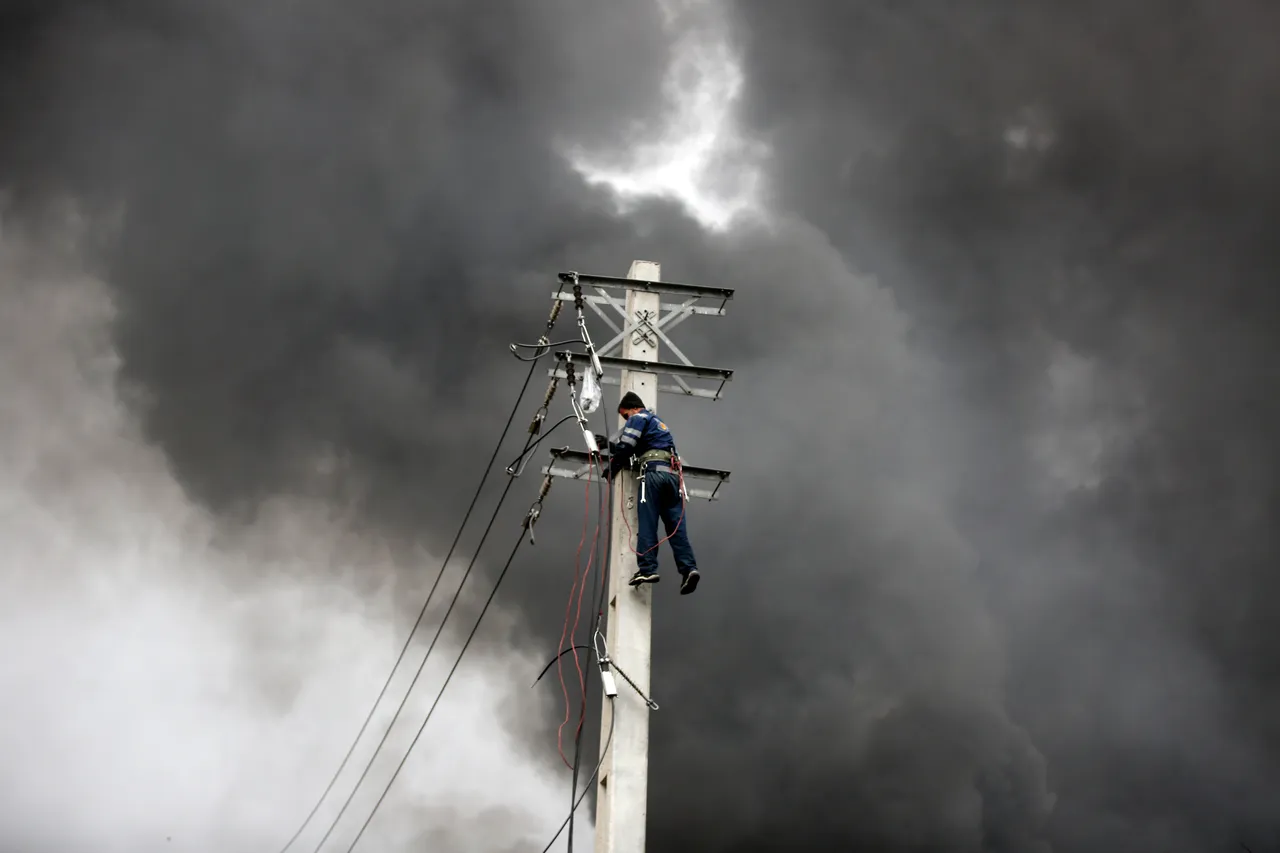
Iran’s power network comprises up to 5,000 large and medium substations spread across the country. The US can hit these substations, but it will create only localised blackouts that can be addressed swiftly.
“The US military certainly has the capacity to strike these facilities. But plunging the entire country into darkness would require hundreds of sorties and a sustained campaign,” Toga says.


Moreover, systematic attacks on civilian infrastructure carry “severe consequences” under international humanitarian law, he adds.
Gulf faces far greater risk
Toga “partially agrees” with online commentary suggesting that Iran consciously engineered an electricity grid decentralised enough to sustain a full-blown war.
“Iran’s grid is not the product of a single deliberate war-proof design project,” he says.
Instead, its current shape emerged from geography, crippling western sanctions that blocked large integrated projects, lessons of the Iran-Iraq War (1980-88), and the explicit post-1991 push for redundancy – a practice of designing power systems with backup components to ensure uninterrupted operation if the primary source fails.
“Iran did not deliberately build a fully distributed grid. But it has consciously tried to compensate for the vulnerabilities of its existing system through backup generation, distributed capacity, and passive protection measures at critical sites,” he says.
The result is a system that is “neither war-proof nor one that will collapse quickly – it sits somewhere in between”.
Major transformer stations and trunk lines remain chokepoints. Yet, the overall architecture demands far more than a handful of precision strikes to achieve nationwide blackout, he says.
There’s a stark difference between the design of the Iranian grid and those of Saudi Arabia, the UAE, Kuwait, Qatar, and Bahrain – countries that face the threat of retaliatory strikes if the US hits Iran’s power infrastructure.
“The electricity grids of Gulf countries are incomparably more centralised and fragile than Iran’s,” Toga says.
Generation in Gulf states depends overwhelmingly on a small number of mega-capacity gas- and oil-fired plants, many of them integrated with desalination facilities that produce both electricity and drinking water on the same site.
Population and infrastructure are along the coastline, creating a compact, highly visible target set.
“If just a handful of facilities are knocked out, millions of people lose both power and water,” Toga warns, noting that between 40 percent and 60 percent of drinking water across the Gulf nations comes from desalination.
Iran’s Revolutionary Guards (IRGC) still possesses hundreds of short- and medium-range missiles and unmanned aerial vehicles, he says.
The Gulf's opposite shore is only 200-300 kilometres away, which makes the question of range irrelevant.
“Iran may not be able to permanently destroy Gulf grids on its own, but strikes on even a few critical facilities could inflict disproportionate damage,” he says, adding that integrated water-electricity plants create a multiplier effect in both military and humanitarian terms.
Other experts have said as much.
According to Michael Spyker, an energy analyst and principal at Canada-based HTM Energy Partners, Iran has built a “particularly good” power grid and gas distribution networks, which are “nearly impossible to destroy”.
“Attacking a very hardened system like this, and opening the Gulf up to attacks on far more single-failure-point assets – seems wildly, wildly stupid,” he wrote in an X post.