The European Space Agency has successfully placed two satellites into orbit to improve monitoring of the climate crisis and its effects on plants and oceans.
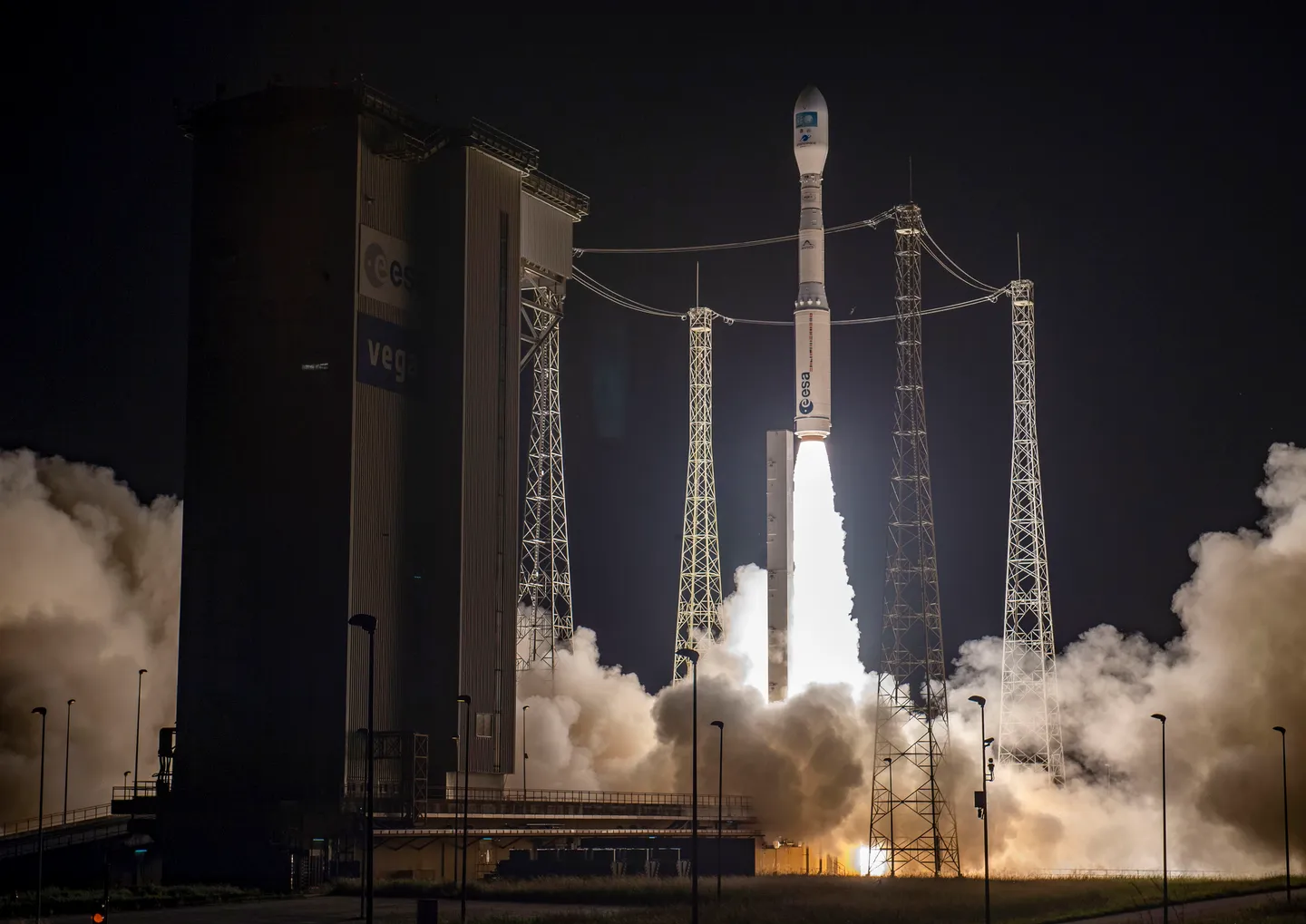
The European Vega-C rocket carrying the Flex and Sentinel-3C satellites lifted off from the Kourou Space Centre in French Guiana at 0121 GMT on Tuesday (10.21 pm local time on Monday).
The satellites were deployed into a sun-synchronous orbit nearly two hours after lift-off.
Flex, short for Fluorescence Explorer, will collect data on how heatwaves and other environmental pressures affect plants.








The satellite will monitor fluorescence, the faint red light emitted by plants during photosynthesis, to establish and quantify the relationship between plant stress and fluorescence, Flex programme head Thierry Huiban told AFP in April.
Sentinel-3C, part of the European Union’s Copernicus Earth observation programme, will monitor the marine environment, including sea-surface temperatures, wave heights and ocean currents.
It will also collect data on land use and vegetation, helping to improve agricultural yields and reduce the risk of food crises.
Simonetta Cheli, the ESA’s director of Earth observation programmes, said such missions were “essential” for understanding and responding to the climate crisis.