The killing of Nemesio Oseguera Cervantes, widely known as “El Mencho,” marks one of the most significant blows dealt by Mexican authorities to drug trafickers in years.
In terms of significance, El Mencho’s death is comparable to the arrests of Joaquín “El Chapo” Guzman in 2016 and Ismael “El Mayo” Zambada in 2024, both known cartel bosses.
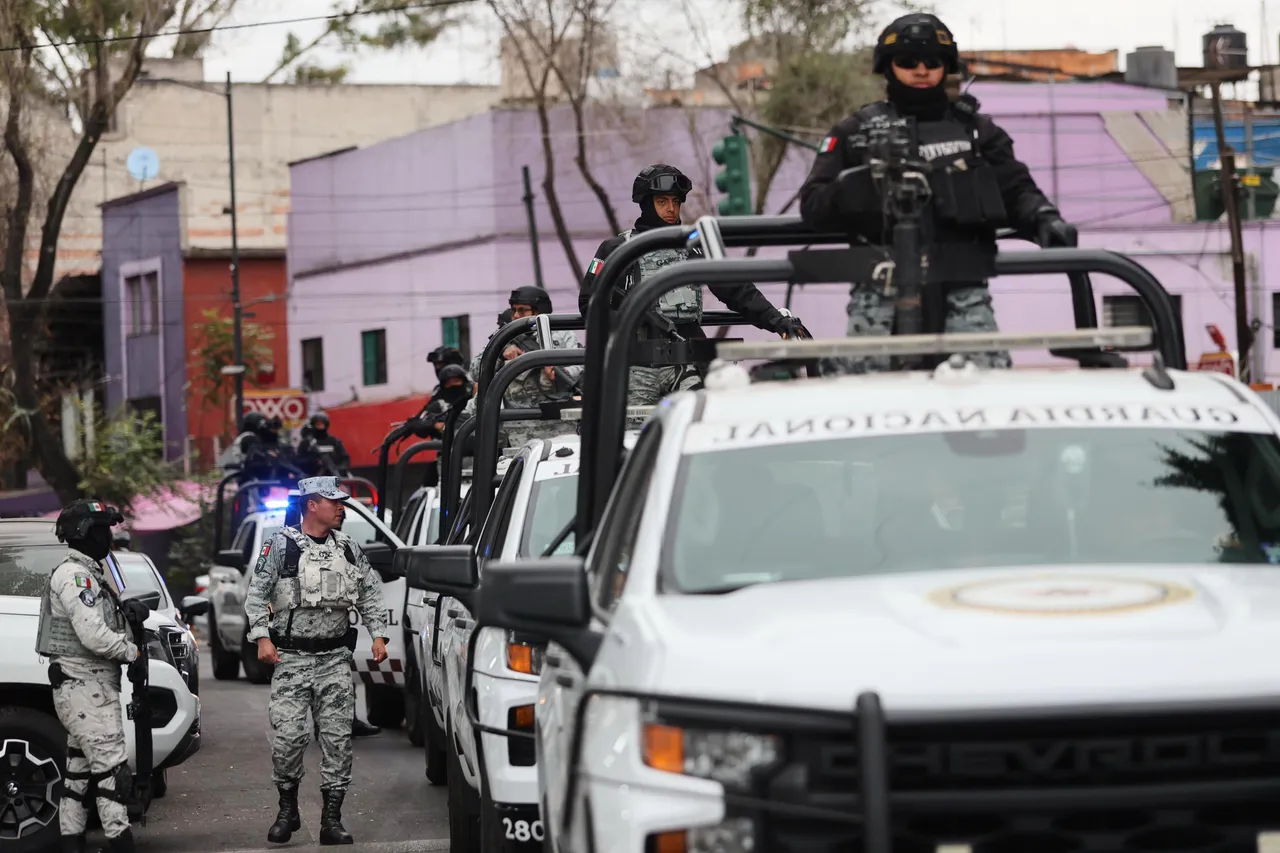
El Mencho’s death has descended several Mexican cities into chaos as his loyalists bombed and burned state and private property.
As the longtime leader of the Jalisco New Generation Cartel, El Mencho was considered among the most powerful and violent figures in Mexico’s criminal underworld.
His organisation rose to prominence in the aftermath of the weakening and fragmentation of the Sinaloa Cartel, once the country’s dominant drug trafficking network.
Following the extradition of key leaders of the Sinaloa Cartel, rival groups competed to fill the vacuum, with the CJNG ultimately emerging as a dominant force.
Capitalising drug routes
For decades, Mexico has been at the centre of an intensifying conflict centred around drugs that has claimed more than 400,000 lives since 2006, with over 125,000 people reported missing. Within this landscape, the CJNG has emerged as one of the most aggressive and rapidly expanding groups.
Cities such as Tijuana and Culiacan have witnessed heavily armed groups deploying improvised armoured vehicles in clashes with security forces, while civilians are often caught in the crossfire.
In several of these regions, the CJNG has been a key actor in escalating violence.
Mexico’s role as a key transit hub in the global trade of drugs fuels the violence. The CJNG has capitalised on drug routes, trafficking cocaine from South America, synthetic drugs such as fentanyl, and domestically produced methamphetamine to the United States and beyond.
In return, money and weapons flow back, sustaining a multi-billion-dollar illicit economy that empowers criminal organisations. The CJNG has used these resources to expand rapidly across multiple regions.
Cartels have entrenched themselves by recruiting young men from economically vulnerable regions, offering income and protection while expanding their influence through corruption within state institutions, including law enforcement and the judiciary.
The CJNG, in particular, has built its strength through aggressive recruitment and territorial expansion. The result is a system in which violence is persistent and fear widespread, with implications extending beyond Mexico’s borders.
Broader agenda







Over time, CJNG’s strategy evolved from primarily transporting drugs to actively controlling territory within Mexico. This shift has intensified clashes with rival organisations and contributed to a steady escalation in violence.
Territorial control has also reshaped how the CJNG generates revenue. Beyond drug trafficking, it relies on activities such as extortion, kidnapping and other forms of organised crime tied to the areas it dominates, requiring a larger and more structured presence on the ground.
This transition has driven the militarisation of cartels.
Earlier organisations, such as the Guadalajara Cartel, operated largely as trafficking networks focused on profit and logistics. In contrast, the CJNG has adopted a more hierarchical and operational structure to manage territory, personnel and resources.
The group now engages in sustained conflicts over land, often resembling internal armed confrontations rather than conventional criminal activity. Rival groups, rather than the state, are frequently its primary adversaries.
Use of technology on battlefields
As competition with rival groups intensified, the CJNG adopted new technologies and tactics. Its fighters deploy drones capable of carrying explosives, use improvised explosive devices and operate reinforced vehicles in both urban and rural combat.
Drones have become a central tool for the group. Once used mainly for surveillance, they are now deployed in attacks against rivals and security forces. Their low cost allows the CJNG to carry out strikes without exposing its members, often using simple impact-based methods rather than precise targeting.
Officials estimate that hundreds are used regularly along the border for reconnaissance and smuggling. Within Mexico, the CJNG has used drones to strike fortified positions, showing it can reach even protected sites.
Uncle Sam’s big guns
A major factor behind the cartel’s militarisation is the steady flow of firearms from the United States into Mexico.
An investigation by CBC News 60 Minutes estimated that hundreds of thousands of guns, roughly 200,000 to 500,000 each year, are trafficked across the border, in what analysts often describe as an “iron river” of weapons.
US investigations show that trafficking networks linked to the group acquire weapons through legal purchases using intermediaries, before moving them south into Mexico.
Some of these weapons, including semi-automatic rifles and .50 calibre firearms, have later been recovered at crime scenes in Jalisco and tied to CJNG operations. The case underscores how decentralised purchasing and easy access to firearms in the United States continue to supply the cartel with military-grade firepower.