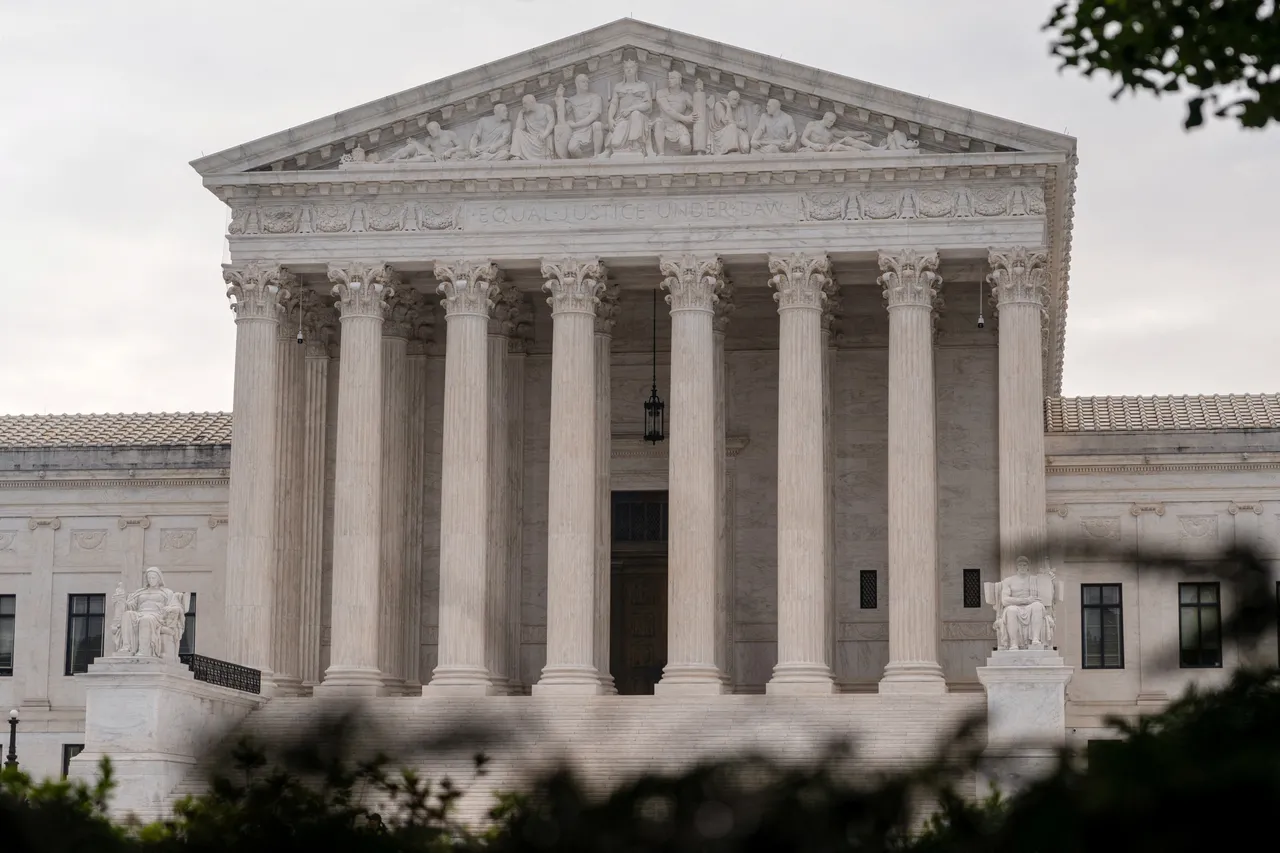
The US Supreme Court has ruled against President Donald Trump bid to restrict birthright citizenship in the United States — one of the top priorities on immigration — in a case involving a right that had long been woven into the fabric of American society.
Tuesday's order invalidated an executive order by Trump and backed lower courts which had blocked Trump's executive order directing US agencies not to recognise the citizenship of children born in the United States if neither parent is an American citizen or legal permanent resident, also called a "green card" holder.
The court, in an eagerly awaited decision on Tuesday — the final day of its term — ruled 6-3 to maintain the right to American citizenship for nearly everyone born on US soil.
The Supreme Court agreed in a majority opinion penned by Chief Justice John Roberts.
"Children born in the United States to parents unlawfully or temporarily present are 'subject to the jurisdiction' of the United States and are citizens at birth under the Fourteenth Amendment's Citizenship Clause," Roberts wrote.
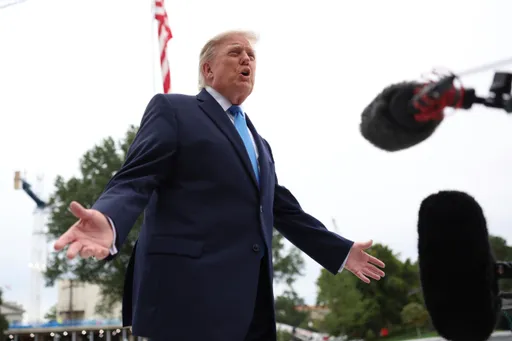
In an unprecedented move for a sitting US president, Trump personally attended oral arguments on birthright citizenship at the Supreme Court in April.
Trump stayed for the presentation by his solicitor general, John Sauer, but did not remain for the arguments of American Civil Liberties Union (ACLU) attorney Cecillia Wang, who defended birthright citizenship.
Challengers to Trump's order had argued that it violates language in the US Constitution's 14th Amendment that confers citizenship to those born in the United States who are "subject to the jurisdiction thereof."
Trump issued the order on his first day back in office last year as part of a suite of policies aimed at curbing both legal and irregular immigration.
The Supreme Court weighed in on what it means to be an American citizen just ahead of the July 4 holiday when the US marks the 250th anniversary of its founding.
Ahead of the ruling, some experts had estimated that Trump's directive could affect the legal status of as many as 250,000 babies born each year and could require the families of millions more to prove the citizenship status of their newborns.






14th Amendment
The legal challenge to Trump's directive considered by the Supreme Court, which has a 6-3 conservative majority, involved a class-action lawsuit filed in New Hampshire by parents and children whose citizenship was threatened by the directive.
The 14th Amendment has long been interpreted as guaranteeing citizenship for babies born in the United States, with only narrow exceptions such as the children of foreign diplomats or members of an enemy occupying force.
The provision at issue, known as the Citizenship Clause, states: "All persons born or naturalised in the United States, and subject to the jurisdiction thereof, are citizens of the United States and of the state wherein they reside."
The administration has asserted that the phrase "subject to the jurisdiction thereof" means that being born in the United States is not enough for citizenship, and excludes the babies of immigrants who are in the country illegally or whose presence is lawful but temporary, such as university students or those on work visas.
Citizenship is granted only to the children of those whose "primary allegiance" is to the United States, including citizens and permanent residents, the administration has argued.
Such allegiance is established through "lawful domicile," which lawyers for the administration define as "lawful, permanent residence within a nation, with intent to remain."
When the Supreme Court considered the case on April 1, Trump made history as the first sitting president to attend arguments before the top US judicial body, though he left midway through, not long after the lawyer arguing against the administration had begun.
During the arguments, Sauer, representing the administration, argued the promise of citizenship for virtually any baby born on US soil has spawned what he called a sprawling industry of "birth tourism."
Sauer claimed that "uncounted thousands of foreigners from potentially hostile nations have flocked to give birth in the United States in recent decades" to secure citizenship for their children. Asked to explain how serious an issue "birth tourism" has become, Sauer primarily cited media reports and conceded that "no one knows for sure."
The 14th Amendment was ratified in 1868 in the aftermath of the Civil War of 1861 to 1865 that ended slavery in the United States, and overturned a notorious 1857 Supreme Court decision that had declared that people of African descent could never be US citizens.