The EU has said that the energy price crisis "will not be short-lived," even as Iran moves to reopen the Strait of Hormuz following a ceasefire agreement.
European Commission spokesperson Anna-Kaisa Itkonen said on Wednesday the easing of immediate tensions in the key maritime corridor does not signal a quick return to stable energy markets.
"Broadly speaking, we should be under no illusion that this crisis that currently impacts high energy prices will be short-lived. It will not be," she told reporters at the midday briefing.
Her remarks came after Iran agreed to reopen the Strait of Hormuz as part of a temporary de-escalation following weeks of military confrontation.
Despite the development, Itkonen stressed that the disruption has already exposed the vulnerability of global supply chains and is likely to have lasting effects.
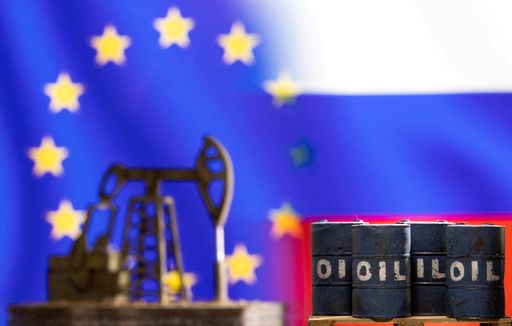
Around 8.5 percent of the EU's liquefied natural gas (LNG) imports pass through the strait, while roughly 7 percent of its oil comes from countries in the region, such as Iraq, Kuwait, Saudi Arabia and the United Arab Emirates, she said.
The dependency is even higher for refined fuels, with about 40 percent of the bloc's jet fuel and diesel imports linked to the route.
"Globally, the Strait transports or transits 20 percent of both oil and LNG, respectively. So, it's a very, very important choke point," Itkonen noted, adding that recent shipping restrictions have already had a visible effect on markets.
The developments follow a decision by US President Donald Trump to suspend strikes against Iran for two weeks, shortly before a deadline he had set for Tehran to reopen the waterway and engage in negotiations.
Regional tensions escalated after US and Israeli attacks against Iran on February 28, triggering retaliatory strikes by Tehran that targeted Israel and countries hosting US military assets.