A network of social media accounts, mostly based in India, was paid to spread dozens of seemingly spontaneous street-interview videos supporting Democratic US Representative Haley Stevens during an August primary for a US Senate seat in Michigan, The New York Times has reported.
The report said at least three dozen clips showing purported voters discussing issues such as affordability appeared on US social media platforms X, Facebook and Instagram and were viewed millions of times.
It said posters were reportedly paid $1 to $5 per thousand views, while the videos were presented as organic content.
Two disinformation research groups, Antibot4navalny and Clemson University’s Media Forensics Hub, traced the activity.
Antibot4navalny tracked 28 X accounts that generated more than 7 million views, while Clemson researchers said some accounts had previously been linked to Chinese bot networks.
A Mumbai-based operator identified as Ayush Jain told the American newspaper he earned about $15 per post for roughly 40 posts.






He said the work came from Lumina Clippers, a firm registered in the US state of Pennsylvania and run by Irish national Rhys McKay, who acknowledged the company’s role but declined to name its client, citing confidentiality.
Who funded the operation remains unclear.
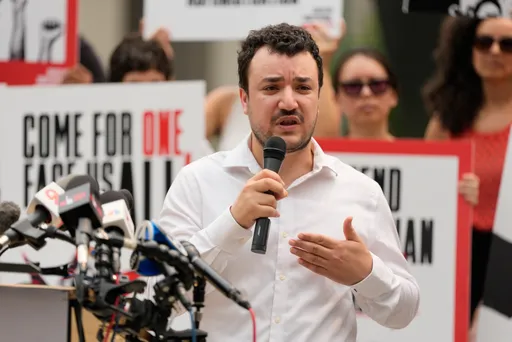
The report noted that it appeared likely tied to groups seeking to help Stevens defeat Abdul El-Sayed, who won the August 4 Democratic primary and will face Republican Mike Rogers in the November general election.
Caitlin Legacki, a former consultant for her campaign, said Stevens was certain the campaign had no involvement in the operation.
Outside groups provided about $60 million in backing for Stevens, according to media tracking firm AdImpact.
Similar tactics have reportedly surfaced in races in Los Angeles and the state of Ohio, reflecting a shift in campaign strategy as voters increasingly tune out traditional political advertising.