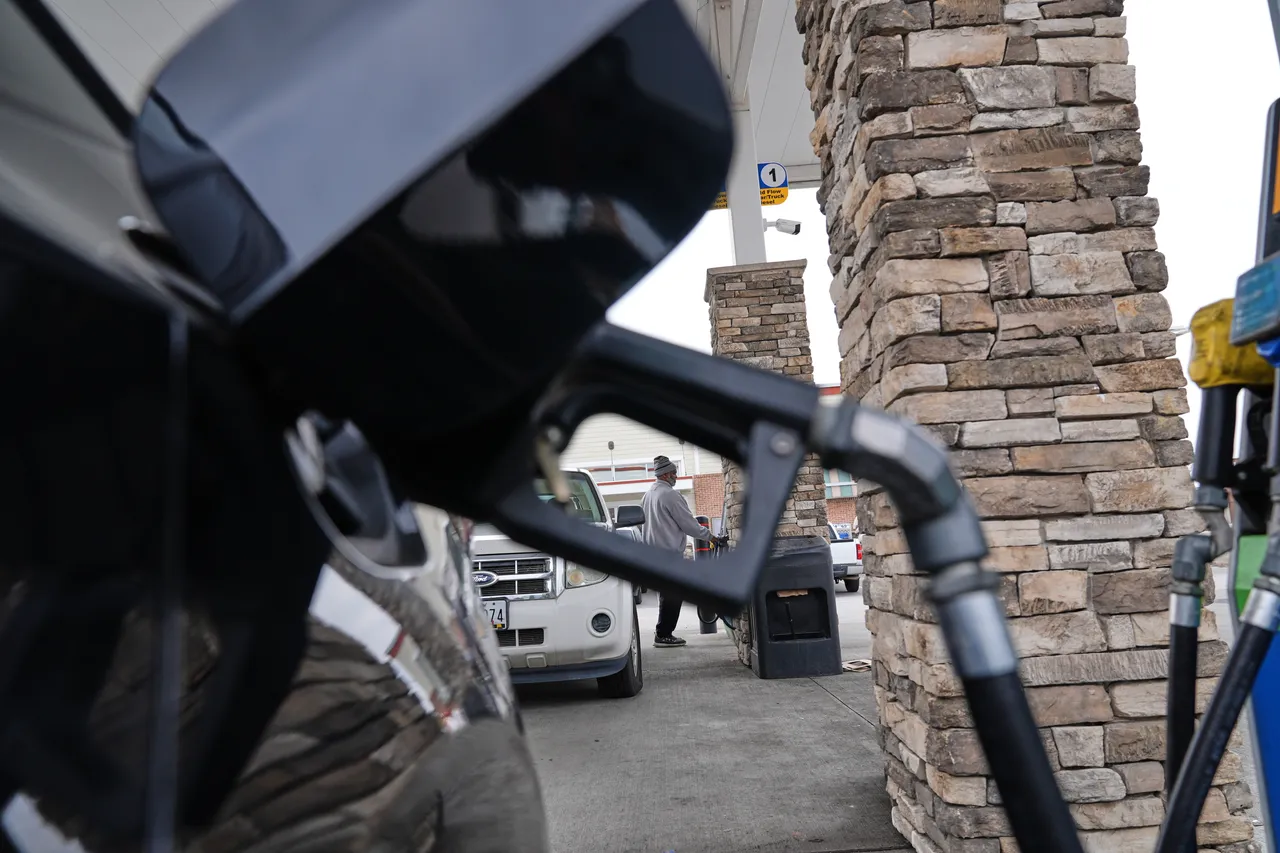
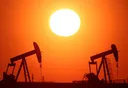
The average price of fuel in the country has again exceeded four dollars per gallon (3.785 litres) for the first time in four years, and diesel has reached $5.50 per gallon, while before the war it was $3.76.
Since the end of February, gasoline prices have risen by more than a dollar, making this one of the sharpest increases in decades. Not only gasoline but also diesel prices are rising, which means the cost of delivery, shipping, and, ultimately, virtually all goods is rising.
The average price of fuel in the country has again exceeded four dollars per gallon (3.785 litres) for the first time in four years, and diesel has reached $5.50 per gallon, while before the war it was $3.76.
Since the end of February, gasoline prices have risen by more than a dollar, making this one of the sharpest increases in decades. Not only gasoline but also diesel prices are rising, which means the cost of delivery, shipping, and, ultimately, virtually all goods is rising.
‘Rising prices will mean ruin for Republicans’
The sharp rise in fuel prices in California since the war with Iran began is already impacting daily life and stymying the transportation sector, Ibrahim, a native of the North Caucasus who lives in California and works in the trucking industry, tells TRT in Russian.
"Right after the war started, fuel prices skyrocketed. Before the war, gas in California was about $4.50 a gallon; now it's $6-7, and in some places it's as high as $7.50. The talk about how this doesn't affect us has nothing to do with reality. It certainly does; you feel it every day," says Ibrahim.
According to him, the first to feel the blow were carriers, who found themselves in a situation where operating became unprofitable.
"Transport companies are simply sitting there in shock, not knowing what to do. Fuel is expensive, but freight rates aren't being raised. Many are finding it more profitable to simply stand idle than to operate at a loss," he adds.
He notes that tariff containment is a temporary measure that will inevitably be followed by price increases throughout the entire supply chain.
"They're deliberately not raising shipping prices right now. Because that would immediately push up prices for groceries, building materials—everything. But that won't last long. If this continues for another couple of weeks, food prices will start to rise too."
Speaking about public reaction, he emphasises that discontent affects, among others, Trump's supporters and is already influencing internal processes.
"Many of his constituents are in complete shock right now, and he understands it. That's why the wave of dismissals has begun. I think it will soon reach the Secretary of War, too. There's a noticeable split in the military right now: it traditionally supports the Republicans, but now there's a division within—those for Trump and those against him. And respected generals are speaking out against him," he says.
According to his assessment, further price increases could directly impact the outcome of the elections.
"As soon as food prices rise, it will mean problems for Republicans in the Senate and Congressional elections. That's why they're doing everything they can to prevent that, including curbing freight rate increases. Hence, the constant claims that 'a deal is just around the corner'—it's an attempt to influence the market and drive down oil prices," Ibrahim concludes.
Despite rising fuel prices, California hasn't yet seen a noticeable increase in food prices, and the crisis's impact on everyday expenses remains limited, a California resident and native of North Ossetia named Aslan tells TRT in Russian.

"I wouldn't say there's been a significant jump in food prices. At least in California, as one of the largest agricultural regions, prices remain roughly the same. Intrastate logistics aren't very expensive, so there aren't any overpayments. There's no need to skimp on food—there's no noticeable shift in food prices yet," says Aslan.
At the same time, according to him, the fuel situation is evolving differently and changing almost daily.
"Fuel prices are rising rapidly. Since the war began, the price of a gallon has increased by more than a dollar. Sometimes you fill up at one price in the evening, and in the morning it's 10-20 cents higher. The last increase was about a week ago, and now the price has held—surprisingly long, for about a week now," he says.
He notes that for those whose work is directly related to the road, rising prices have already become a noticeable daily burden.
"I work in delivery, driving about 300 miles daily. Now I have to pay about $10 a day extra for gas. While I used to not look for cheap gas stations and could stop at any, now I focus on price—I choose the cheapest one," he adds.




Speaking about the political reaction, he emphasises that Trump's statements are not taken seriously by a significant part of society.
"Many don't take Trump and his rhetoric seriously. A week ago, large-scale rallies against his policies—both domestic and foreign—took place across the country. The signs were quite harsh, openly critical and even calling for impeachment," he says.
At the same time, in his assessment, outside of the fuel factor, no serious changes have yet occurred in everyday life.
"Aside from rising gasoline prices, other price hikes and any serious difficulties in everyday life are not currently being observed," he concludes.
‘Far from war, but not from fear’
Rising fuel prices in the US are already a noticeable burden for middle-income households, and, along with economic pressure, comes a growing sense of insecurity, says Ruslan, a New Yorker and native of the Chechen Republic.
"For anyone who owns a car and pays for fuel, their expenses are rising. For some, it's quite significant: if some of our guys earn around $3,000–$4,000 a month, and you start spending an extra $200–$300 on gas, that's already around 5–10% of your income," Ruslan TRT in Russian.
According to him, rising fuel prices will inevitably lead to higher prices for other goods, despite attempts to curb them.
"It's clear that Trump is now playing a 'dance with tambourines,' literally telling us in his ritual statements several times a day how deeply, and now, Iran has been completely defeated. Perhaps this, along with regulatory measures, is somehow holding back price increases for everything, but we understand that when fuel prices rise, everything else must rise too. We're gradually stocking up on what won't disappear right away," he says.
He notes that what is happening affects not only the economy, but also the feeling of security and freedom.
"Besides the rising cost of living, for me personally and my family, the issue of safety and freedom is once again becoming relevant. You don't know if they'll want to strip you of your citizenship because ICE officers photographed you at an anti-Trump protest," he notes.
He emphasises that the experience of emigration makes these feelings especially acute.
"In 2014, I left Russia with my family due to pressure related to my human rights work. It was here that I felt safe for the first time. But now, with Trump's return, that feeling is under threat again. I find myself looking around again—just like then," Ruslan says.
According to him, even when far from the conflict zone, people continue to feel its psychological pressure.
"We've moved away from the wars, but the feeling of war lingers. It seems far away, but at the same time it feels very close," he concludes.
For some in society, what's happening appears to be the inevitable price of US global leadership. For others, it's a situation in which domestic interests are subordinated to foreign policy priorities, and the economic burden falls on ordinary citizens.
But those for whom war is not an abstraction are feeling the current situation particularly acutely.
Those from Russia and other post-Soviet countries see familiar scenarios in what's happening: rising prices, sanctions pressure, political tension. For them, this isn't just another crisis, but a repeat of an already-lived experience—only in a different country.
It is their voices—those who have already fled war or its consequences—that today make it possible to see how a “distant” conflict is becoming part of the domestic reality of the US, influencing not only prices but also perceptions of the future.