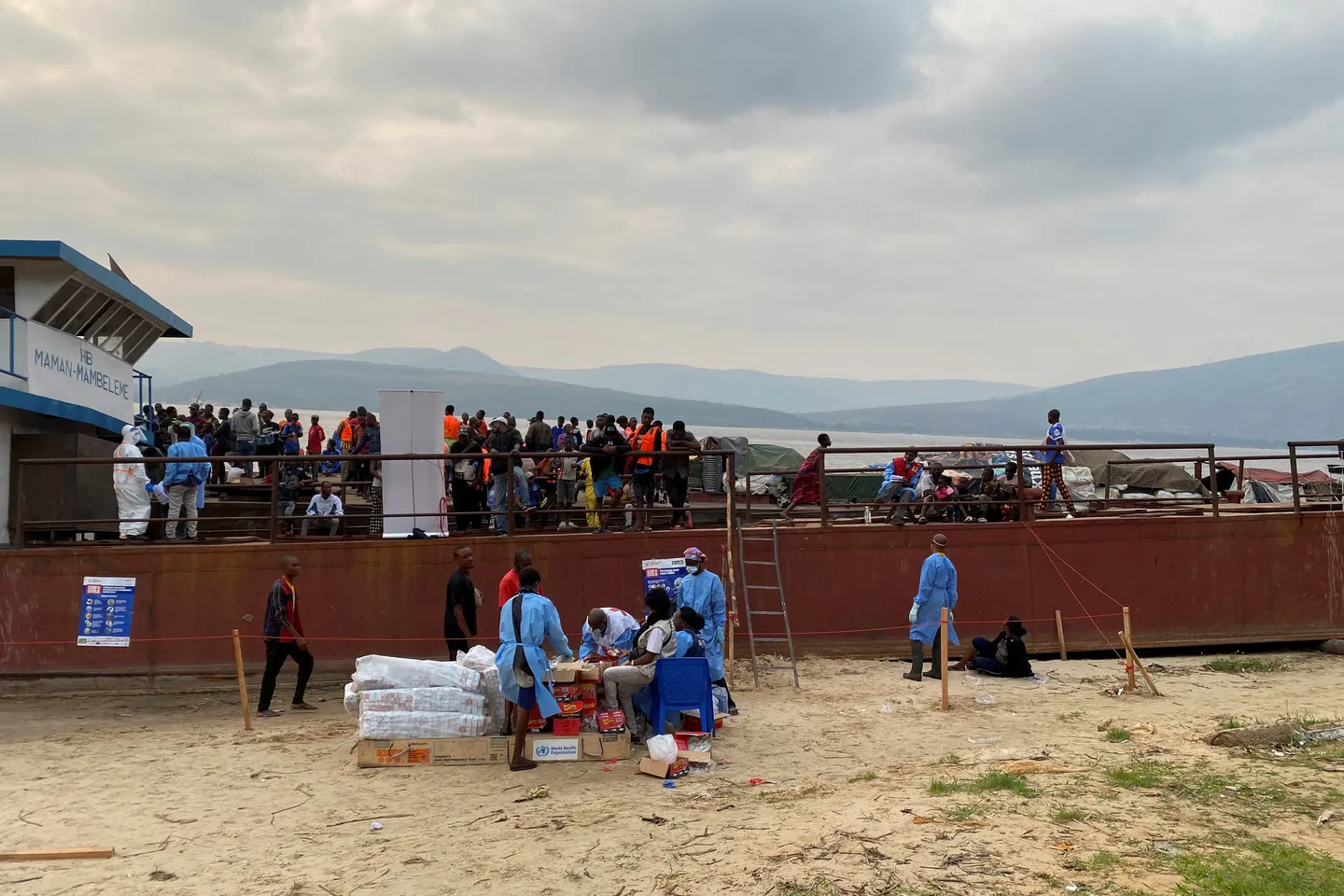
The number of health zones affected by Ebola in the Democratic Republic of the Congo has risen to 61 across six provinces after the virus spread to the Kayna Health Zone in North Kivu province, the World Health Organization’s Africa office said in a situation report late on Tuesday.
At least 6,686 cases, including 3,226 deaths, have been recorded since the outbreak began in mid-May, according to the report.
WHO said the epidemiological pattern of the Bundibugyo virus strain outbreak was becoming increasingly heterogeneous, with transmission trends diverging across affected provinces and health zones.
“The trends reinforce an increasingly heterogeneous epidemic, with declining transmission in some areas occurring alongside intensification and continued geographic spread elsewhere,” the report said.
The affected provinces are Haut-Uele, Ituri, North Kivu, South Kivu, Bas-Uele and Tshopo.
Ituri remains the main focus of the outbreak, while substantial transmission continues in North Kivu and Haut-Uele and new areas continue to be affected.





WHO also highlighted the rising proportion of deaths occurring within communities.
Between August 31 and September 6, the proportion of confirmed deaths occurring in communities reached 75 percent, up from 56.6 percent two weeks earlier.
The report said persistently high community mortality could reflect several barriers, including delays in detection, notification and transfers to treatment facilities, limited recognition of the illness, transport and geographical challenges, and a lack of community trust.
“This divergence is concerning, as the increase in community deaths alongside the continued decline in treatment facilities deaths indicates that the earlier reduction in overall mortality has not been sustained,” it said.
The government of DRC and health partners last week launched a revised 180-day multisectoral response plan worth $1.3 billion aimed at breaking chains of transmission.
The plan calls for a major expansion of epidemiological surveillance, contact tracing, community engagement, risk communication and logistical capacity, as well as preparedness measures in at-risk provinces.