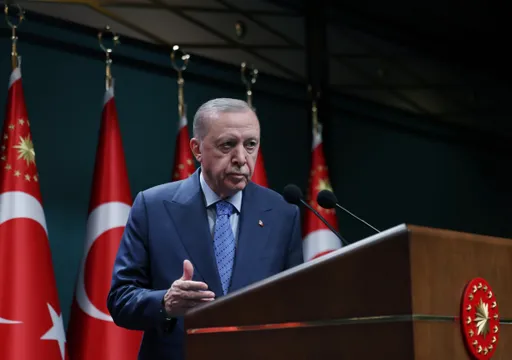
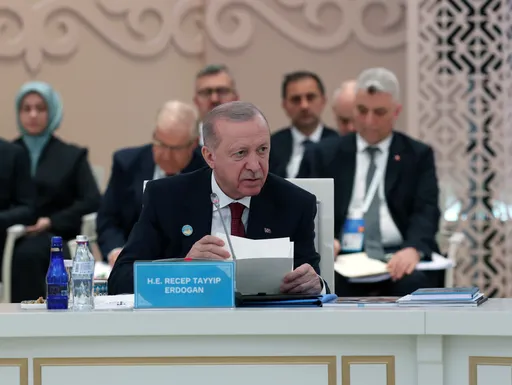
Chinese President Xi Jinping arrives in New Delhi for a BRICS summit alongside leaders from India, Russia and Iran, as wars in Ukraine and Iran, border disputes, trade and energy test the divided grouping.
The conflicts in the Middle East and Ukraine, along with global trade turbulence and energy security, are expected to dominate the two-day meeting of the 11-nation bloc.
But Xi's visit on Saturday will also be closely watched as his first to neighbouring India since 2019, and the biggest step yet in a cautious thaw between the nuclear-armed rivals.
His arrival comes six years after a deadly 2020 military clash along their disputed border in India-administered Kashmir, with ties gradually improving through restored flights, visas and high-level contacts.
The 2020 China-India military clash was a violent, hand-to-hand battle in the Galwan Valley of eastern Ladakh region of India-administered Kashmir that killed 20 Indian soldiers and four Chinese soldiers.

Beijing said on Friday it was "ready to work with India... by strengthening communication, enhancing cooperation, and properly handling differences".
The underlying territorial dispute remains unresolved, and both sides retain heavy military deployments along the high-altitude border between India-administered Kashmir and Chinese-controlled Aksai Chin.
Xi is due to hold face-to-face talks with Prime Minister Narendra Modi later on Saturday, according to New Delhi's foreign ministry.
"They are looking for 'early and substantial harvest' when it comes to the border issue," said Pradeep Taneja, a China-India expert at the University of Melbourne.
"You cannot have a buildup of your forces on the border... but at the same time say 'we should continue to have people-to-people relations and economic relationships.'"


Deep mistrust remains, with their contested Himalayan frontier, a widening trade deficit and strategic rivalry still complicating ties.
'Big constraint'
BRICS was created in 2009 as a forum for major emerging economies seeking greater influence in institutions dominated by Western powers.
As well as Iran, BRICS includes Saudi Arabia and the United Arab Emirates — countries with sharply differing positions on the war launched by the United States and Israel in February.
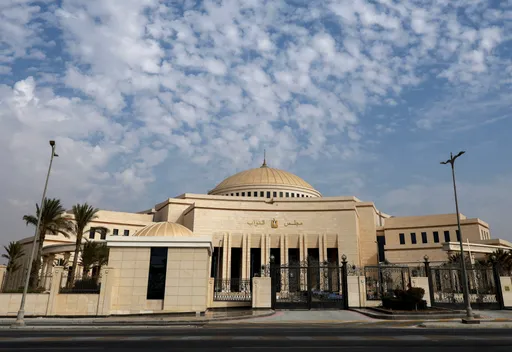
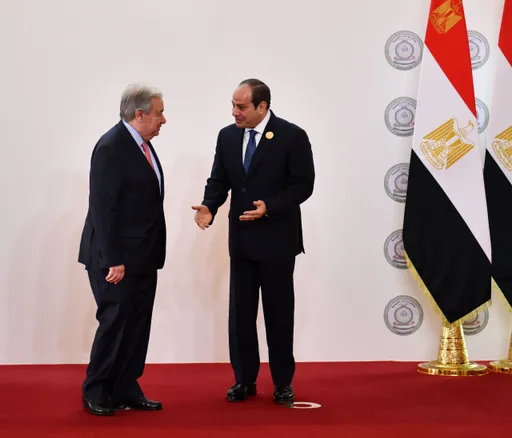
UAE President Mohamed bin Zayed Al Nahyan, Saudi Foreign Minister Prince Faisal bin Farhan and Egyptian President Abdel Fattah el Sisi are also to attend.
Brazil is representated by Foreign Minister Mauro Vieira, with President Luiz Inacio Lula da Silva campaigning for a fourth term in October elections.
BRICS foreign ministers failed to agree on a joint statement when they met in New Delhi in May.
"The Gulf conflict is going to be the central fault line this time during the BRICS summit," said Harsh V. Pant of India's Observer Research Foundation.
"What was seen until last year as an achievement — the expansion of BRICS — today looks like a big constraint on BRICS," Pant said.