 Kemal Inat
The European Parliament's latest Türkiye report highlights the contradiction between Europe's strategic dependence on Türkiye and Brussels' persistent habit of lecturing it.
The European Parliament's 2025 report on Türkiye has sparked frustration in Ankara because of what Turkish officials see as its critical and unbalanced tone.
The timing is particularly striking.
The report was adopted just as the EU has been seeking to improve relations with Türkiye, following a period of tensions between 2016 and 2020 and a recent return to more constructive engagement.
Russia's military offensive in Ukraine and the resulting security challenges pushed the EU to deepen cooperation with Türkiye.
Since US President Donald Trump's return to the White House in early 2025, Türkiye’s strategic importance to Europe has grown even further.
Trump's increasingly distant approach toward traditional European allies, coupled with his efforts to improve relations with Russian President Vladimir Putin, has intensified Brussels' search for reliable security partners.
In this context, Türkiye — a long-standing member of both NATO and the Council of Europe — is viewed by many European governments as an indispensable pillar of European security.
Why Ankara rejects EU criticism on the Cyprus issue
What undermined relations between Türkiye and the EU was Brussels' reluctance to advance Türkiye’s long-standing membership bid, often for reasons Ankara viewed as cultural rather than political.
When German Chancellor Angela Merkel and French President Nicolas Sarkozy, leaders of the EU's two most influential member states, openly opposed Türkiye’s accession in the mid-2000s, Ankara's motivation to pursue membership weakened significantly.
The optimism that had characterised Turkish-European relations during the era of German Chancellor Gerhard Schröder gradually gave way to growing mistrust and frustration.
Developments surrounding Cyprus island after 2004 further reshaped Türkiye’s perception of the EU.
The Greek-administered Southern Cyprus was admitted to the EU even though 75 percent of Greek Cypriot voters had rejected the UN-backed Annan Plan in a referendum held on both sides of the island in April 2004.
By contrast, 65 percent of Turkish Cypriots supported the proposal. For many in Türkiye, the decision raised questions about Brussels' commitment to a fair and lasting settlement of the Cyprus dispute.
The EU's continued restrictions on the Turkish Cypriot community, despite its support for the UN plan, reinforced these doubts.
Since then, Ankara has viewed European involvement in the Cyprus issue with increasing scepticism.
From the Turkish perspective, admitting the Greek Cypriot administration to the EU, despite its rejection of the proposed settlement, effectively made Brussels a party to the conflict rather than an impartial mediator.
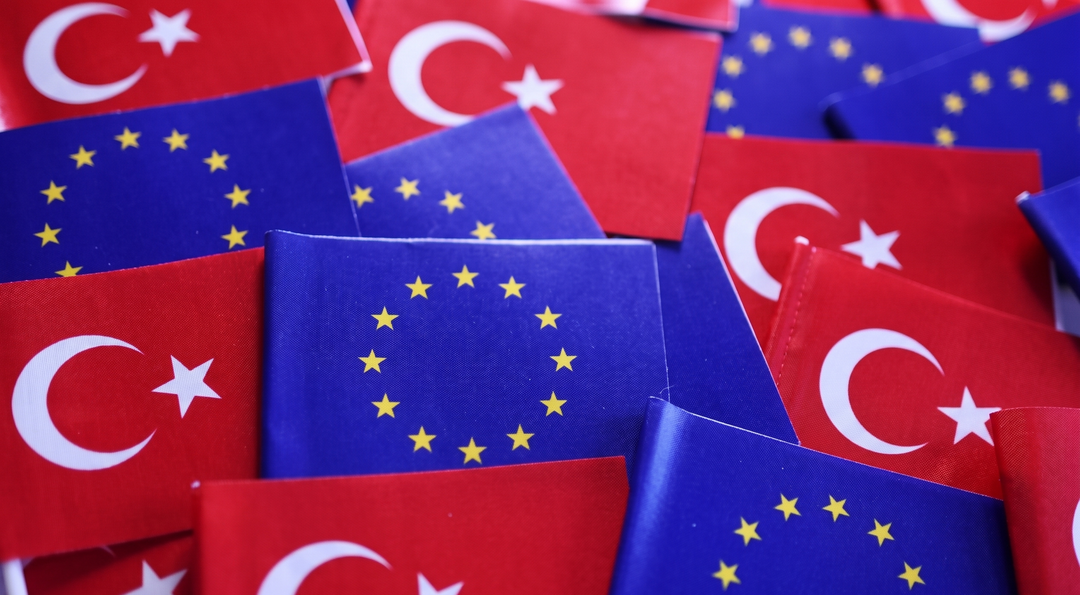
Understanding Ankara's reaction to the European Parliament's latest criticism over Cyprus requires this historical context.
For many years, Türkiye supported efforts to reach a comprehensive settlement on the island. Today, however, Ankara advocates a two-state solution, arguing that the EU's approach has undermined the prospects for a mutually acceptable agreement.
From Türkiye’s perspective, Brussels aligned itself with the Greek Cypriot side during negotiations, overlooked Turkish Cypriots' security concerns, and maintained restrictions on the Turkish Cypriot community despite its support for the UN-backed settlement plan.
These developments played a key role in shaping Ankara's current position.
At the same time, Türkiye argues that some EU member states have used the Cyprus issue as a political tool to obstruct its accession process.





According to this view, the politicisation of Cyprus has not only contributed to the deadlock on the island but has also further strained relations between Türkiye and the European Union.
Why the EP report is not being accepted in Türkiye
The European Parliament's sharp criticism of Türkiye’s judicial system is viewed in Ankara as part of a long-standing pattern of European interference in the country's internal affairs and is therefore largely dismissed.
More broadly, EU criticism regarding the rule of law and human rights is often rejected in Türkiye’s for three main reasons.
The first is what many in Türkiye see as a lack of consistency in the EU's approach.
For critics in Ankara, the case of Israel illustrates why Brussels' human rights criticisms are no longer viewed as entirely credible.
They argue that the EU has continued to support Israel despite the genocide it has committed in Gaza, the grave human rights violations in the occupied West Bank, and the unlawful attacks on countries such as Lebanon, Syria, Iran, and Qatar
From this perspective, the reluctance of some EU member states, particularly Germany, to support sanctions against the government of Israeli Prime Minister Benjamin Netanyahu reinforces the perception that Brussels applies human rights and international law selectively.
As a result, many in Türkiye see the EU's criticism of other countries on these issues as undermined by accusations of double standards.
The second reason is that, from Ankara's perspective, EU criticism has lost much of its political relevance because Türkiye’s accession process has effectively been frozen since 2018.
As long as the EU does not offer a credible path toward membership and is not viewed as an impartial actor, its assessments and recommendations are unlikely to gain significant traction in Türkiye.
The third reason concerns what Ankara sees as the interventionist approach of certain EU member states, particularly Germany and France.
Turkish officials argue that relations between states should be based on mutual respect for sovereignty and non-interference in domestic affairs.
On that basis, Ankara rejects both criticism of Türkiye’s judicial system and calls for sanctions against Turkish officials, emphasising the independence of the country's judiciary.
The EU must adapt to new realities
Although the European Parliament's report on Türkiye is not legally binding, as EU foreign policy is ultimately determined by the European Council, the European Commission and member states, its adoption by a large majority reflects the persistence of deep reservations about Türkiye within parts of the Union.
It also suggests that some European actors remain more inclined to rely on pressure and sanctions than engagement.
Yet the changing geopolitical landscape calls for a more pragmatic approach.
As Europe confronts mounting security challenges, Türkiye’s role in defence, migration management, trade and regional diplomacy has become increasingly important.
Rather than further alienating a strategically significant partner, Brussels should seek a framework for cooperation that reflects these new realities.
This article was first published on TRT Deutsch