 Zeynep Conkar
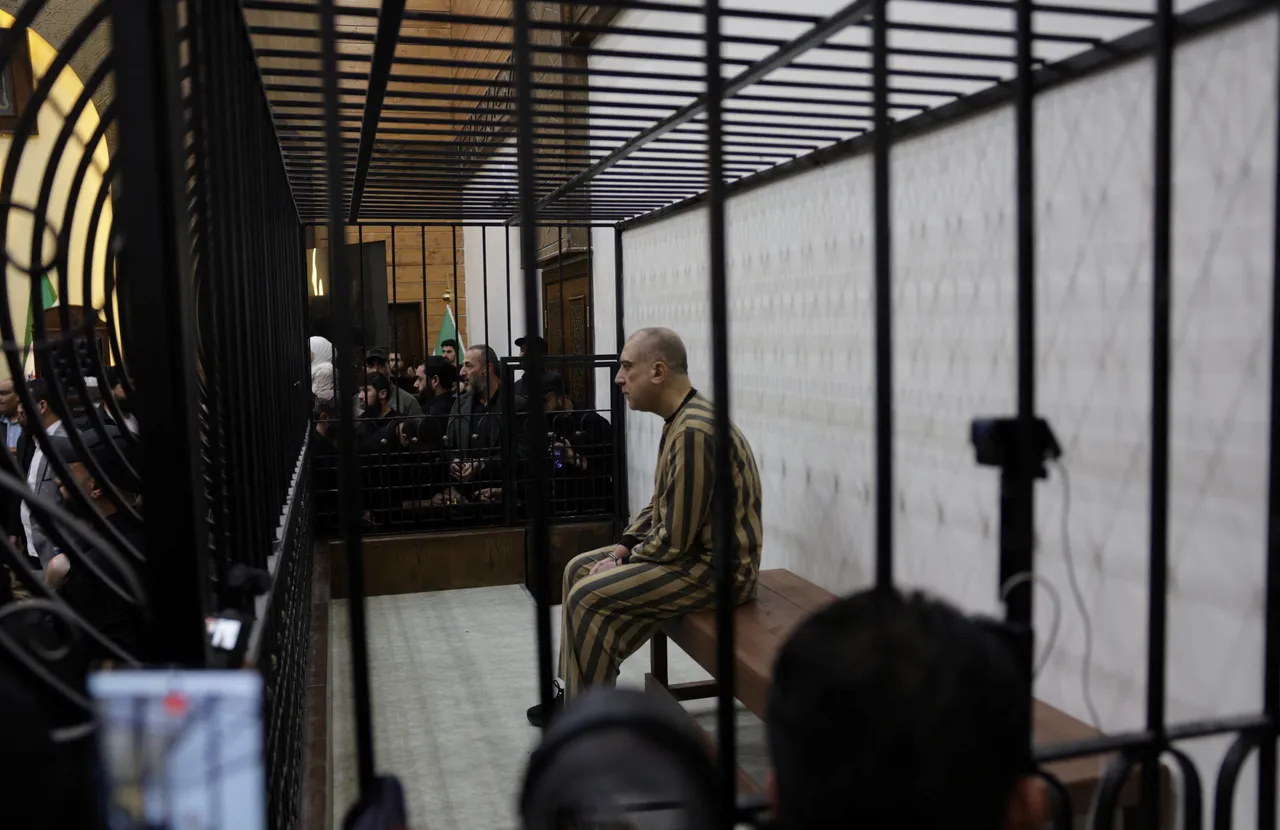
Last week, a disgraced former brigadier general in a striped prison uniform stepped into an iron cage at Damascus's Palace of Justice.
Atef Najib, who once declared "I am god in Daraa," before killing his victims, was finally where Syrians had long dreamed of seeing him: behind bars, answering for his crimes, becoming the first official of the ousted regime to face a public trial inside Syria.
The long-awaited trial began 16 months after the authoritarian regime of Bashar al Assad was overthrown in a lightning-quick operation by opposition forces. The ousted leader fled to Moscow with his wife and children besides his brother Maher.
Najib, a cousin of Bashar al Assad and the architect of one of the uprising's earliest and most savage crackdowns, ran a security branch that snatched children off the streets, subjected them to electric shocks and mutilation, and returned their broken bodies to their families weeks later.
Facing him, placed on a panel in the courtroom, was a photograph of Hamza al-Khatib, the 13-year-old from Daraa whose tortured body became the defining symbol of Syria's uprising.
The presiding judge, Fakhr al-Din al-Aryan, opened the session with the words: "Today we begin the first trials of transitional justice in Syria."
Al-Aryan had himself been sentenced to death in absentia by the Assad regime after publicly defecting from Syria's judiciary in 2013. He had spent over a decade in exile before returning after Assad's fall to head the very court now trying the oppressive regime's men.
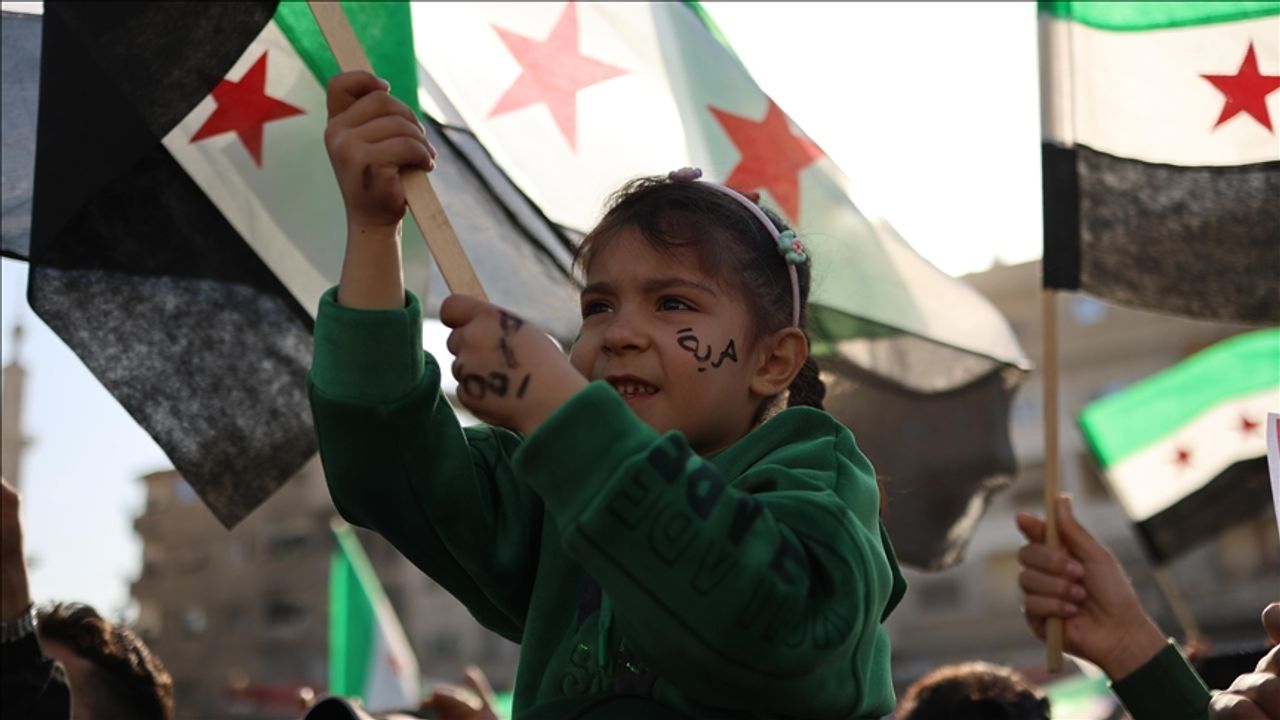
Crowds gathered outside the court in celebration, as families of victims, including some from Daraa, attended the session. Many in attendance, who had been wanted by security forces under Assad only a few years ago, now found themselves witnesses to a long-awaited moment of accountability.
For many Syrians who spent years in exile with little more than a distant hope of return, the sight of former regime officials in the dock is a turning point, according to Nedal al Amari, a political activist from Daraa.
"I never expected that this day would come. For years, I used to tell myself that my only dream was to one day be buried in Syria after I die, that was the most I allowed myself to hope for,” Al Amari tells TRT World.
“But seeing the criminals behind the bars of a Syrian courtroom changed something in me. It made me truly believe, for the first time, that justice will prevail, no matter how long it takes, no matter the cost.”
“This moment felt like the beginning of something I had stopped believing was possible."

What comes next
Sunday's session was preparatory and only a beginning for long-awaited justice.
Najib is expected back before the court on May 10, when substantive proceedings begin. But he will not be alone for long.
A judicial source told AFP that future in-person trials will include Wassim al Assad, another relative of the ousted president, former grand mufti Ahmed Badreddin Hassoun, as well as military and security officials arrested by the new authorities in recent months.
Bashar al Assad himself, along with his brother Maher, the former commander of the Syrian military's 4th Armoured Division, are charged in absentia, accused of killings, torture, extortion, and drug trafficking.



For some, no verdict inside a Damascus courtroom will feel complete until the man at the top of the chain of command is physically brought back to face it.
"For me, there is only one measure of success: that everyone who participated in the killing of the Syrian people is brought to account; every officer, every official, every person who gave an order or pulled a trigger,” Al Amari says.
“Beyond Syria's borders, I want to see Russia hand over Bashar al Assad. As long as he sits comfortably in Moscow, the process will always feel incomplete.”
“Justice cannot be declared finished while the man most responsible for the deaths of hundreds of thousands of Syrians remains free," Al Amari adds.
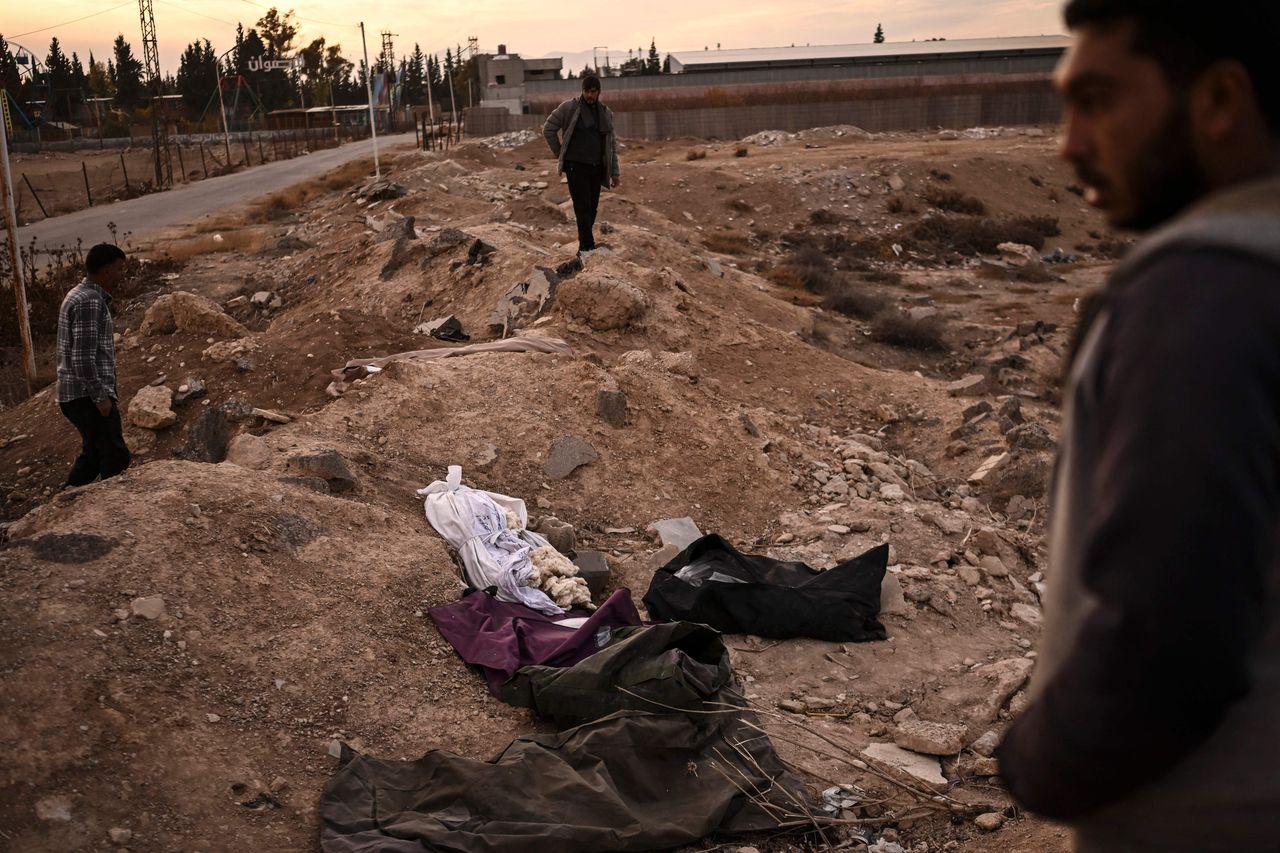
Days before the trial opened, Syrian authorities arrested Amjad Yousef, the main suspect in the 2013 Tadamon massacre in Damascus, in which at least 41 people were killed.
A leaked video appeared to show Yousef shooting civilians who had been detained and blindfolded, with their hands bound. His arrest signals that the net is widening beyond high-profile political figures to reach those with documented evidence of atrocities.
Justice on trial
The proceedings arrive with enormous expectations and growing momentum. The Syrian Network for Human Rights has documented at least 177,000 cases of enforced disappearances since 2011, and Sunday's session marked the first concrete step toward answering for them.
Al Amari, while welcoming the moment, tempers his expectations and calls for answers on the fate of more than 150,000 people who vanished into the regime’s detention system.
"Honestly, the first session was not at the level we had hoped for, it felt more like a presentation, a formality. But I completely understand that, and I don't say it as a criticism.”
“Syria is rebuilding its entire justice system from the ground up, and that takes time. What matters is that it has started. And when I say justice, I don't mean money, no one is really looking for financial compensation,” Al Amari says.
Syrians believe that lasting accountability must go beyond the courtroom, encompassing truth-seeking, reparations, and institutional reform alongside criminal prosecution.
“What people want is the truth. There are more than 150,000 Syrians who went missing under the regime and have never been accounted for. We still know nothing about them, nothing about where they are or what happened to them,” Al Amari says.
“Five of my own cousins are among them. For their families, the truth is everything," he adds.
President Ahmed al-Sharaa's government has been laying the groundwork since the early months after Assad's fall, establishing both a National Commission for Transitional Justice and a separate Missing Persons Commission by presidential decree in May 2025.
For a country that spent 14 years with no accountability at all, the opening of this court was, as the judge himself declared, a beginning.