 Zeynep Conkar
Syria on Friday announced a fresh ceasefire and integration deal with the YPG terror group, marking a new phase in efforts to bring all territories of the war-ravaged nation under the control of the Syrian state.
Under the deal, YPG militants will pull back from frontline positions while Syrian Interior Ministry units deploy into the cities of Hasakah and Qamishli.
The deal comes after weeks of intense military pressure on the YPG. Syrian forces swept through northern and eastern regions earlier in January, retaking key areas long held by the SDF/YPG, the Syrian branch of the PKK terrorist group.
According to Syria’s official news agency SANA, government troops secured full control of Tabqa, a district of strategic importance near Raqqa, after intense operations that pushed terror groups out of key military positions.
The Syrian Army also launched an operation against terror targets in the west of the Euphrates, particularly Deir Hafir and Maskanah, on January 13, after establishing humanitarian corridors on the M15 highway for civilian evacuations.
After a successful operation, the Defence Ministry confirmed that hundreds of terrorists in the region surrendered.
For many Syrians, these developments mean the reassertion of state authority over territories that, for years, suffered under YPG control.
According to Zain al Abidin, a Syrian journalist based in Deir Ezzor, the war against the YPG was not only about ending a so-called federal project.
“This group, since its presence in the country around 2015, has committed many crimes against the people of the Jazira region, and Arabs in general,” al Abidin tells TRT World.
“There have been years of marginalisation, years of injustice, and years of oppression and killings. They completely destroyed people’s lives. They deliberately neglected the population and systematically impoverished them. It had to end, and alhamdulillah it did."
In March 2025, the Syrian presidency announced an agreement for the YPG’s integration into state institutions, rejecting any attempts at division.
However, the YPG had failed to comply with the terms of that agreement.
Syrian President Ahmed al Sharaa has repeatedly stressed that Syria’s political structure is unified and centralised, and that state institutions will re-enter all regions without exception.
According to Nedal al Amari, political activist from Daraa, Syria's unity is the foundation of stability and justice for everyone.
“What happened was a decisive blow to the division and armed autonomy terror, and a clear message that Syria can only be built as one unified and sovereign state,” al Amari tells TRT World.
“For me, this is about recovering an important part of Syria's national decision-making and rejecting projects imposed by force or supported from outside.”
Unity after years of terror
What stands out is how strongly this moment has resonated at the popular level.
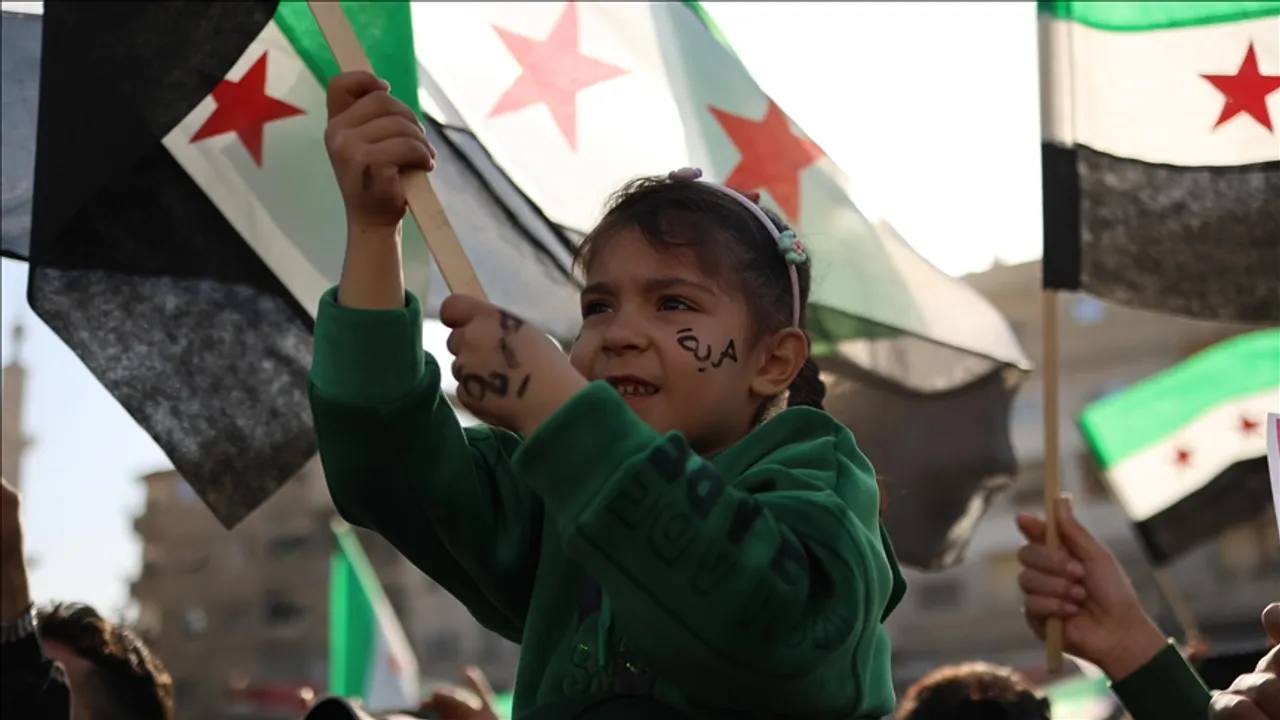
Across Syrian cities and online platforms, reactions have centred on unity, dignity, and the idea that the country is being put back together after years of terror.
In many eastern regions, residents had faced fear and instability due to the terror group’s presence, restrictions on movement, economic exclusion and so on.
“Of course, a unified Syria, with one capital, Damascus, is the dream of all Syrians. It has always been the desire from the beginning,” al Abidin says.
“Between 2017 and 2025, as a resident of Deir Ezzor, I could not go to Raqqa, and I could not enter Hasakah without a guarantor paper. You needed a Kurdish guarantor just to enter your own area. This kind of racism existed even before the separatist project formally began.”
“We hope and wish that their presence will also end in Hasakah and Qamishli, and that they will be fully disarmed. Weapons in the hands of these people are extremely dangerous,” al Abidin adds.
Under the new agreement, the YPG is to be merged into state bodies, armed terror members are to be absorbed into the Defence Ministry, and control of border crossings and energy infrastructure is to return to Damascus.
Alsharaa confirmed that state authorities would soon be present across Deir Ezzor, Hasakah, and Raqqa, urging calm among tribal communities during the transition.
“After years of war and division that have exhausted Syrians, the idea of ‘one Syria’ has come to mean safety, stability, and the restoration of what a state should be,” says al Amari.
“It's about recovering the shared national identity that years of conflict tried to fragment. The celebration reflects a deep need among Syrians to feel they belong to one homeland that unites them,” he explains.
Energy and sovereignty
The most tangible symbol of this shift may be oil and gas. For years, Syria’s major energy fields in the east were outside state control, generating little benefit for the broader population. That has now begun to change.
The state-owned Syrian Petroleum Company announced that extraction has resumed at several recovered fields, including sites in Hasakah, Raqqa, and Deir Ezzor.
“Syria’s oil has been exploited by every previous force that controlled Syrian territory. This applied to the Assad regime, and later to the PKK and SDF, which ended up exercising the greatest control over these resources,” al Abidin says.
“We have had vast oil fields in Hasakah, Deir Ezzor and the Jazira region. From 2017 onward, Deir Ezzor was entirely under their control and all of these resources went straight into their pockets.”
“If you look today at the streets of Raqqa, Hasakah, or Deir Ezzor, you can clearly see that there has been no improvement in infrastructure. Despite the enormous sums involved, the oil money never translated into development.”
Syrian company officials now say production could reach up to one hundred thousand barrels per day within months, providing critical support to electricity generation and the wider economy. Gas from the Jibsa fields is already being sent to processing plants to ease chronic power shortages.
These developments follow earlier advances by tribal forces east of the Euphrates, who took control of major oil and gas sites after a security vacuum emerged with the withdrawal of foreign troops.
Images broadcast by SANA showed former YPG positions abandoned, along with key transport hubs now under government control.
“Back then, large amounts of oil were sold to northern Iraq, to groups affiliated with Barzani, while another portion went directly into the pockets of PKK leaders,” al Abidin says.
“Neither we nor anyone else benefited from it. What we received instead was pollution and deadly smoke. We now hope that the government will manage these resources properly, in a way that helps rebuild the country in the future,” he adds.
Al-Amari resonates with this.
“The return of oil and gas fields to state control should be a real turning point in how these resources are managed. They need to be treated as national assets serving all Syrians, not as tools to finance terror groups,” he says.
Reclaiming these resources required first removing YPG from the region, something made possible by over a decade of Turkish counterterrorism operations along Syria's northern border.
Turkish-Syrian solidarity
Invoking its right to self-defence under Article 51 of the UN Charter, Türkiye has carried out successive military operations –Euphrates Shield, Olive Branch, and Peace Spring– to neutralise terrorists in northern Syria.
These operations have eliminated at least 17,000 PKK/YPG terrorists and secured Türkiye's southeastern border. These efforts largely demolished PKK’s operational capacity and weakened its influence across Syria and Iraq.
Through these operations, Türkiye has effectively “shattered the terror belt” that was intended to be established in northern Syria, as Turkish President Erdogan puts it.
Beyond military humiliations, the YPG also suffered increasing political pressure. Both Ankara and Damascus have made it clear that refusing to integrate into Syria’s national military structure would bring serious repercussions.
With pressure mounting from all sides, the SDF ultimately had no choice but to bow down.
According to al Abidin, the brotherly ties between Syria and Türkiye are older than many could imagine.
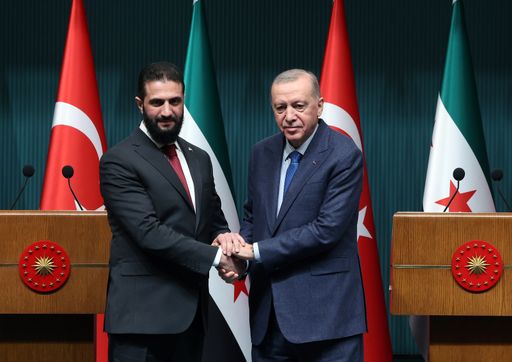
“After the fall of the regime, Türkiye was among the first and most prominent countries to help Syria stand again, both at the leadership and popular level. The Turkish role was significant, including efforts related to lifting sanctions, training the Syrian army, and other areas.”
“PKK is a shared danger for both Syria and Türkiye. Ankara played the biggest role and applied the greatest pressure in supporting the Syrian state to eliminate this terror,” al Abidin says.
“The latest military operation launched by the Syrian army was therefore necessary, an urgent necessity. It put an end to this separatist pocket.”
This sense of solidarity has been visible online, with Turkish and Syrian users amplifying one another’s messages and celebrating the same milestones.
“The shared celebration is about the military development, yes, but it's also about the feeling that this outcome is good for both countries' security and stability,” says al Amari.
“You're seeing this closeness expressed more openly now because both sides sense a real alignment of interests and future, and social media has given people a space to share these feelings spontaneously," al Amari adds.
At its core, the moment is about reclaiming sovereignty, resources and narrative and, for many Syrians, a moment to celebrate rightful victory.