 Murat Sofuoglu
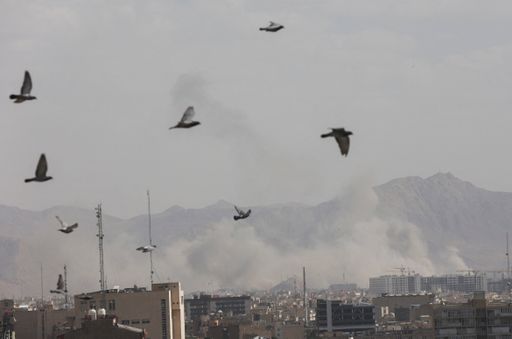
Following a tense weekend that saw several US aircraft destroyed near Iran’s Isfahan nuclear facilities, Washington and its Israeli ally agreed to a Pakistan-mediated two-week ceasefire with Tehran.
Analysts believe that the Isfahan incident — likened by some to the infamous 1961 Bay of Pigs fiasco — as well as Iran’s steadfast resistance, signalled to Washington that continuing the war would deepen economic and political costs across the oil-rich region and beyond.
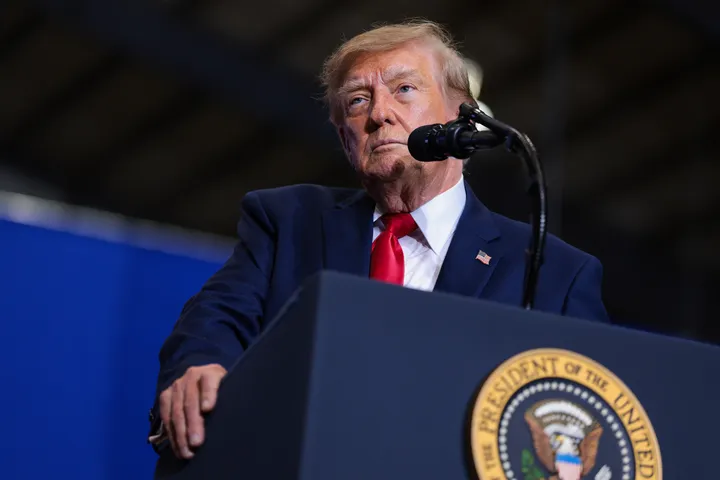
Trump signalled he viewed Iran’s 10-point proposal as “a workable basis on which to negotiate” a long-term peace, later reposting Iranian Foreign Minister Abbas Araghchi’s statement on the ceasefire.
“A two week period will allow the Agreement to be finalized and consummated,” he said on his social media platform Truth Social.
Before adopting his pro-peace stance, Trump on Sunday — following incidents involving US aircraft near Isfahan and in the Persian Gulf — threatened to wipe out Iranian “civilisation”, raising fears of strikes on civilian infrastructure.
But Tehran replied to Trump’s threat, stating that it would target civilian infrastructure across the Gulf if the US attacked Iranian power plants and other civilian sites.
“Both parties realised that attacking infrastructures in the region doesn’t defeat the other party. It is just mutual destruction,” Mohammed Eslami, a political scientist at the European University Institute, tells TRT World.
Explaining the conceptual basis of the current ceasefire, he argued it could “lead to a permanent end to the war if the US does not shift its position again during negotiations,” as it had done previously.
Washington might also have recognised that neither regime change nor an internal rebellion would occur anytime soon, as ordinary Iranians turned to civilian infrastructure after Trump’s threats, forming “human chains for the power plants and bridges,” according to Eslami.
“Trump realised that the operation of capturing Iranian uranium stockpiles would not be as easy as the operation in Venezuela for arresting (Nicholas) Maduro,” the Iranian academic tells TRT World, referring to the alleged US operation on the weekend to get Iranian uranium near Isfahan.
“This was a strategic defeat that although they projected it in the media and for the ordinary people in a different way, experts and theorists of military affairs know about it perfectly,” he says.
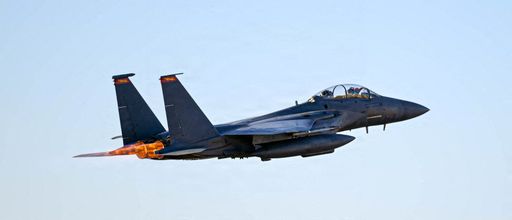
This showed that a ground operation against Iran, whether on its islands in the Persian Gulf or mainland, carries enormous risks, he adds.
‘Not like Gaza ceasefire’
Amid Israel’s continued military actions across Gaza, the West Bank, Lebanon, Syria, and Yemen, experts doubt the fragile US–Iran ceasefire will hold long enough to reach a comprehensive agreement.
“It will depend in the next two weeks whether or not the United States is going to negotiate in good faith efforts away from the Israeli and the Zionist lobby pressure,” Sami al Arian, the director of the Center for Islam and Global Affairs at Istanbul Sabahattin Zaim University, tells TRT World.
While some Iranian analysts contend that Tehran’s demands represent a maximalist stance because many believe it emerged in a stronger position from the conflict, nearly everyone agrees that the current ceasefire should not resemble the Gaza truce, which has been repeatedly undermined by Israeli attacks on Palestinians, resulting in the deaths of hundreds since October 2025.
“What seems clear is that Iran will not accept a Gaza style ceasefire—one that freezes the conflict without addressing underlying issues.
“From Tehran’s perspective, it is likely to be all or nothing: either a comprehensive agreement or no deal at all,” Fatemeh Karimkhan, a Tehran-based Iranian journalist, tells TRT World.
Karimkhan also draws attention to Iran’s well-established credibility problem with the Trump administration.
“Repeated reversals and broken commitments have produced deep trust issues in Tehran. For now, it is fair to say that both sides have tested each other long enough to resist being drawn into alternative agendas, including those advocated by third parties such as Israel.”
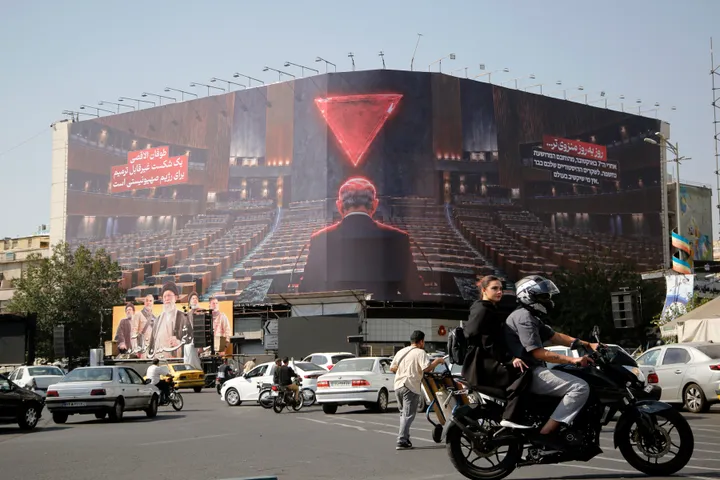
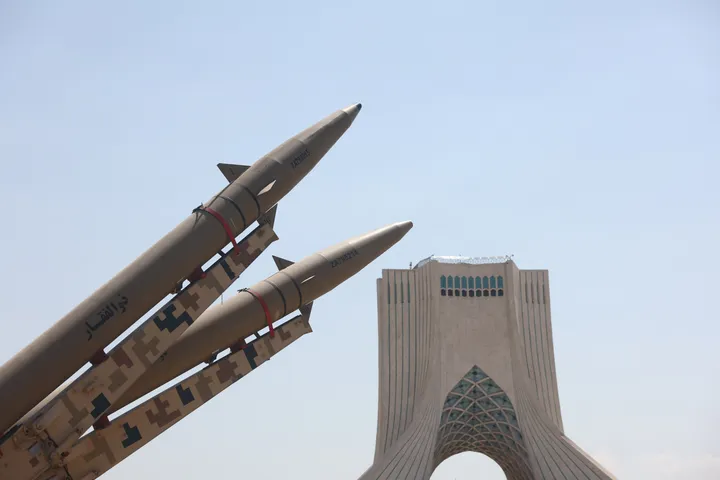

She assesses that the key question from now on is how much more each side is willing to pay in terms of political, economic, and military resources to continue testing each other.
“If neither side is prepared to bear additional costs, the ceasefire may solidify into something resembling a permanent arrangement. If not, the conflict could easily resume or even escalate.”
Status of Hormuz Strait
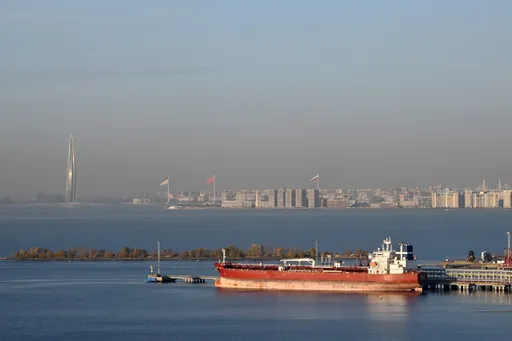
Tehran’s 10-point peace proposal covers key topics, including Iran’s significant control over vessel traffic through the strategic Strait of Hormuz, which handles one-fifth of the world's oil trade.
It also advocates for lifting Western sanctions on the energy-rich country and guarantees that it will never be attacked by the US and its allies.
The Iranian proposal has no mention of the country’s nuclear programme, for which the US and Israel attacked the country in the first place.
Overall, the ceasefire and the US's designation of Iran’s 10-point proposal as “workable” demonstrate the administration’s “weakness,” as the US president has shifted from one extreme to another, according to experts.
“From Armageddon menaces to a dove. Why? The US and Israeli's arm stocks (missiles) are in a dire situation. Why has Trump accepted the 10 points that previously he had rejected?” Ricardo Martins, a policy analyst specialising in international affairs and geopolitics, tells TRT World.
Among other issues, the status of the Hormuz Strait appears to be one of the most pressing, requiring agreement between Iran and the US.
While the 10-point plan proposes increasing Iranian authority over the strait, which could bring tens of billions of dollars each year, it’s not clear whether Trump will accept it.
In a recent Anderson Cooper interview, CNN anchor Fareed Zakaria said that Hormuz revenues could make Iran the second-richest country in the Middle East after Saudi Arabia, according to recent financial estimates.
Besides Iran, which said it will share revenues with Oman, a Gulf country located right across the Iranian coast in the Strait of Hormuz, the waterway is also important to oil-rich countries and states with high oil demand.
“Hormuz is more important to China than any other country. They really supported the ceasefire politically and also helped Pakistan with drafting the proposal,” Eslami says, referring to Beijing’s oil imports from not only Iran but also Gulf states through the Strait.
Axis of Resistance
The Iranian proposal also references the country’s allies across the Middle East, from Lebanon’s Hezbollah to Yemen’s Houthis and Iraqi paramilitary groups, calling for an end to all fighting against them, according to Tehran.
While Iran maintains that Lebanon should also be included in the ceasefire agreement, the Netanyahu government rejects this, continuing to bomb the country, which forces half of its population to be displaced from their homes.
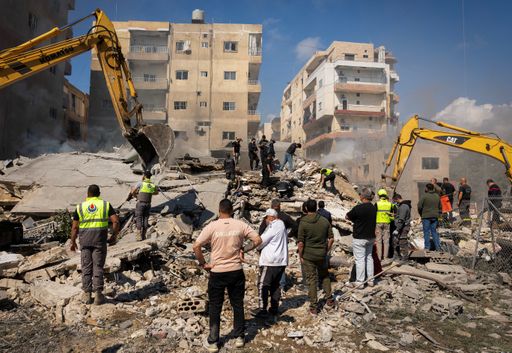
What the Zionist regime does vis-à-vis Gaza and Lebanon matters much for the success of the ceasefire and a comprehensive peace plan between the US and Iran, according to Arian.
“That's always going to be a potential spoiler,” he tells TRT World, underlining that Trump needs to exercise strong US pressure over Israel to ensure a long-term peace.
“If Israel escalates in Gaza or in Lebanon, it would be very difficult for Iran to conclude a comprehensive peace deal with the United States.”