 Zeynep Gizem Ozpinar
If Athens is to be believed, the way to invalidate a treaty is to declare it invalid often enough.
Greece has repeatedly challenged the 2019 Türkiye-Libya maritime memorandum, counting on Libya's political divisions to prevent its ratification. But that calculation suffered a setback on October 20.
Libya's House of Representatives unanimously ratified the agreement in Benghazi, while the Tripoli-based High Council of State welcomed the decision as a positive development. Two rival Libyan institutions had effectively aligned on an agreement Athens had opposed for years.
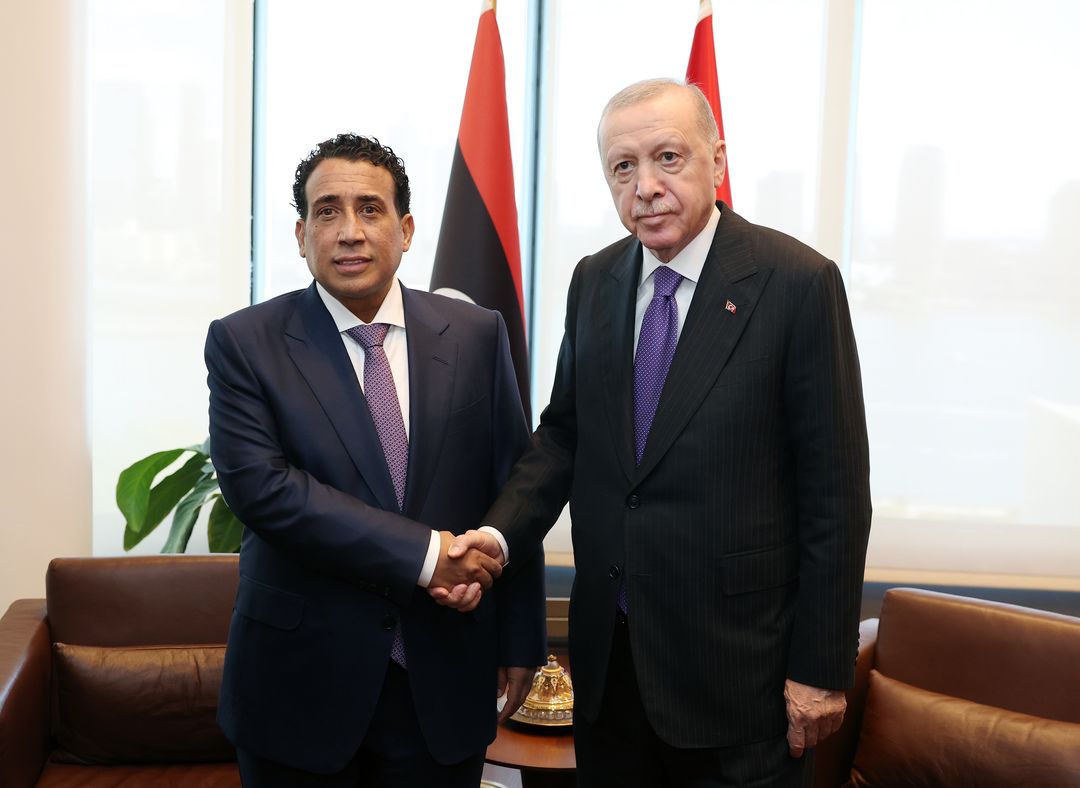
Ankara had spent months building ties across Libya's political divide. It hosted Saddam Haftar, reopened its consulate in Benghazi and facilitated military contacts between eastern and western Libya. In August, Turkish Foreign Minister Hakan Fidan visited Benghazi, meeting Khalifa Haftar and other senior eastern Libyan figures.
While Athens relied on Libya's divisions, Ankara sought to bridge them. The ratification exposed the limits of Greece's strategy and prompted renewed legal and diplomatic objections.
Fact No. 56119
Signed on November 27, 2019, the Türkiye-Libya memorandum entered into force on December 8, 2019 and was registered with the UN Secretariat under number 56119.
Greece argues that UN registration does not confer legal validity. While registration does not itself establish validity, Article 102 of the UN Charter allows registered treaties to be invoked before UN organs.
Athens also maintains that the memorandum cannot produce legal consequences for third states. Yet this is a general principle of treaty law. Under Article 34 of the Vienna Convention, agreements do not create rights or obligations for third states without their consent.
The same principle applies to Greece's 2020 maritime agreement with Egypt, which cannot impose obligations on Türkiye or Libya. Greek Cypriot lawyer Nicholas A. Ioannides has acknowledged that the Athens-Cairo agreement cannot annul the Türkiye-Libya memorandum.
The deeper dispute concerns how maritime boundaries should be drawn in the Eastern Mediterranean.
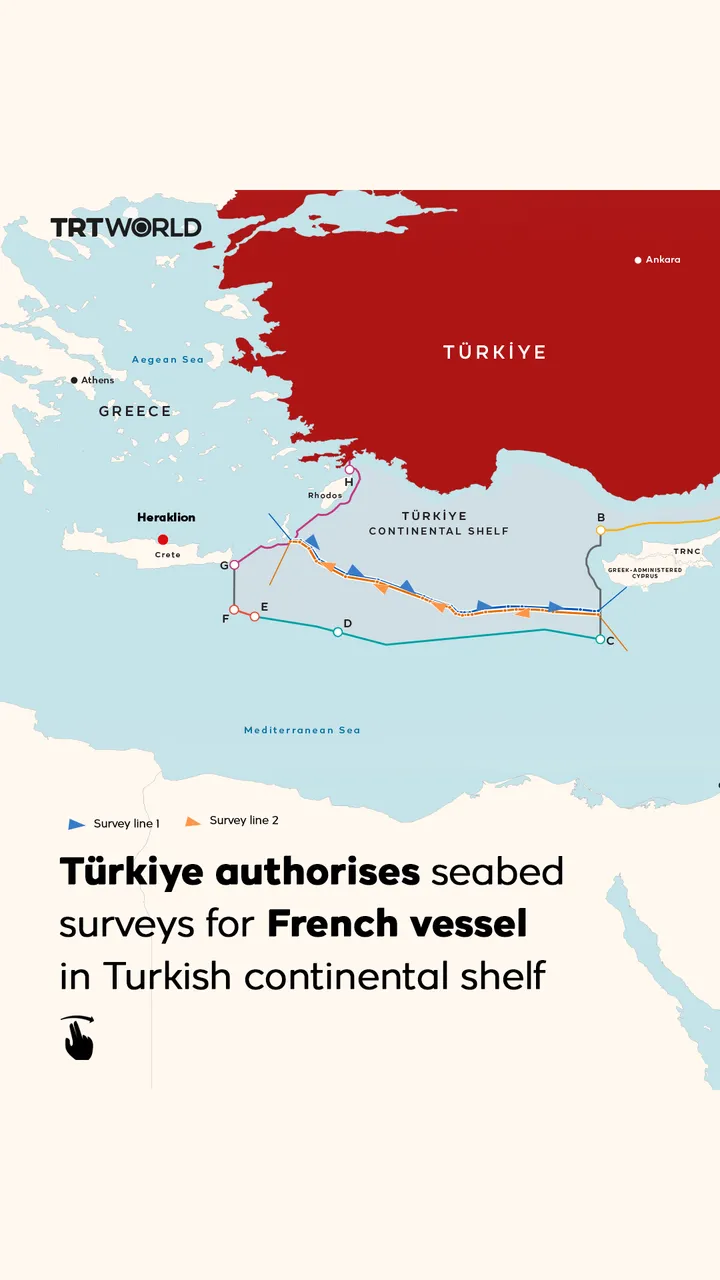
Greece argues that the memorandum infringes its maritime entitlements. Türkiye maintains that islands should not automatically receive full effect when their maritime projections overlap those of neighbouring mainland states.
In a letter to the UN, Ankara argued that islands should not cut off a mainland's coastal projection and emphasised the length and direction of coastlines as relevant factors.
According to Turkish figures, Türkiye's Eastern Mediterranean coastline measures approximately 1,870km, compared with 167km for Greece in the same basin.
The UN Convention on the Law of the Sea, to which Türkiye is not a party, calls for an equitable solution to continental shelf delimitation under Article 83. Article 121 addresses island entitlements without prescribing their precise effect in every delimitation dispute.
International court decisions have also recognised the importance of geography. In the Libya-Malta case, the International Court of Justice adjusted a delimitation line after considering relevant geographical factors. In the Black Sea case, it gave Serpents' Island no additional effect beyond its territorial sea.
Greece itself has accepted adjustments to island entitlements. In a 2020 speech, Prime Minister Kyriakos Mitsotakis acknowledged that certain Greek islands received reduced effect under the country's maritime agreement with Italy.
These precedents strengthen Ankara's argument that maritime delimitation cannot be determined solely by the presence of islands.
Türkiye maintains that the southwestern Anatolian and northeastern Libyan coastlines face each other for delimitation purposes. Article 1 of the memorandum defines their agreed boundary as an equidistance line.
For Ankara, the agreement also supports its wider Blue Homeland maritime doctrine. Libya's ratification has now given renewed political backing to an arrangement Greece has spent years trying to undermine.
Greece's diplomatic objections
On October 20, the Greek Foreign Ministry declared the memorandum "null and void". Egypt reiterated its opposition the following day.
Greek Foreign Minister Giorgos Gerapetritis argued that ratification added nothing to the memorandum's legal standing and questioned the legitimacy of the Libyan government that signed it.
Yet Greece had previously cited the absence of approval by Libya's House of Representatives as a reason for rejecting the agreement. Now that the parliament has approved it, Athens maintains that the decision has no legal effect.
This shift exposes an inconsistency in Greece's diplomatic argument.
UN Security Council Resolution 2259 endorsed the Libyan Political Agreement and recognised the Government of National Accord as Libya's sole legitimate government at the time.


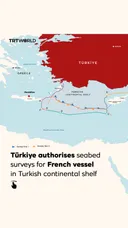



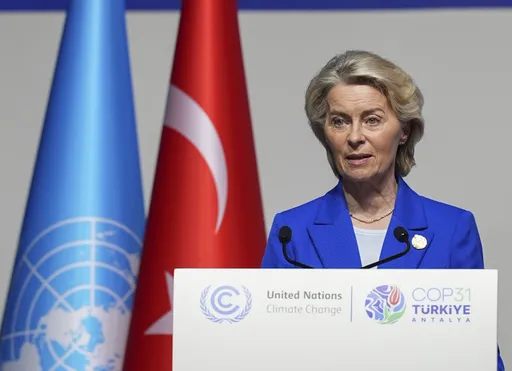
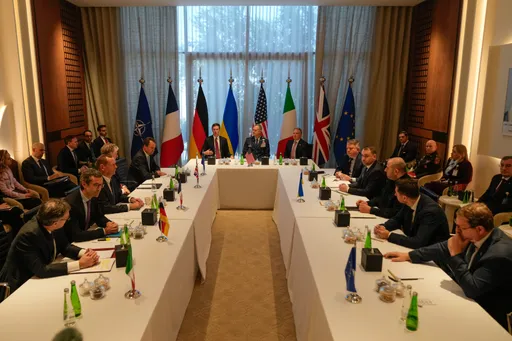
The EU has backed Greece's position. On October 20, European Commission President Ursula von der Leyen and European Council President Antonio Costa described the memorandum as "null and void" and expressed regret over the Libyan parliament's decision.
The dispute also concerns the Seville map, which Türkiye argues would severely restrict its maritime jurisdiction. Yet the European Commission clarified in 2020 that it had not commissioned the map, while the US Embassy in Ankara stated that it had no legal significance.
The dispute extends eastward to Meis and Greek-administered Cyprus. Türkiye argues that granting Meis full maritime effect would connect Greek maritime claims with those advanced by Greek-administered Cyprus, restricting Ankara's maritime jurisdiction and disregarding Turkish Cypriot interests.
On October 26, Gerapetritis delivered a joint statement on behalf of Greece, Greek-administered Cyprus, Egypt, Bahrain, the UAE and the EU. Three days later, Mitsotakis described the memorandum as illegal and arbitrary during a UN Security Council session.
But statements by individual governments do not constitute a Security Council decision on maritime delimitation.
As Türkiye's UN envoy Ahmet Yildiz pointed out, the Council does not act as a maritime delimitation court.
The confrontation is unfolding alongside growing defence cooperation between Greece, Israel and Greek-administered Cyprus. Greece signed a $750 million agreement with Israel for PULS rocket artillery systems in April, followed by an agreement worth approximately €3 billion for the Achilles Shield air defence system in August.
For Ankara, these developments reinforce concerns that Greece and its regional partners are strengthening their military position while seeking to restrict Türkiye's maritime influence.
Cairo's lost square kilometres
Egypt remains a key partner in Greece's opposition to the memorandum, but its own maritime interests complicate that alignment.
Following an October 22 phone call between Gerapetritis and Egyptian Foreign Minister Badr Abdelatty, Greek media reported that the two countries would discuss extending their 2020 maritime agreement east of the 28th meridian.
Egypt's Foreign Ministry, however, said only that consultations would continue.
The distinction matters because an eastward extension would involve areas where Greece's claims concerning Meis intersect with Egypt's potential maritime entitlements.
Türkiye argues that Egypt has already accepted less maritime jurisdiction than it could have secured through agreements based primarily on mainland coastlines.
According to Türkiye's Foreign Ministry, the 2003 maritime agreement between Egypt and Greek-administered Cyprus deprived Cairo of approximately 11,500km² of potential maritime jurisdiction.
Turkish officials also maintain that the 2020 Greece-Egypt agreement left Cairo with around 15,000km² less than it could have obtained through an agreement with Türkiye.
These figures reflect Ankara's interpretation rather than an internationally adjudicated determination.
Evidence from Greece's negotiations also suggests that Egypt secured concessions.
In a 2020 parliamentary speech, Mitsotakis acknowledged that Cairo had rejected "enticing proposals" offering it "much greater" maritime space.
A calculation published by the Hellenic Institute of Strategic Studies suggests that Athens' initially preferred median line would have allocated Egypt approximately 35,000km², compared with more than 41,000km² under the signed agreement.
The difference of more than 6,000km² illustrates how negotiations moved away from Greece's initial position to accommodate Egypt's interests.
During an October 23 meeting in Istanbul, Abdelatty reiterated Egypt's objections to the Türkiye-Libya memorandum. Fidan acknowledged Cairo's concerns and called for consultations to continue.
At an October 28 press briefing, Türkiye's National Defence Ministry reiterated that an agreement with Ankara could give Egypt more than 15,000km² of additional maritime jurisdiction compared with its agreement with Greece.
For Cairo, the competing proposals raise a fundamental question: whether continued alignment with Athens best serves Egypt's maritime interests.
Libya's ratification has dealt a setback to Greece's strategy of challenging the memorandum through Libya's political divisions. Athens continues to dispute its legality, but parliamentary approval has strengthened Ankara's diplomatic position.
Without negotiations that address competing maritime claims, the dispute risks remaining locked in diplomatic objections, while Türkiye and Libya continue to advance their position in the Eastern Mediterranean.