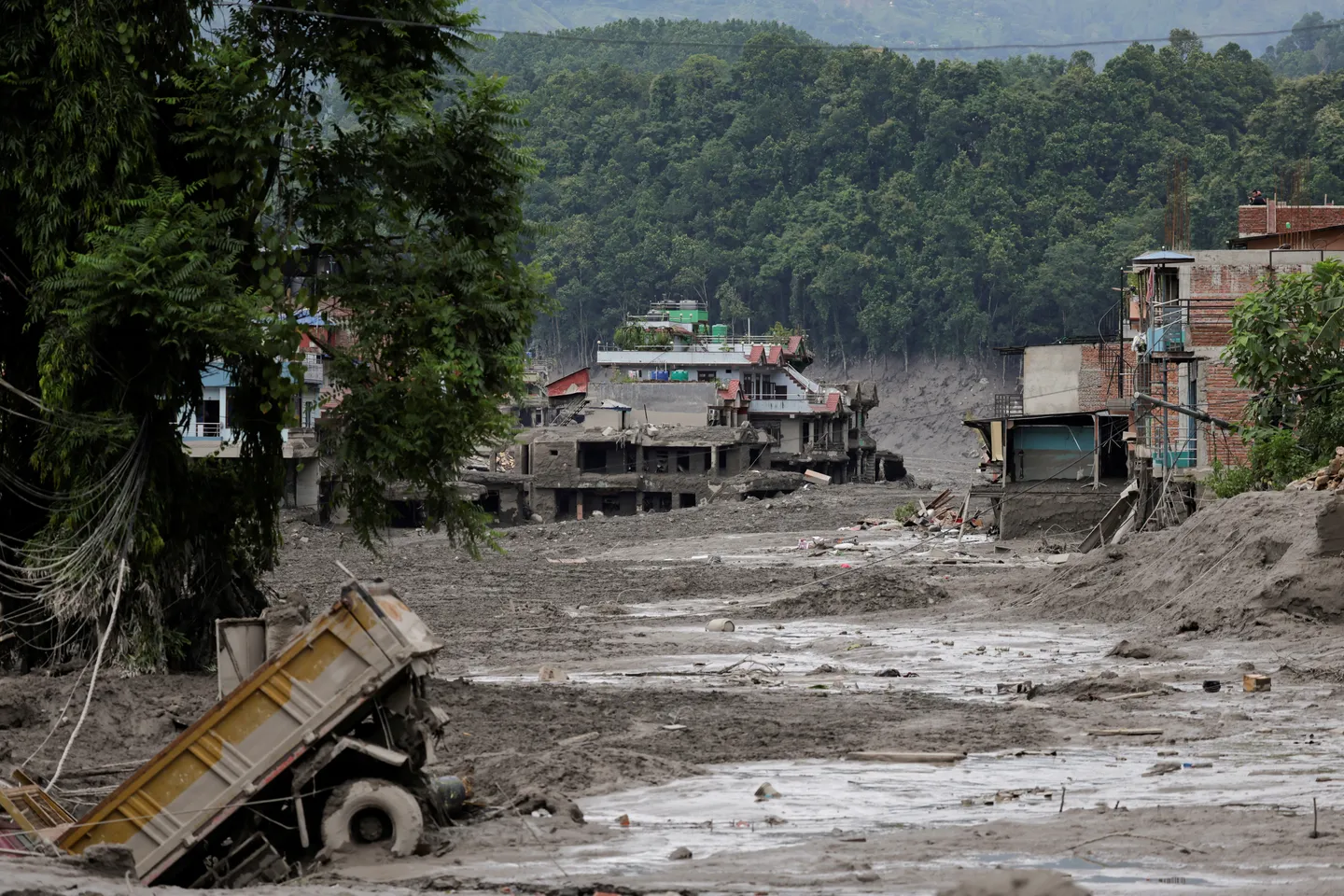
At least 384 tourists and travellers, as well as soldiers and police, were reported missing in Nepal after flash floods and mudslides near the China border, while at least 157 deaths were confirmed, officials said.
The death toll from the flash flood that struck the Himalayan border region of Nepal and China's Tibet on Wednesday has risen to 157, police said.
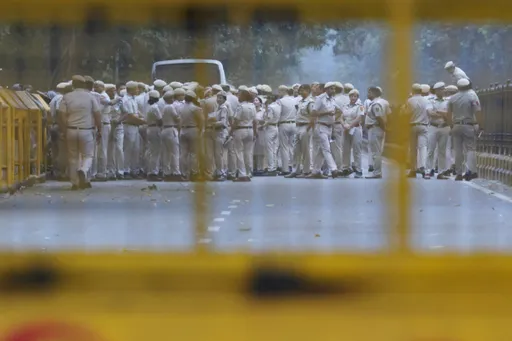
Briefing parliament on the disaster, Nepalese foreign minister Sishir Khanal said officials, soldiers and police were among those missing after flash floods swept away their barracks.
The Nepal Tourism Board said separately that it recorded 384 missing people.
Authorities “are working to verify the whereabouts and safety status of the tourists and travellers who were in or travelling through the affected areas,” the board said.
Khanal said 29 police officers and 44 Nepalese army soldiers were also missing after the floods swept away their barracks in Rasuwa district.
According to government estimates, 19 bridges were swept away, and 40 kilometres (25 miles) of road were damaged, along with 13 hydropower projects.
About 200 trucks were also swept away.
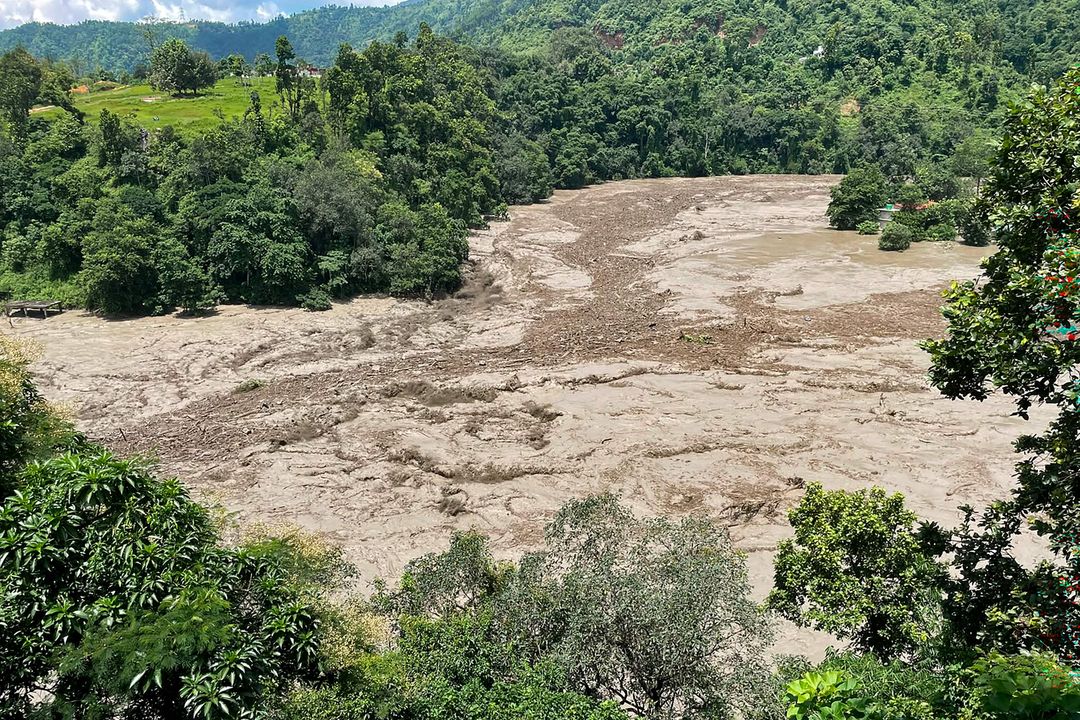
Widespread destruction
Khanal said an earthquake struck the border area on Wednesday, triggering an avalanche that “eventually caused the collapse of glacial lakes in the Tibet region of China.”
Beijing identifies the region as the Xizang Autonomous Region.
“Due to the flood, a large number of hydropower projects, government offices and road facilities were erased,” Khanal said.
According to the US Geological Survey, a magnitude 4.4 earthquake struck Kodari village in Nepal, which borders Tibet in China, at 8.37 am local time (0252GMT).
Massive search and rescue operations were launched on both sides of the border.
Those reported missing include people from Nepal, India, the UK, South Africa, Australia and the Netherlands, while the nationalities of many others have yet to be confirmed.
Eight South Korean nationals were “unaccounted for,” while 10 others were stranded following the floods in Nepal, Seoul-based Yonhap News reported, citing South Korea’s foreign ministry.
Khanal said the floods caused widespread destruction in the Rasuwa, Dhading and Chitwan districts.
Mass search, rescue operations underway
“Equipped with helicopters, drones and rafting boards, rescuers from all state forces - Nepal Police, Armed Police and Nepal Army - were deployed to the flood-hit area,” Khanal said.
China’s state-run Xinhua News Agency reported that a mudslide struck near Gyirong Port, a major land port connecting the two countries, in southwest China’s Xizang Autonomous Region.
“The disaster has cut off roads leading to the port on the Chinese side, as well as communications and power supplies,” Xinhua reported, citing the emergency management bureau of Gyirong County in Xigaze City.
Chinese President Xi Jinping ordered “all-out efforts” to search for and rescue people.
Xi also called for efforts to “evacuate residents at risk and provide timely medical treatment to the injured to minimise casualties.”
“Authorities in Xizang have mobilised forces to carry out search and rescue operations. All relevant operations are underway,” Xinhua reported.
It remains unclear how many people were affected on the Chinese side of the border.
In Kathmandu, government-run hospitals and medical facilities operated by security agencies were cleared to accommodate people injured in the disaster.
Tourists travel to the Rasuwagadhi area to trek in the Langtang region, one of Nepal’s most popular trekking destinations.
Other travellers pass through Rasuwagadhi en route to Mount Kailash and Lake Mansarovar in China.