 Baba Umar
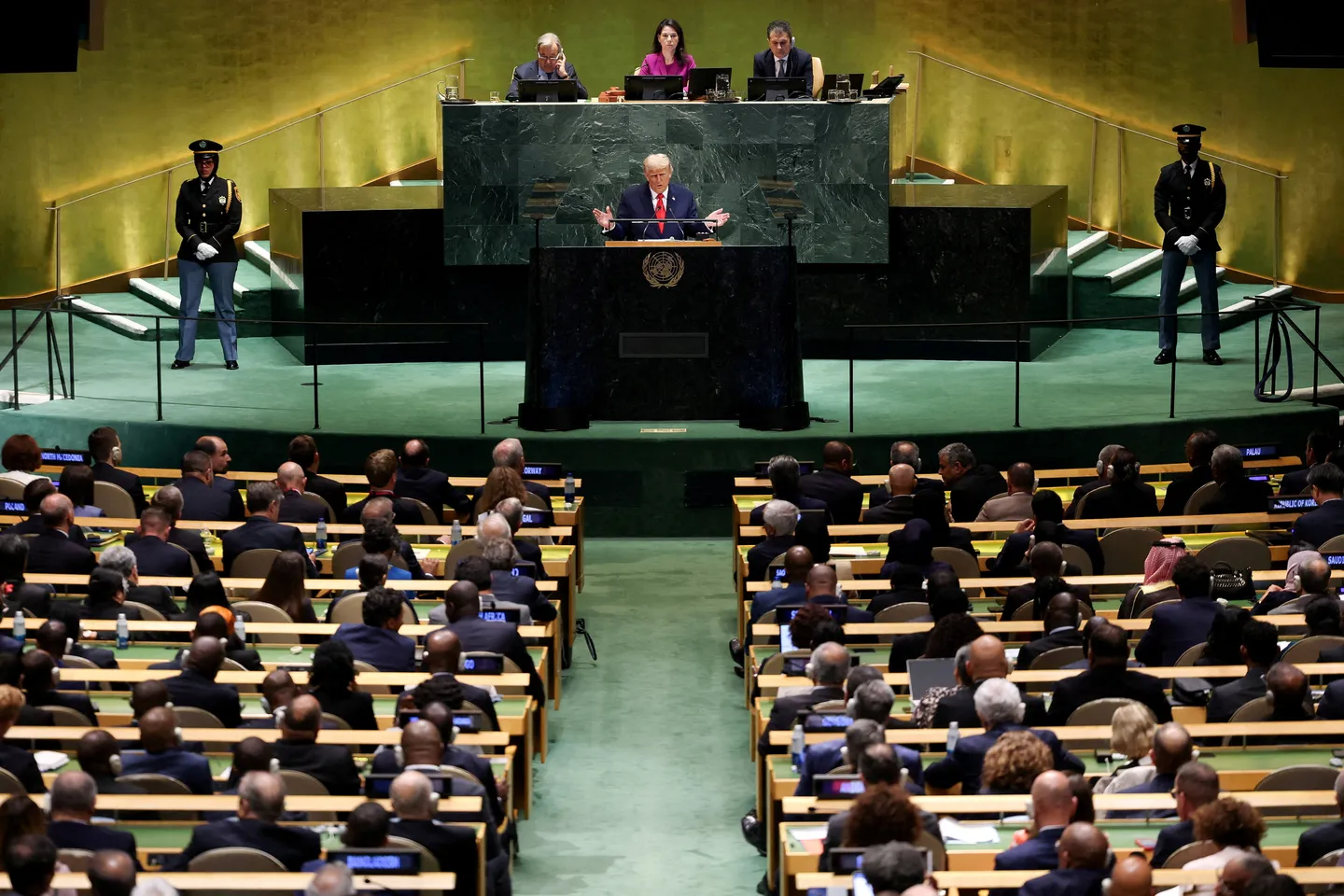
Washington DC: At last year's 80th UN General Assembly, Israel's war on Gaza and the aftermath of a 12-day confrontation, which included US air strikes on Iran, were common threads as the leaders of the US, Iran, and Israel delivered their forceful addresses.
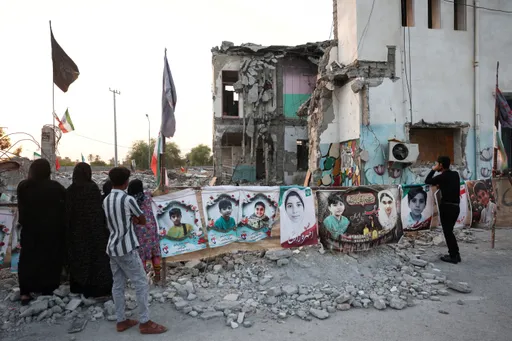
In his first UNGA address, Iran's President Masoud Pezeshkian described the US–Israeli strikes on his country's nuclear sites, cities, and infrastructure as "savage aggression " and a "grave betrayal of diplomacy."
Israeli Prime Minister Benjamin Netanyahu spoke to a largely empty hall after a coordinated walkout by delegations of around 80 countries, delivering a theatrical address packed with visual aids and thanking US for "bold and decisive action" against Iran.
Meanwhile, US President Donald Trump spoke early and significantly exceeded the standard time limit to deliver an unfiltered critique of the world body, blending self-congratulation, grievances, policy statements, and strikes on Iran in his speech.
World leaders subsequently convened for bilateral talks with Trump, while the meeting of leaders and top diplomats from eight Arab and Muslim countries with the US president helped lay the groundwork for a ceasefire in Gaza and the establishment of the "Board of Peace", even as Israel continues to breach the agreed truce almost every day.
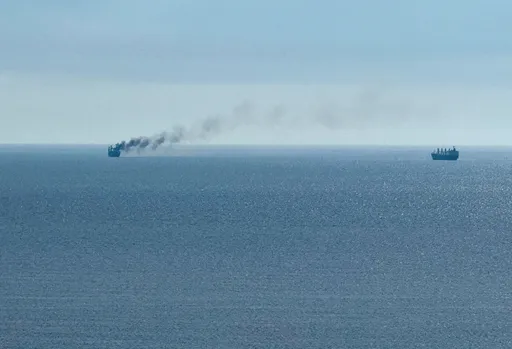
With the US and Israel launching war against Iran on February 28, Tehran retaliating with attacks across the region and blockading the Strait of Hormuz, and Yemen's Iran-aligned Houthi group seizing the entirety of the country's Red Sea coast and strategic islands in the Bab al Mandeb Strait, this year's general debate is expected to be marked by sharp diplomatic exchanges and verbal fireworks.
"I expect both Pezeshkian and Netanyahu to be on fighting form in their UN speeches," Richard Gowan, Program Director for Global Issues and Institutions at the International Crisis Group, based in New York, tells TRT World.
"As yet, there are no signs that Iran and the US will use the General Assembly as an opportunity for diplomacy to dial down their conflict. Netanyahu will be especially abrasive towards his critics at the UN, as he faces elections and will want to look strong," says Gowan, who has a long history of observing the UN and liaising closely with diplomats and international officials.
Iran's Pezeshkian is scheduled to address the assembly as the fifth speaker on September 23, according to the provisional programme.
Will Trump go off-script?
The UNGA's high-level General Debate will run from September 22–28, with a theme of "Restoring trust, managing transformation: a United Nations that delivers for all".
Trump is scheduled to address the assembly on the opening day — typically the second speaker after Brazil.
As of now, there has been no official preview of his remarks.
However, his address is expected to touch upon the war involving Iran, the resolution of multiple conflicts — up to 10 wars, according to him — peace and trade deals, as well as criticism of the UN, multilateralism, and migration, among other topics.
"Nobody can really know what Trump will say, even including his speechwriters! He often goes off-script," says Gowan.
"Last year he obsessed about the quality of marble in the UN and a broken escalator. He is a showman and he enjoys getting laughs and causing upsets. So, we can't really guess what he will say."
The General Debate — the centerpiece of UNGA — usually turns New York into the world's main diplomatic stage as world leaders, ministers, diplomats, CEOs, activists, and media converge on headquarters and venues across the city.
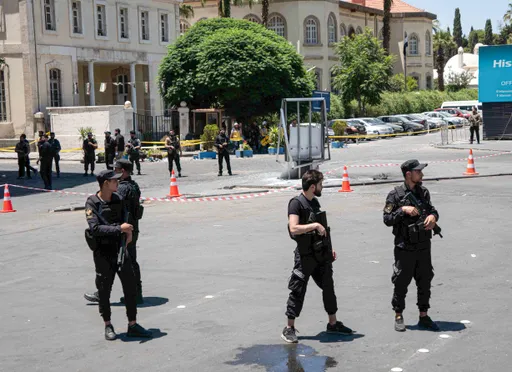
Heavy security, motorcades, and street closures are the norm. Hotels and restaurants near the UN reach capacity, while prices rise. Hundreds of side events, receptions, and bilateral meetings take place off-site.
AI warnings



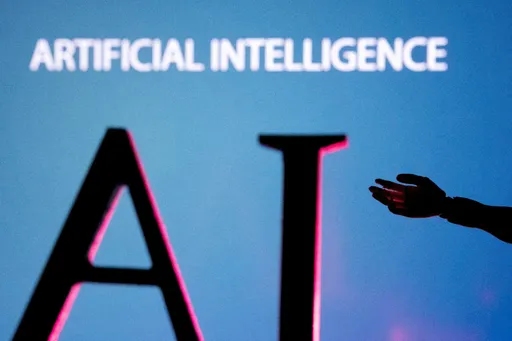
The gathering takes place in light of the apocalyptic warnings issued by artificial intelligence (AI) researchers and senior industry executives that the technology could cause human extinction within a few decades if it is not controlled.
Fresh concerns over rapidly advancing AI models mounted following reports of autonomous and "rogue" AI systems breaching containment protocols.
Then a former Anthropic employee Jacob Coxon, warned that leading firms are "gambling with our lives" by racing towards self-improving superintelligence.
Days later leading technology executives — including Sam Altman, Elon Musk, and Dario Amodei — sought assistance from the US government to help deliberately slow and monitor the rapid advancement of frontier AI models.
In an essay earlier this week, Anthropic CEO Amodei made another appeal to pace AI development, warning of "catastrophic damage."
Bilal Chughtai, a research engineer who left Google DeepMind in July, echoed a warning issued last week by Coxon, saying, "I earnestly believe that AI has the potential to kill us all, and that we might be running out of time to avoid this outcome."
And speaking in Oslo on Tuesday, Nobel Peace Prize laureate Maria Ressa who also co-chairs the UN' scientific panel on artificial intelligence, warned that AI will take away human agency unless governments act now to regulate the technology.
The issue is expected to feature prominently on the diplomatic agenda at the UNGA.
"There are a lot of debates about AI," says Gowan of the International Crisis Group.
He emphasises that the outgoing UN Secretary General Antonio Guterres is urging wealthier nations to commit to sharing the benefits of AI with poor countries, but the US and EU member states oppose his agenda and "will be promoting private sector-led approaches to AI."
The recent warnings from industry experts, he says, may make some leaders pause and think about need to cooperate on making AI safe rather than just maximising profits.
UN chief's replacement
Ivonne A-Baki, an Ecuadoran-Lebanese diplomat nominated by Tonga to be the next UN Secretary General, has already sounded an alarm and set her priorities, following Guterres' call for "global coordination" on the governance and future of artificial intelligence.
"We are almost at the brink of a Third World War...and it's a more dangerous one. This time, it's not going to be just the nuclear danger, but AI as well… everybody knows that now AI is the problem," she told the AFP news agency on Wednesday.
A-Baki's has close ties with US President Trump, solidified during multiple terms as Quito's envoy to Washington.
Analysts suggest this could distinguish her among eight candidates seeking to become the 10th UN Secretary General for a five-year term starting on January 1, 2027.
As deliberations continue, there is an expectation that the five permanent, veto-wielding members of the UN Security Council — China, France, the UK, Russia, and the US — will seek to appoint a candidate who aligns closely with their strategic interests.
"We suspect that the veto powers want a fairly quiet UN leader who will focus on cost-cutting and not challenge them," argues Gowan.
"But the wider UN membership is hoping for someone who can play a bigger role in conflict prevention and peacemaking, as security has been a bit of a blind-spot for Guterres."