 Zeynep Conkar
More than a hundred House Democrats voted on Wednesday to strip $3.3 billion in military aid to Israel, one of the sharpest breaks yet in a bipartisan consensus that held for half a century.
Of the House's 212 Democrats, 103 voted yes, 98 voted no, and 10 voted present. Former Speaker Nancy Pelosi voted the same way as progressive Ayanna Pressley as the Democratic leadership split three ways.
But the more striking rupture this week came from inside the Republican administration itself. Vice President JD Vance told podcaster Joe Rogan that people inside the Israeli government have been running a manipulation campaign to derail the ceasefire Washington negotiated with Iran, because they wanted the war to continue.
“...We know beyond a shadow of a doubt that they are manipulating and trying to change American public opinion to keep the war going on indefinitely,” Vance said.
Weeks earlier, asked by CBS whether the Israeli leader had mishandled the relationship with Washington, Vance said Netanyahu "aggressively asserts the interests of his country," which sometimes align with those of the US and sometimes do not.
Remarks like these signal something deeper than a one-off disagreement, according to political analyst Klaus Jurgens.
“The decades-old accepted notion that, no matter the issue, Washington supports Israel is comparable to Germany's ‘Staatsräson,’ it was non-negotiable. Powerful Israeli lobbyists worked behind the scenes to keep it that way,” Jurgens tells TRT World.
“But let us be frank and clear: they bankrolled both the GOP and Democrats; that is the real reason... not American love for Israel, but American politicians' love for Jewish donations.”
“Declaring that Israel is attempting to influence US politics is a vital step to curtailing, and one day ending, Israeli influence on US domestic and foreign policy. MAGA means independence, including from Israel,” Jurgens adds.
Trump's frustration with Netanyahu
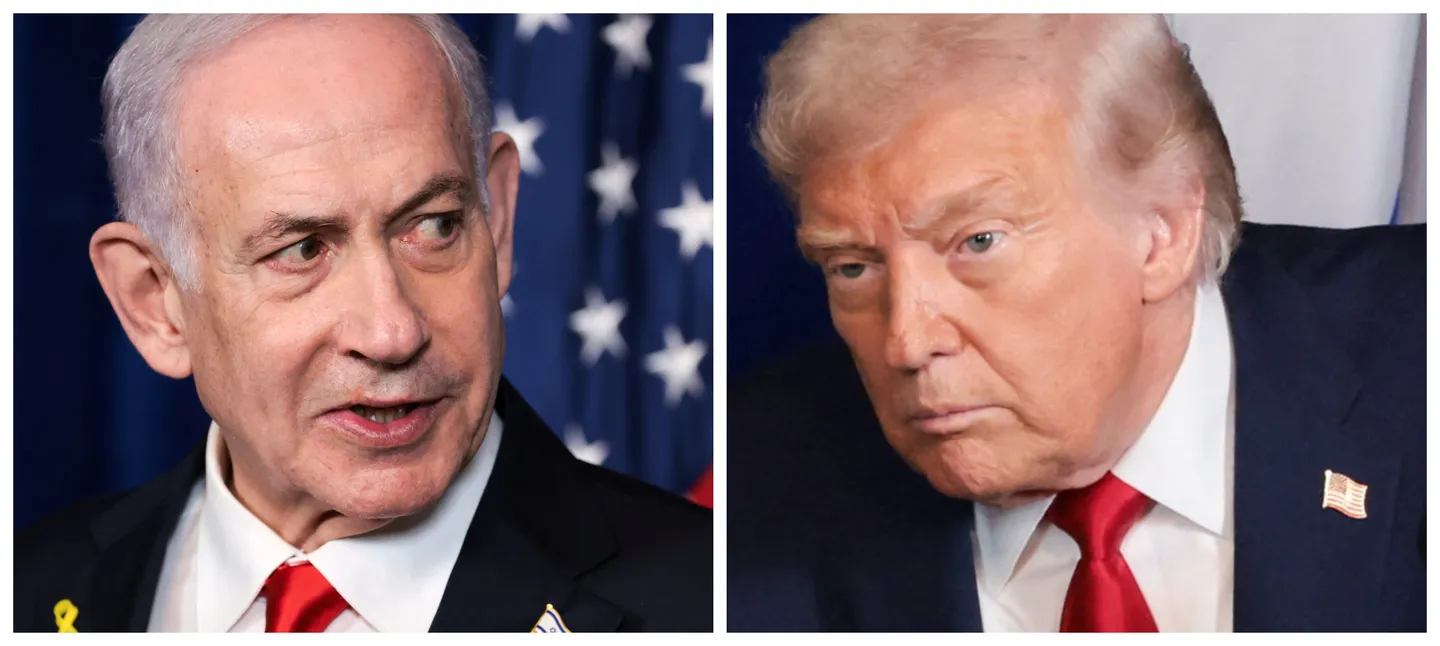
The friction started well before Vance went on Joe Rogan. In early June, reports emerged that Trump had cursed at Netanyahu on a call over Israel's escalation in Lebanon, accusing him of ingratitude and demanding to know what he was doing as the strikes threatened to derail the administration's Iran negotiations.
The Israeli paper Maariv reported Trump went further in private, calling Netanyahu an “ungrateful bastard."
Vance himself confirmed the rift was real when CBS asked him, in a June interview, whether Netanyahu had made mistakes in handling the relationship with Washington.
"He's certainly gotten some things wrong," Vance said, declining to elaborate beyond saying such disagreements were better left private.
By June 18, the vice president wasn't keeping it private anymore.
Standing in the White House briefing room, Vance warned Israeli officials directly against opposing the ceasefire framework Trump had just signed with Iran, telling reporters that if he were in the Israeli cabinet, he might think twice before attacking the only powerful ally Israel has left in the entire world.
It was the first time a senior official in this administration inverted a decades-old assumption that Israel could break publicly with a US president and still expect Washington to bend.
Jurgens sees nothing surprising in this.
“The NATO Ankara Summit further cemented Washington's interest in returning to the global power stage. Anyone seen as a potential threat to that newfound image of strength is considered politically toxic,” Jurgens says.
“Trump and Vance would rather tell Netanyahu what to do; it is no longer the other way round.”
“Continued military assistance to Israel will soon be conditioned on Washington having a clear say in how it is actually used. My guess: it will of course continue, but be much more conditional,” he adds.
The friction has a Türkiye dimension too. Trump was angered after Netanyahu publicly criticised a proposed US sale of F-35 fighter jets to Türkiye during a Fox News interview, just before Trump travelled to Ankara for the NATO summit on July 7-8, according to Axios.

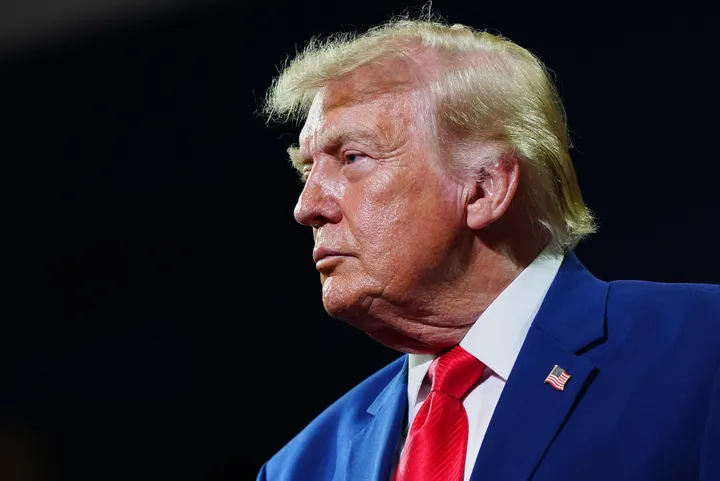






Trump believed Netanyahu had "no right" to publicly intervene in the arms deal, according to a White House official, while another said the remarks further aggravated already growing tensions between the two leaders.
The episode landed as Washington signalled it was ready to restore defence ties with Ankara, including lifting sanctions tied to Türkiye's purchase of the Russian S-400 system and reopening the F-35 talks Netanyahu had objected to.
A new phase
The vote in Congress and the tensions inside the White House point to the same reality, with backing Israel's actions in Gaza and now in a widening regional war becoming harder for American officials to justify.
The US government has spent 2026 bypassing Congress on Israel arms sales, repeatedly.
In January, it notified Congress of over a $6 billion sale with barely an hour's warning, skipping the standard committee review and refusing to brief lawmakers on Gaza policy.
In March, as the US and Israel opened a joint air offensive against Iran, Secretary of State Marco Rubio invoked emergency authority to push through a $650 million bomb sale without congressional review, the second time the administration had done so.
By May, it happened a third time: an $8.6 billion weapons package for Israel and Gulf states, again under emergency authority.
Aid to Israel drew almost no dissent in Congress for decades. The first cracks came after Israel's 2021 assault on Gaza, when Minnesota Representative Betty McCollum introduced legislation tying aid to human rights compliance. It went nowhere.
Since October 2023, the genocide in Gaza has been documented with strikes filmed in real time, ICJ provisional measures, ICC arrest warrants.
In 2024, only 37 Democrats voted against a $14.3 billion aid package. This week, 103 voted to cut a fraction of that sum.
“One of the many reasons Trump got his second term in office was the unhappy electorate: economic worries, Biden's mishaps, no national purpose... Trump promised solutions,” Jurgens says.
“Democrats and Republicans know any prolonged war with Iran is a vote loser come November. Any long-term military or financial involvement is too.”
“Withdrawing from Iraq, as announced yesterday, is another clear sign of this new policy. Yes, it is ‘the economy, stupid’ (past Democratic election slogan) paired with ‘money's too tight to mention’ (Simply Red pop song),” he adds.
Public opinion has tracked the same curve. An AP-NORC poll this month found that about a third of US adults, and roughly half of Democrats, now believe Israel has committed genocide against Palestinians in Gaza.
Congress, and parts of the executive branch, appear to be responding to mounting evidence from Gaza, Lebanon and Iran that has become increasingly difficult for either party to sidestep politically.
“With Gaza, even former hardliners realise that the US public regards Israel's invasion of Palestine as wrong, not calling it genocide yet, but declaring it wrong.”
“All this might recalibrate and reformulate US domestic and foreign policy,” Jurgens adds.