 Abhishek G Bhaya
The security of the Indo-Pacific and the North Atlantic can no longer be viewed separately, Australia's Defence Industry Minister Pat Conroy said, arguing that modern conflicts demand closer cooperation between NATO and partners in Asia.
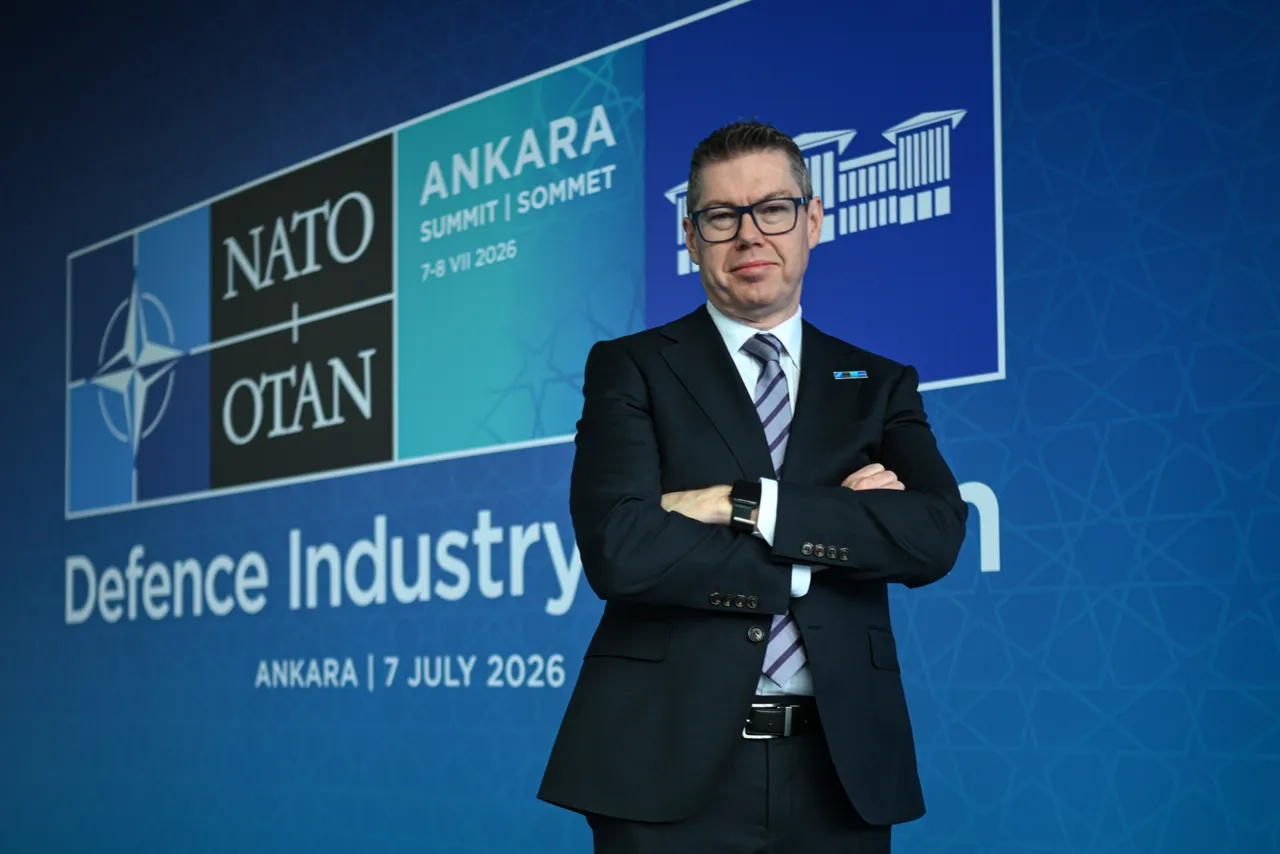
Speaking to TRT World on the sidelines of the NATO Summit in Ankara, Conroy said the changing nature of warfare had reinforced Australia's commitment to working more closely with the alliance.
"The Indo-Pacific and the North Atlantic are inseparable," Conroy told TRT World. "All wars are now global, so it is in all our interests to work together to deter conflict."
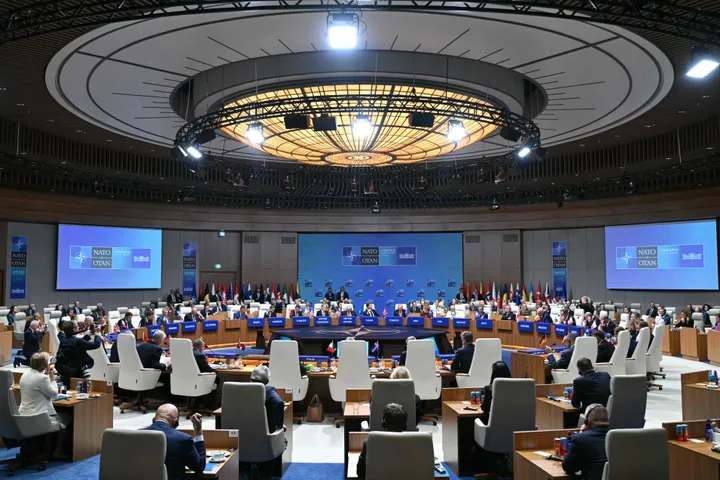
His remarks encapsulate Australia's central message at this year's NATO Summit, where the Indo-Pacific Four (IP4) — Australia, Japan, South Korea and New Zealand — joined alliance leaders to discuss security challenges stretching from Europe to Asia.
Australia has steadily deepened its relationship with NATO over the past two decades, evolving from being an important partner in the Afghanistan mission into one of the alliance's closest Indo-Pacific partners. Today, cooperation spans defence industrial development, cyber security, emerging technologies, resilience and support for Ukraine through NATO initiatives.
During the NATO Defence Industry Forum, Conroy argued that strengthening industrial capacity has become just as important as increasing defence spending.
"If every country in NATO and every country in the Indo-Pacific is increasing defence spending, but we're not growing the industrial base, we're simply going to pay a lot more for the same amount of equipment," he said.
Australia, he noted, is undertaking the largest peacetime increase in defence spending in its history, with defence expenditure reaching 2.8 percent of GDP this year. Canberra is also restructuring its defence bureaucracy by transferring around 40 percent of its defence budget into a dedicated capability delivery agency aimed at accelerating procurement and innovation.
Rather than relying solely on domestic production, Australia is pursuing what Conroy described as a model of "co-design, co-development, co-production and co-sustainment" with trusted partners.
He pointed to joint programmes with Germany on Boxer combat reconnaissance vehicles, Canada on over-the-horizon radar and Norway on Naval Strike Missile production as examples of a more integrated defence industrial strategy.






Conroy also called for governments to abandon protectionist approaches that limit industrial cooperation.
"We desperately need to increase our appetite for risk. We need to reduce barriers. We need to move beyond protectionism and recognise that there is more than enough work for everyone."
Asked by TRT World whether Washington's reported decision to rename the US Indo-Pacific Command back to Asia-Pacific Command diminished the strategic importance of the Indo-Pacific, Conroy declined to comment.
"That's a question for the United States and what they choose to call their combatant commands," he said.
However, he reaffirmed Australia's commitment to another key regional grouping. "We think the Quad is a very important institution, and we're strong supporters of it."
The Quad — comprising Australia, India, Japan and the United States — has become one of Canberra's principal strategic partnerships in the Indo-Pacific alongside its growing engagement with NATO.
Australia's presence at the Ankara summit also reflects expanding practical cooperation with Türkiye.
While not a NATO member, Australia has increasingly explored defence industrial opportunities with Ankara as Türkiye rapidly expands its domestic defence sector, particularly in drones, naval systems and armoured vehicles. Conroy said earlier on the summit sidelines that Australia's government was "always open" to working with NATO partners such as Türkiye on defence industry cooperation.
The visit itself underlines how Canberra increasingly sees NATO not simply as a Euro-Atlantic alliance but as a platform for coordinating responses to shared global challenges — from the Russia-Ukraine war to technological competition, supply-chain resilience and the security implications of China's growing military capabilities.
As NATO strengthens cooperation with its Indo-Pacific partners, Australia is positioning itself not only as a security partner but also as a contributor to the alliance's evolving industrial base — arguing that future deterrence will depend as much on trusted production networks and technological collaboration as on military spending alone.