Millions of Muslims across the globe are observing the holy month of fasting, which takes place during the ninth month of the Islamic calendar.
During the holy month of Ramadan (29 to 30 days), able Muslims abstain from all food and drink from dawn to sunset.
The practice is one of the five pillars of Islam.
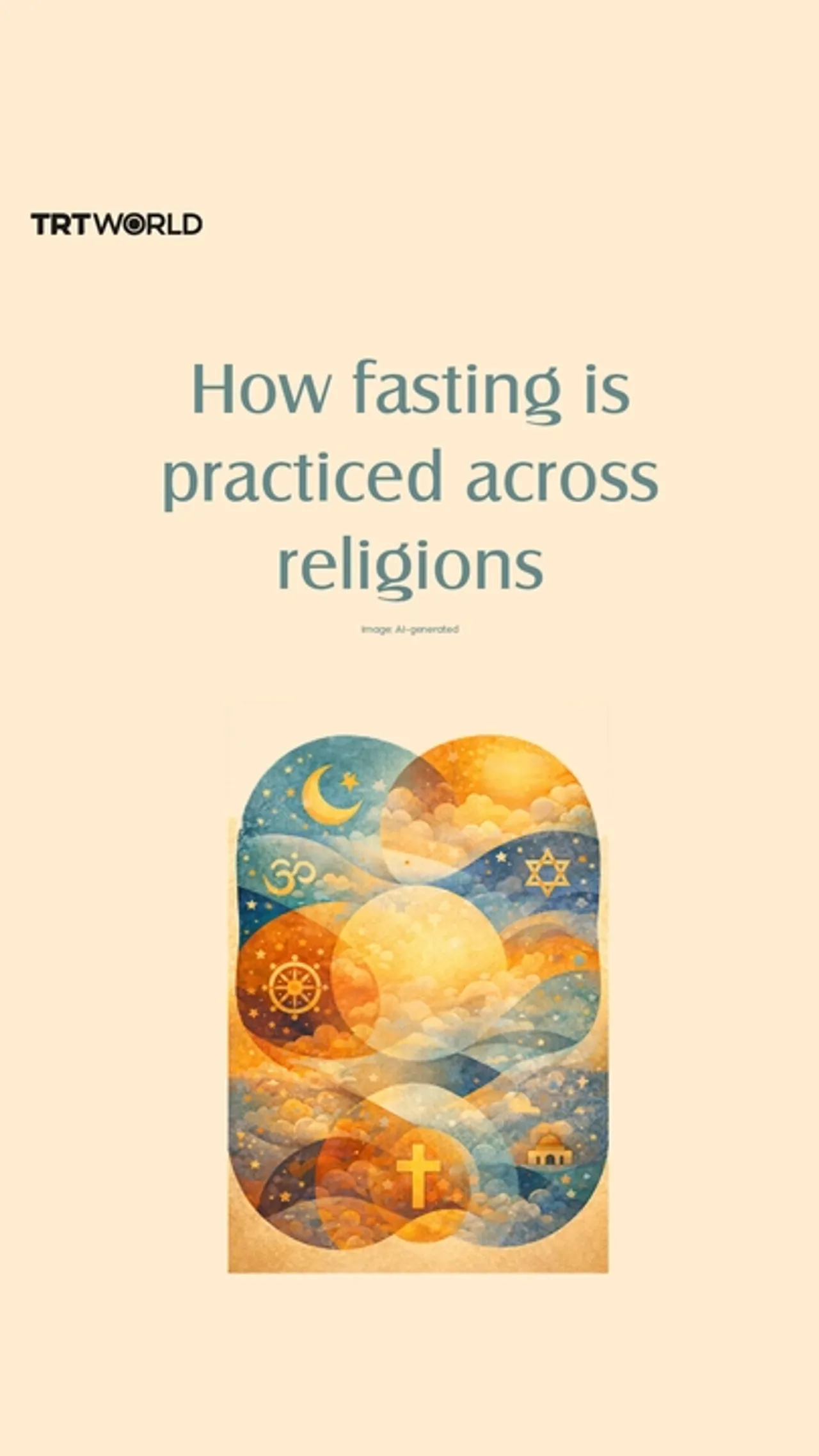
Beyond Ramadan, fasting is a spiritual practice shared across faiths and cultures worldwide.
Here are a few examples.
Christianity
Many Christian denominations observe fasting.
Catholics, for example, abstain from meat on Fridays during Lent — the 40-day period leading up to Easter — and also fast on Ash Wednesday and Good Friday.



Judaism
Jews observe fasting on six days during the year, including Yom Kippur, the holiest day of the Jewish calendar.
Divided into “major fasts” (around 25 hours) and “minor fasts” (from sunrise to sunset).
Buddhism
In many Buddhist traditions, monks and nuns refrain from eating solid food after noon until the following morning.
Some Buddhists also choose to fast on holy days.
Hinduism
Hindus often fast on new moon days and during festivals like Navratri and Maha Shivaratri.
Some skip meals, while others avoid certain foods for a set number of days.