 Carlos Ortega Sanchez
For centuries, Turks and Spaniards imagined each other, long before they ever truly met.
In 16th- and 17th-century Spain, "the Turk" appeared in paintings, plays, festivals, sermons, and battle accounts. The Ottoman Empire was then one of the great powers of the Mediterranean and also one of the main rivals of the Spanish monarchy.
Across the sea, however, Spain generally occupied a less constant place in Ottoman concerns.
This contradiction (imagining the other a lot and knowing little about them) was a recurring theme at a congress held in Istanbul to commemorate the Spanish-Ottoman Treaty of Peace and Friendship of 1782.
For two days, Spanish and Turkish historians reconstructed a relationship more complex and nuanced than the simple story of rivalry, peace, and subsequent reconciliation.
Because Spain and Türkiye have been meeting for five centuries. What has changed is the way they do it.
From its earliest centuries, the Ottoman Empire held a prominent place in the Spanish imagination.
Both powers vied for control of the Mediterranean Sea; corsairs linked to the Ottoman regencies in North Africa, such as Algiers and Tunis, raided the Iberian coasts, and thousands of people directly experienced war or captivity.
The Battle of Lepanto in 1571, a historic naval confrontation in which the prominent writer Miguel de Cervantes , author of Don Quixote, participated, left an indelible mark on the geopolitics of the time and ended up becoming the great symbol of that rivalry.
But in those times, “the Turk” was much more than a military adversary. He appeared in plays, romances, celebrations, and paintings.
A project led by art historian Ivan Rega Castro on the construction of the Turkish imaginary analyses precisely how these representations adapted to the needs of each era.
In Hispanic painting of the 16th and 17th centuries, his presence was relatively discreet but constant, extending even to the monarchy's American territories.
Over time, moreover, the Turk became a recognisable image of the “enemy”: he could appear as a defeated captive, a fearsome warrior, or even as a ridiculed figure, and was even used anachronistically to represent conflicts that occurred centuries before the Ottoman expansion.
The problem is that those images could be much more intense than the actual knowledge of the other person.
Even enemies negotiated
The image of the Turk as a great Mediterranean adversary did not prevent Spaniards and Ottomans from talking to each other when necessary.
By the end of the 16th century, after decades of conflict, both empires began to seek ways to reduce a rivalry that was becoming increasingly costly.
No permanent embassies existed between Madrid and Istanbul, but emissaries, intermediaries, merchants, and agents carried messages between the courts.
Diplomatic contacts, secret negotiations, and even projects aimed at achieving a more lasting peace existed.
During the Istanbul congress, historian and expert on the early modern Ottoman period Evrim Turkcelik succinctly summarised the situation with the phrase: “Negotiating without normalisation”.
This helps us understand a reality often lost when history is reduced to the Battle of Lepanto and the Mediterranean Wars. Spain and the Ottoman Empire could be at war at one time and, at the same time, maintain open channels of communication.
Furthermore, the Mediterranean in the 16th and 17th centuries was not divided into two completely isolated worlds.
Goods and news circulated through its ports, but so did freed captives, converts to Islam, interpreters, merchants, and religious figures.
The border separated, but it also connected.
This coexistence of rivalry and diplomatic interaction also explains why the treaty signed in 1782 did not emerge from nothing.
Rather, it was the decisive step from occasional diplomacy, dependent on intermediaries and specific circumstances, to a much more stable relationship.
The big change came at the end of the 18th century, when the period marked by the Battle of Lepanto and the great naval and military rivalry was behind us, and both powers had new priorities.
Spain was looking more and more towards the Atlantic and America, while the Ottoman Empire had to face, among other challenges, the advance of the Russian Empire towards the Black Sea and southeastern Europe.


In 1782, they signed a Treaty of Peace, Friendship, and Commerce in Istanbul, ratified the following year. Rather than ushering in a sudden friendship, the agreement transformed the former adversary into a stable partner.
As historian Elsa Medina Iglesias summarised during the congress, it was the convergence of “two reasons of state”.
From then on, the relationship no longer relied solely on occasional envoys and paved the way for more regular legations, consulates, and commercial contacts.
From political to cultural rapprochement
The next major change came in the 20th century. After the collapse of the Ottoman Empire, the Republic of Türkiye was proclaimed in 1923 under the leadership of Mustafa Kemal Ataturk, and just a year later, Spain signed a Treaty of Friendship with the new state.
A prime example of that era was Yahya Kemal Beyatli, one of the great Turkish poets of the 20th century and author of Dance in Andalusia, who arrived in Madrid in 1929 as a diplomat and the first plenipotentiary minister of the new Republic in Spain.
He perfectly encapsulates how culture and diplomacy were beginning to intertwine in a relationship very different from that of previous centuries.
For decades, however, the relationship remained relatively discreet. A genuine rapprochement began to become more visible in the 1980s and 90s.
Spain had emerged from a 40-year dictatorship and joined NATO and the then European Economic Community.
Meanwhile, Türkiye, a member of the transatlantic alliance since 1952, was also strengthening its ties with Europe. Official visits became more frequent, and both governments began to maintain a more regular political relationship.
One of the clearest symbols of this new era was the Alliance of Civilisations.
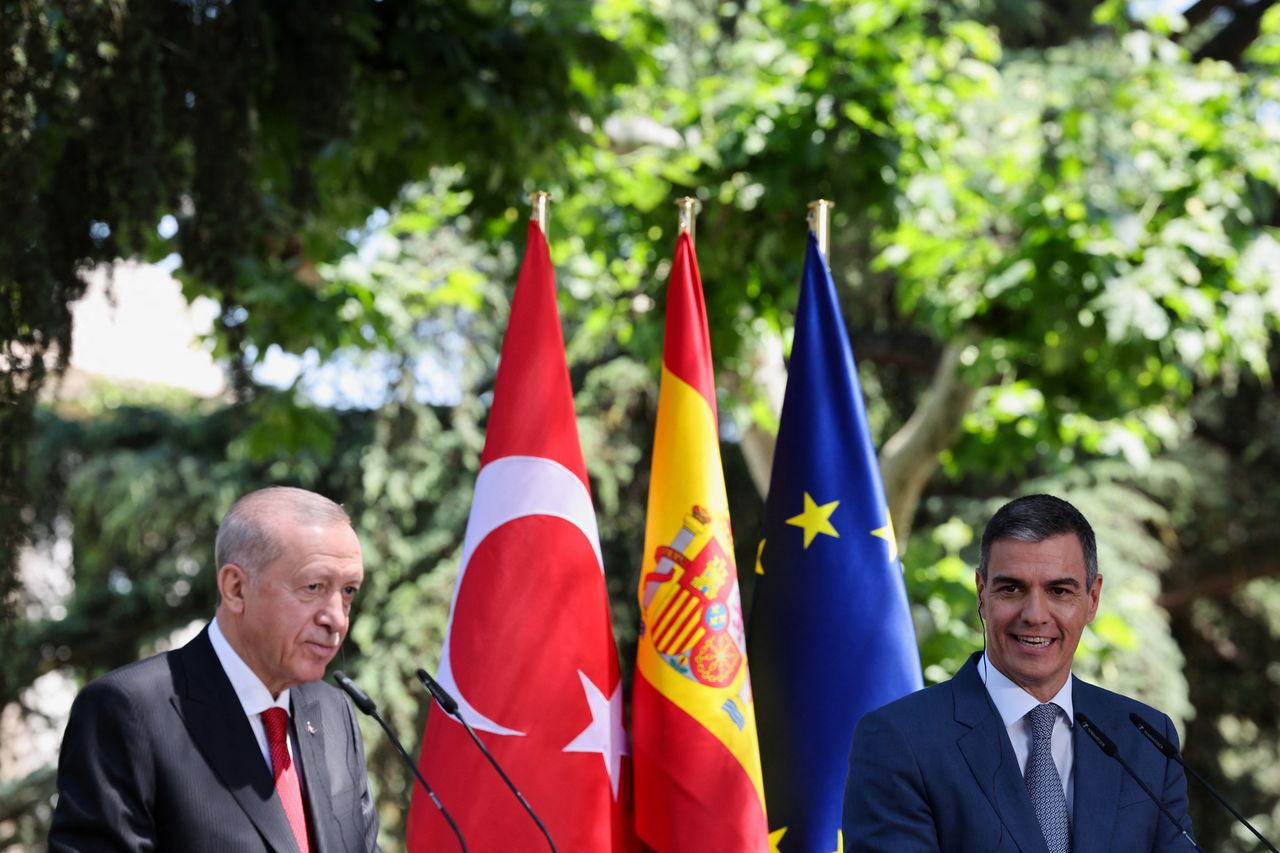
Proposed in 2004 by the then Spanish prime minister, Jose Luis Rodriguez Zapatero (2004-2011), and co-sponsored by Türkiye under the government of Recep Tayyip Erdogan, the initiative stemmed from a simple idea: in an increasingly interdependent world, the security, development, and prosperity of some societies could not be understood in isolation from others.
Based on this premise, it sought to generate a common political will to combat prejudice, misperceptions, and polarisation, especially between Western and Muslim societies.
The United Nations formally incorporated it in 2005.
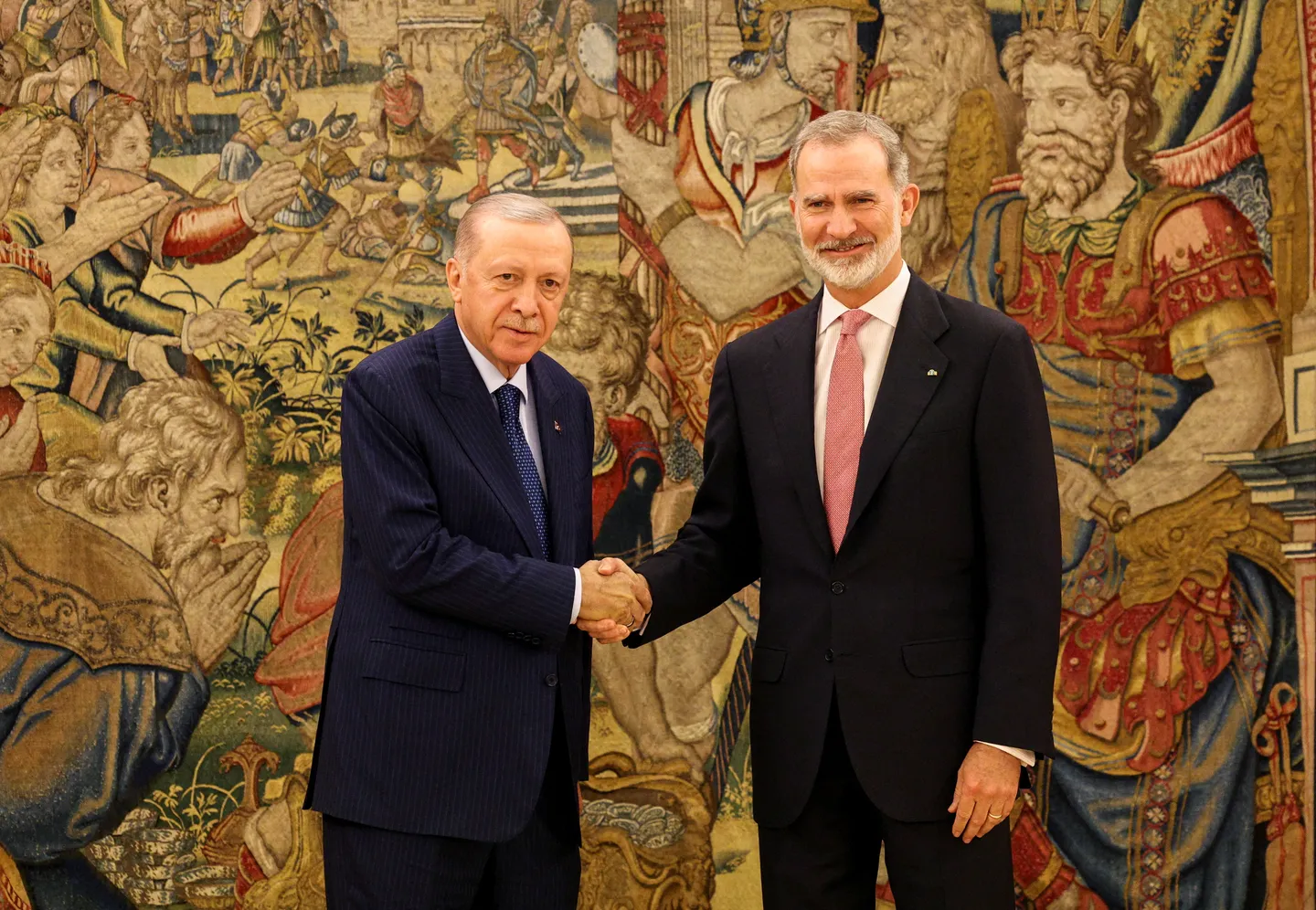
It is difficult to find an image further removed from Lepanto: Spain and Türkiye presenting themselves together, not as representatives of civilisations destined to clash, but as promoters of dialogue between them.
Today, the relationship between Spain and Türkiye is no longer built solely on governments and embassies.
It is an increasingly broad and diverse relationship, encompassing businesses, universities, tourists, students, and books, and it promises to continue deepening as exchanges between the two societies grow.
In 2025, trade between the two countries exceeded $20.5 billion, a record figure.
That same year, more than 452,000 Spaniards travelled to Türkiye. Istanbul, Cappadocia, and the Aegean coast are now increasingly popular tourist destinations for Spaniards.
Contact between the two countries is thus beginning to extend beyond diplomatic summits.
Cultural ties have also strengthened. The Cervantes Institute has operated in Istanbul since 2001, and the Yunus Emre Institute has had a branch in Madrid since 2018.
Both serve as spaces to promote their respective languages and cultures through courses, cultural activities, and meetings that bring the two societies closer beyond official relations.
Added to this is a growing circulation of books and ideas: Turkish authors such as Orhan Pamuk , Zulfu Livaneli , and Ahmet Hamdi Tanpinar can now be read in Spanish, bringing themes such as Istanbul, memory, modernisation, and the tensions between tradition and change closer to Spanish-speaking audiences.
At the same time, Spanish works continue to find new readers in Turkish.
History has not simply been a leap from enmity to friendship. The process was more complex and gradual: Spaniards and Ottoman Turks first imagined each other, then learned to negotiate, later built permanent relationships, and finally began to get to know each other more directly.
The Mediterranean Sea, which separated the worlds of Philip II in the 16th century and the Ottoman sultans, remains in the same place. The distance between its two shores, however, seems to be shrinking.
(This article was first published on TRT Español)