For Palestinian amputees in Gaza, an Adidas campaign featuring a former Israeli soldier who lost a leg has come to embody two starkly different realities.
Former Israeli soldier Shalev Biton appeared in a local campaign promoting Adidas’ “Single Shoe” service, designed for amputees and others who need only one shoe.
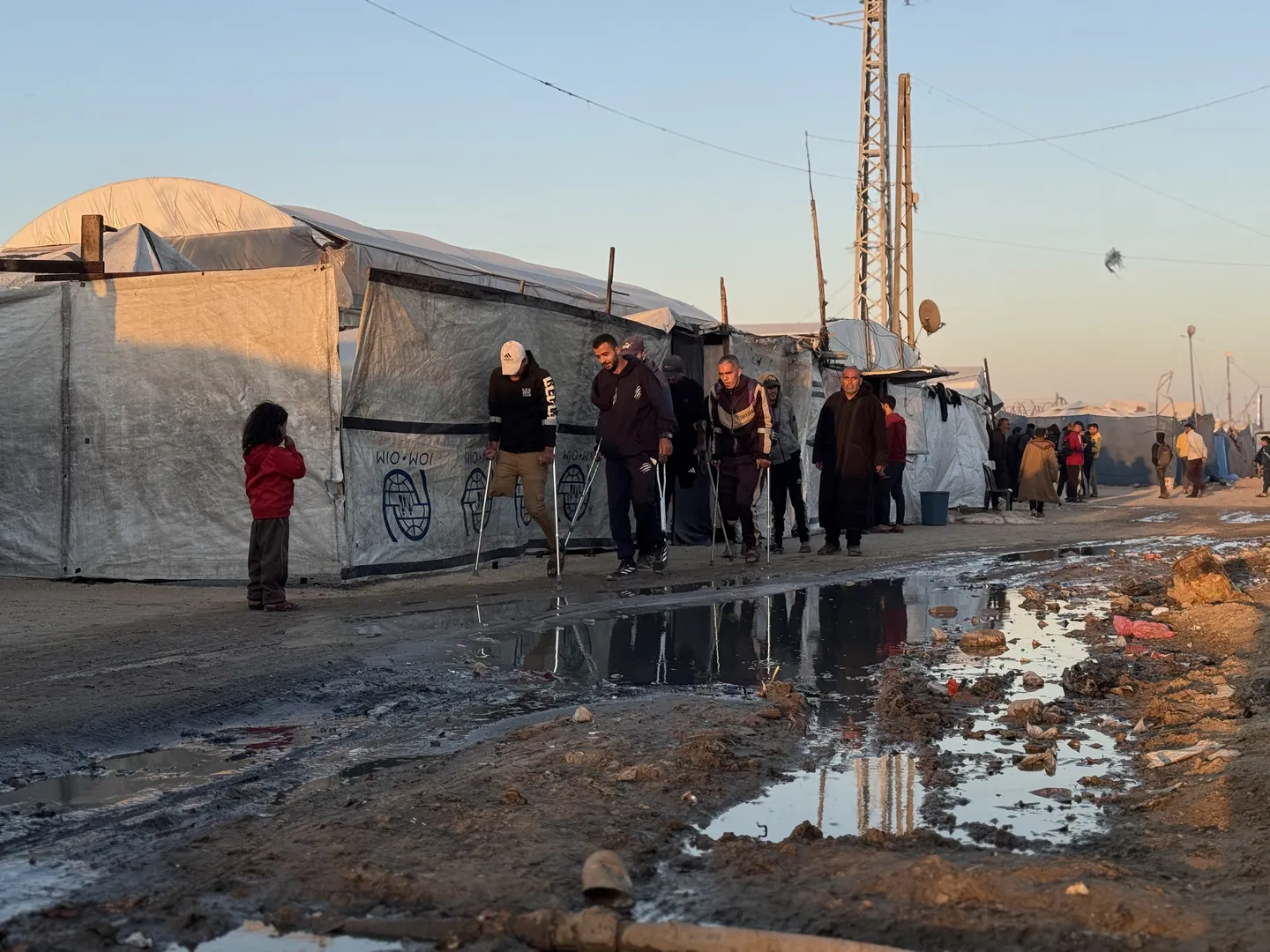
In Gaza, meanwhile, thousands of Palestinians who lost limbs in brutal Israeli attacks continue to struggle to obtain basic prosthetics, replacement parts and rehabilitation.
The contrast has angered amputees in the enclave, who question why a former Israeli soldier was chosen for such a campaign while their own needs remain largely unmet due to the Israeli blockade despite a ceasefire deal.
‘How can Adidas do this?
Omar Haliwa, 14, lost his leg in an Israeli strike while on his way to collect water. Several relatives who were with him were also killed.
“How can Adidas bring an Israeli soldier and put him in an advertisement while we, the wounded of the war in Gaza, are suffering so much?” Haliwa says.
He said losing his leg changed his life completely, while attempts to obtain a suitable prosthetic repeatedly ran into shortages of raw materials at Gaza’s prosthetics centres.
For Haliwa, seeing a former Israeli soldier receive services tailored to amputees while Palestinians struggle to obtain basic prosthetic limbs was painful.
He urged Adidas to pay attention to Palestinian children and young people who have lost limbs in Israeli attacks.
‘We have nothing’
Kifah al Fakhouri, who lost her leg in an Israeli strike on a seaside cafe in Gaza City, said she was shocked by the campaign.
“I would have liked Adidas to pay attention to the needs of the people of Gaza and Palestine, because we have thousands of amputees,” she says.
“This soldier lost his leg in 2021 and now has a prosthetic limb and resources. We in Gaza have nothing — no treatment, no equipment, no supplies.”
Fakhouri said prosthetic limbs available in Gaza often fail to meet patients’ needs, with some too heavy or unsuitable for everyday use.
Amputees need modern joints, replacement parts and better prosthetics to regain mobility, she said, adding that losing her leg affected her work, movement and virtually every aspect of daily life.
Ahmed Jawadi al Balawi, another Palestinian who lost a leg during the war, said his prosthetic had already worn out and needed maintenance and replacement parts.
“Look at us with mercy,” he said.
“They do not need help the way we do. They have resources. We have nothing. We make something out of nothing.”
Balawi said many amputees in Gaza are forced to use old or poorly fitting prosthetics and struggle to find shoes and accessories compatible with them.






Nabil Abdullah Mahmoud Ibrahim lost his leg when an Israeli drone struck him while he was playing football with other children at a school sheltering displaced Palestinians in northern Gaza.
“Shouldn’t Adidas support Gaza, when so many people here have lost limbs?” he asked.
He said Palestinians with amputations should receive the same support and opportunities available to others living with similar injuries.
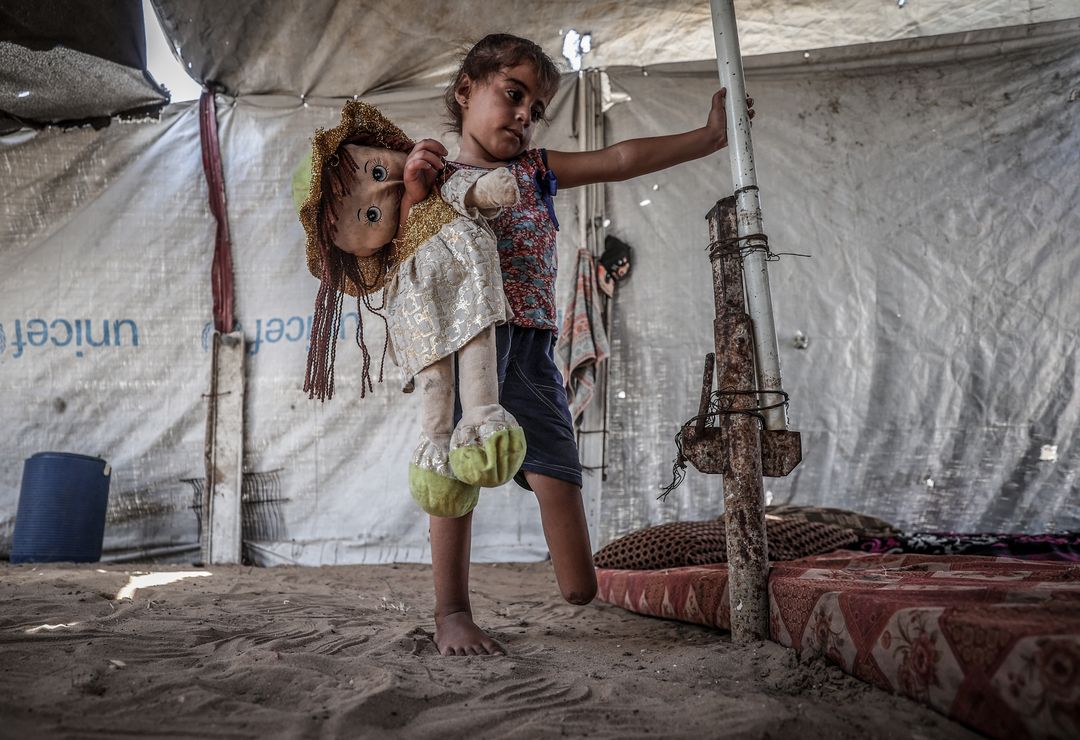
More than 8,000 amputees in Gaza
Munir al Barsh, director-general of the health ministry in Gaza, said estimates indicate that more than 8,000 Palestinians have lost limbs during Israel’s genocide in Gaza, including more than 3,000 children.
He said Gaza has trained specialists capable of producing and fitting prosthetic limbs, but restrictions on the entry of raw materials and medical supplies have prevented many patients from receiving suitable prosthetics.
“The priority should be the Palestinian child who has lost a leg or an arm and needs rehabilitation,” Barsh said.
He urged international organisations and global companies to support Palestinian amputees and help provide prosthetics and rehabilitation equipment.

Boycott calls
The controversy intensified after images from the campaign spread widely online, with pro-Palestinian users contrasting Biton’s access to prosthetics and specialised services with the conditions facing thousands of amputees in Gaza.
Israel’s Channel 15 said posts about the campaign drew millions of views, while calls to boycott Adidas spread across social media.
Amid the backlash, Adidas Arabia, the sportswear company’s regional Middle East social media account, issued an apology over the campaign, saying an image used in a recent local activation had raised “concerns and strong reactions.”
“It was never our intent to cause offence, and we apologise for anyone affected,” the statement said, stressing that the promotion was a local initiative rather than part of a global campaign.
Adidas Arabia also said the company would continue to “listen, learn and work” to ensure its actions reflected its stated inclusive values.
For Gaza’s amputees, however, the controversy exposed a gulf that went far beyond a single advertisement.
One campaign had put an amputee in the spotlight. Thousands of others in Gaza were still waiting for the chance to walk again.
Israeli occupation forces have killed more than 73,000 Palestinians and wounded over 174,000 in Israel’s genocidal war on Gaza that has destroyed or damaged much of the enclave’s civilian infrastructure since October 2023.