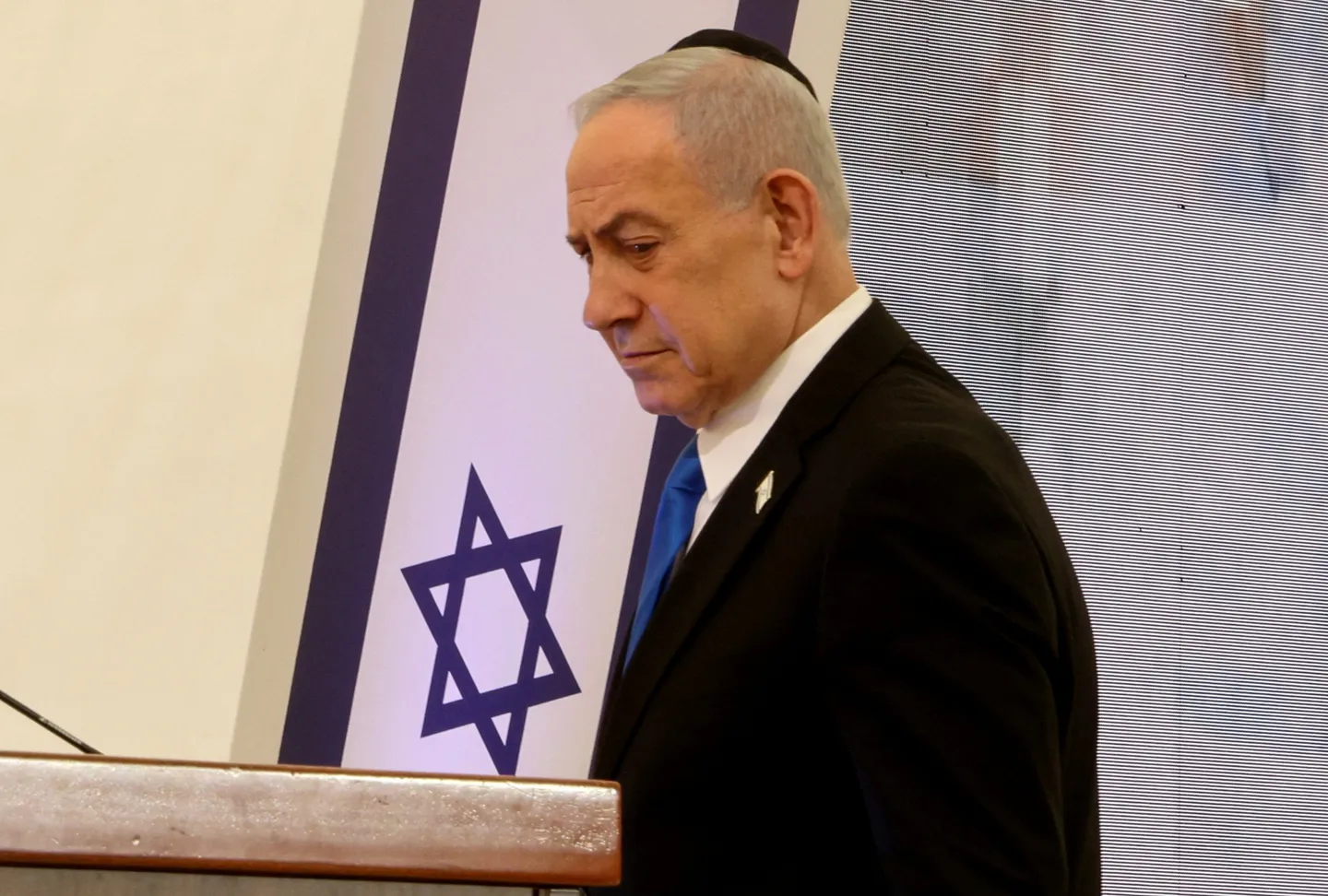
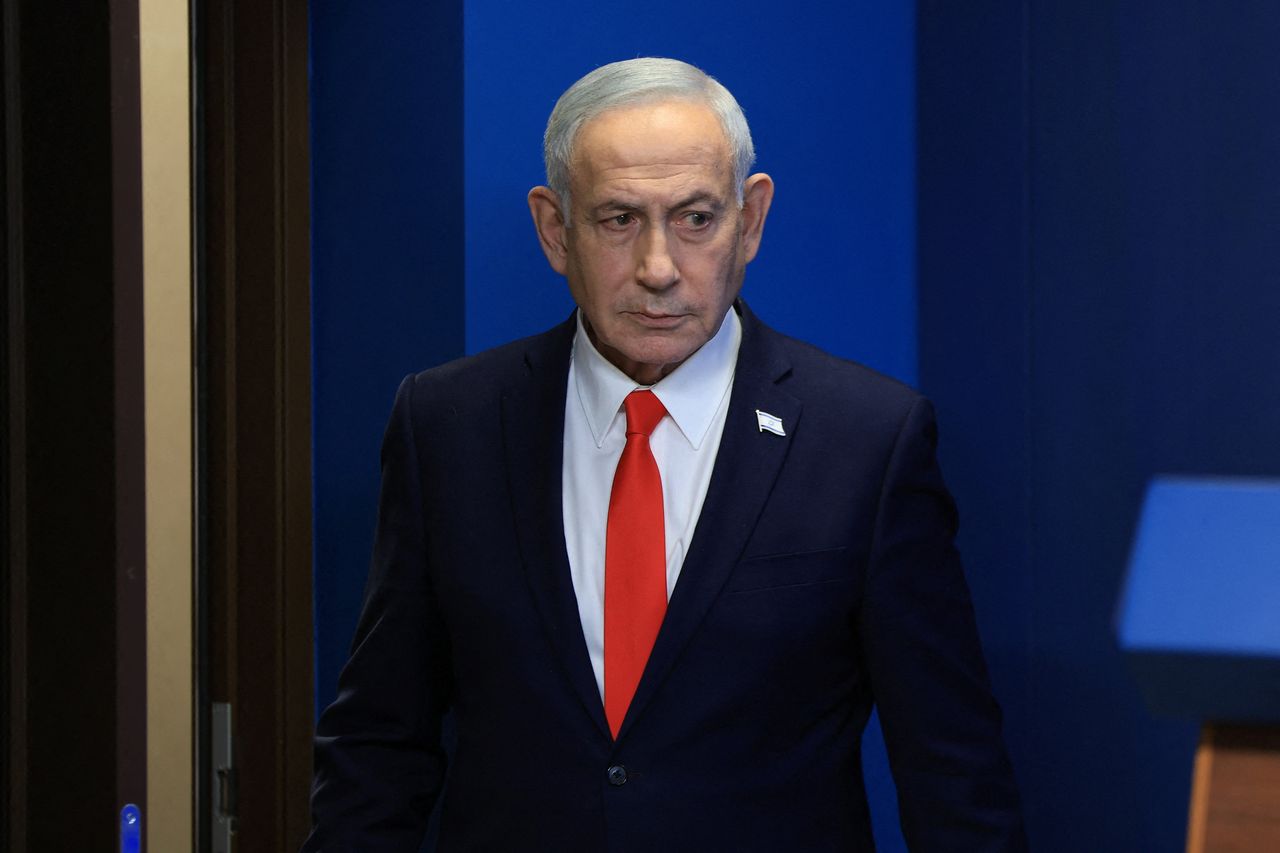
A new poll has shown Prime Minister Benjamin Netanyahu’s political bloc at its weakest point ahead of Israel’s next election.
The Maariv survey has projected the opposition bloc to win 62 seats in the 2026 election, while the current coalition could drop to 48.
Published on Friday, the poll comes as Netanyahu advances legislation ahead of the expected dissolution of the Israeli parliament, the Knesset, which has 120 seats.
When asked about voting in the elections, 49 percent of respondents replied that they would only vote for a party that belongs to the bloc of parties opposing Netanyahu.
A total of 36 percent of respondents said they would vote only for a party aligned with Netanyahu’s bloc, while 12 percent remain undecided about which bloc to support.
Another 3 percent said they would back a party outside either bloc.
Netanyahu’s Likud has lost support and is tied with Yashar! at 22 seats, according to the survey.
The opposition, led by Gadi Eisenkot’s Yashar! party is projected to secure a parliamentary majority in the October 27 election.
Shas party, separately, has fallen to seven seats, its lowest projected result since winning 11 mandates in the 2022 election.
The Religious Zionist Party remains at four seats, while Otzma Yehudit has declined to seven.
Blue and White and Balad are projected to fall below the 3.25 percent electoral threshold required to enter the Knesset.
The poll also found strong opposition to including ultra-Orthodox Haredi parties in the next governing coalition.








Support of Arab parties
About 83 percent of respondents opposed Haredi parties’ inclusion, while only 8 percent supported bringing them into the coalition.
Meanwhile, 70 percent backed including an Arab party in the future coalition, while 10 percent opposed the move, and 20 percent say it doesn't matter or they have no opinion.
Public confidence in the current government’s decision-making has also weakened ahead of the election.
Only 38 percent of respondents believe the government can make the right decisions, while 55 percent disagree.
Israelis leave Israel
Maariv commentator Shlomo Maoz published data over the weekend showing a sharp rise in the number of people leaving Israel in recent years.
In 2022, about 37,800 people left Israel, while 22,300 returned after spending time abroad, resulting in a net negative migration balance of 15,500.
In 2023, 59,400 people left Israel, compared with 29,600 who returned. The negative migration balance rose to 29,800 that year.
The trend intensified in 2024, when 82,800 people left Israel, while only 24,200 returned. The negative migration balance reached 58,600 people.