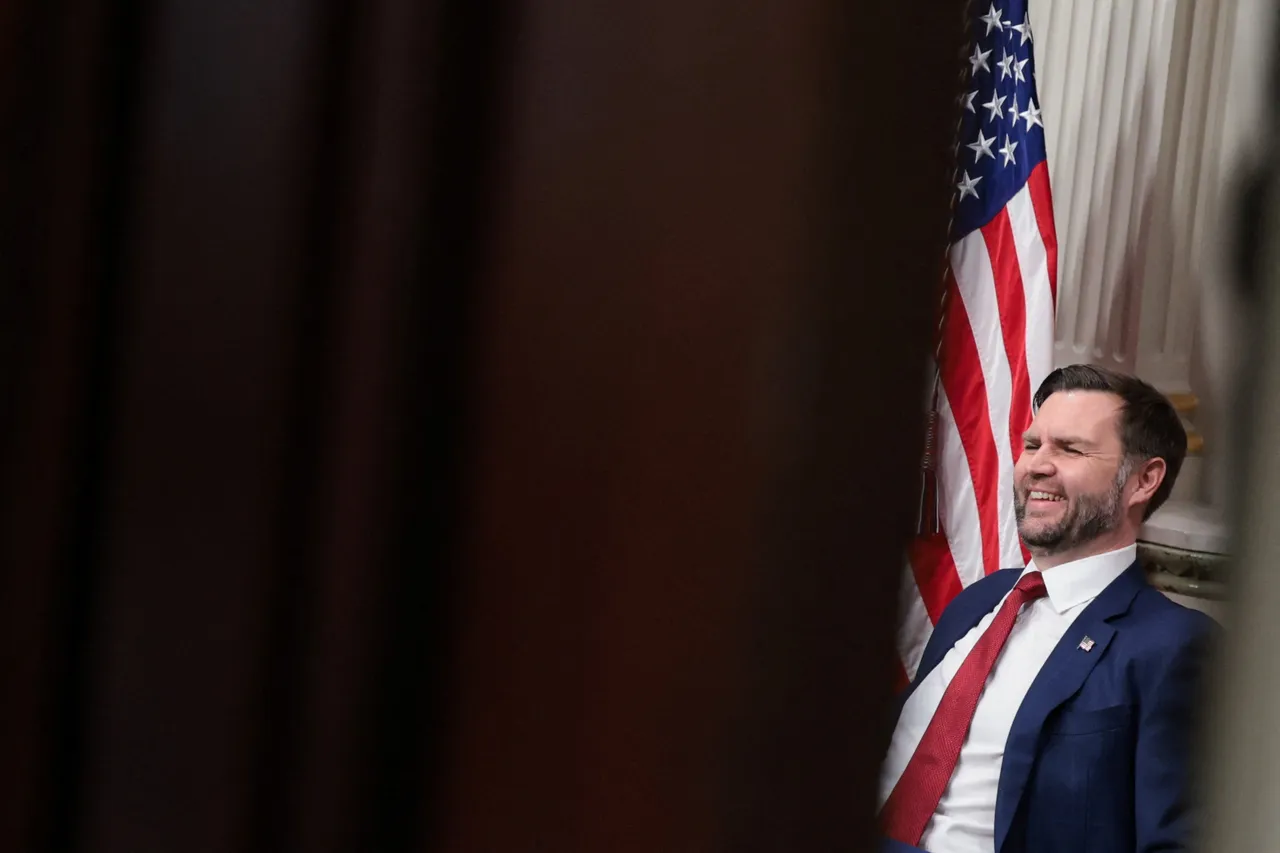
US Vice President JD Vance is emerging as a key figure in Washington’s efforts to broker a peace deal with Iran amid the ongoing war, which is now nearly a month old.
Diplomatic contacts are intensifying through regional mediators, including Pakistan, which has been relaying US messages to Iran and vice versa.
According to an Axios report, Vance has taken a leading role in behind-the-scenes diplomacy, holding multiple discussions with Israeli Prime Minister Benjamin Netanyahu and engaging with Gulf allies while maintaining indirect communication channels with Iranian officials.
The report said the White House views Vance as a central negotiator due to his senior position and his skepticism towards prolonged military engagements, positioning him as a suitable envoy for sensitive talks.
Vance's diplomatic efforts include coordination with countries such as the United Arab Emirates and Qatar, focusing on de-escalation, potential peace negotiations, and regional security dynamics.
US President Donald Trump formally confirmed Vance's role on Thursday, asking him to brief officials on Iran and noting he is working alongside Mideast Envoy Steve Witkoff and Jared Kushner, Trump’s son-in-law, on ongoing negotiations.
White House officials told Axios that Vance’s senior standing and opposition to prolonged overseas conflicts make him a more appealing interlocutor for Iran than Witkoff and Kushner, with Witkoff recommending him as lead negotiator.
"If the Iranians can't strike a deal with Vance, they don't get a deal. He's the best they're gonna get," a senior administration official said.
A White House official said Witkoff and Kushner are still handling negotiations, while Vance is prepared to take a larger role if talks progress.
Iranian officials have, however, reportedly rejected further negotiations with Kushner and Witkoff.
They have conveyed through back-channel intermediaries, that they have "zero trust" in the duo, accusing them of "stabbing Iran in the back" by conducting peace talks while the US and Israel were already planning for the war on Iran.
Did Vance shout at Netanyahu?
White House officials suspected some Israeli figures tried to undermine Vance after a tense call with Netanyahu, where he questioned overly optimistic war expectations.
US and Israeli sources also denied reports that Vance shouted at Netanyahu, calling the claims inaccurate, the report said.
"Before the war, Bibi (Netanyahu) really sold it to the president as being easy, as regime change being a lot likelier than it was," a US source told Axios. But "the VP was clear-eyed about some of those statements," the source added.

The report said that Vance initially voiced skepticism about the war’s duration, goals, and impact on US resources, but backed a strategy of overwhelming force once Trump decided to proceed.
While supportive of Israel, Vance remains wary of divergences in US and Israeli objectives and is expected to follow Trump’s direction in pursuing a preferred outcome, Vance advisers say, according to the report.
"He has his own views, but he is going to work according to Trump instructions, and try and achieve an outcome that the president likes," said a source close to Vance told Axios.
To end the war on Iran, the US government recently sent a 15-point proposal to Iran through mediator Pakistan.
The proposal calls for several actions, including the removal of Iran's stockpiles of highly enriched uranium, a halt to uranium enrichment, the cessation of its ballistic missile programme, and a reduction in funding for its regional allies.
Tehran rejected the US proposal and issued its own five-point counter proposal that calls for complete halt to US-Israeli aggression and assassinations, guarantees to prevent future war, payment of war damages, ending war on all resistance groups, and sovereignty over the Strait of Hormuz.
Iran has stated that it will only end the war "at a time of its own choosing" and only if its conditions are fully met. It has also ruled out direct negotiations with the US until the conditions are accepted.
Wall of mistrust
Iran, however, appears reluctant to trust the US in negotiations after repeated experiences of what Tehran views as American bad faith, broken commitments, and the use of talks as a cover for military strikes.
Last year, while indirect talks were underway, the US and Israel bombed Iranian nuclear sites, including on Natanz and Fordow.
This year, hours before US and Israeli began their war on Iran, mediator Oman revealed that Iran had agreed to zero stockpiling of uranium and to convert existing enriched material into fuel, calling it an "unprecedented breakthrough" in nuclear negotiations that were taking place in Geneva.
Writing in The Economist, Badr Albusaidi, the Omani Foreign Minister, offered a damning assessment of events leading up to the US-Israeli war on Iran, blaming "Israel’s leadership" for persuading Trump to join the war on the false basis that Iran’s administration would offer an "unconditional surrender" after the assassination of its supreme leader Ali Khamenei.
"The American administration’s greatest miscalculation, of course, was allowing itself to be drawn into this war in the first place," he wrote. "This is not America’s war, and there is no likely scenario in which both Israel and America will get what they want from it."
Amidst this mistrust, Vance is expected to hold talks with Iran, be they direct or indirect. However, Trump has offered no guarantee that Israel will abide by a potential US-Iran peace deal.
Israel has threatened to persist with attacks on Iran until its own war objectives are fulfilled, differing from those of the US.