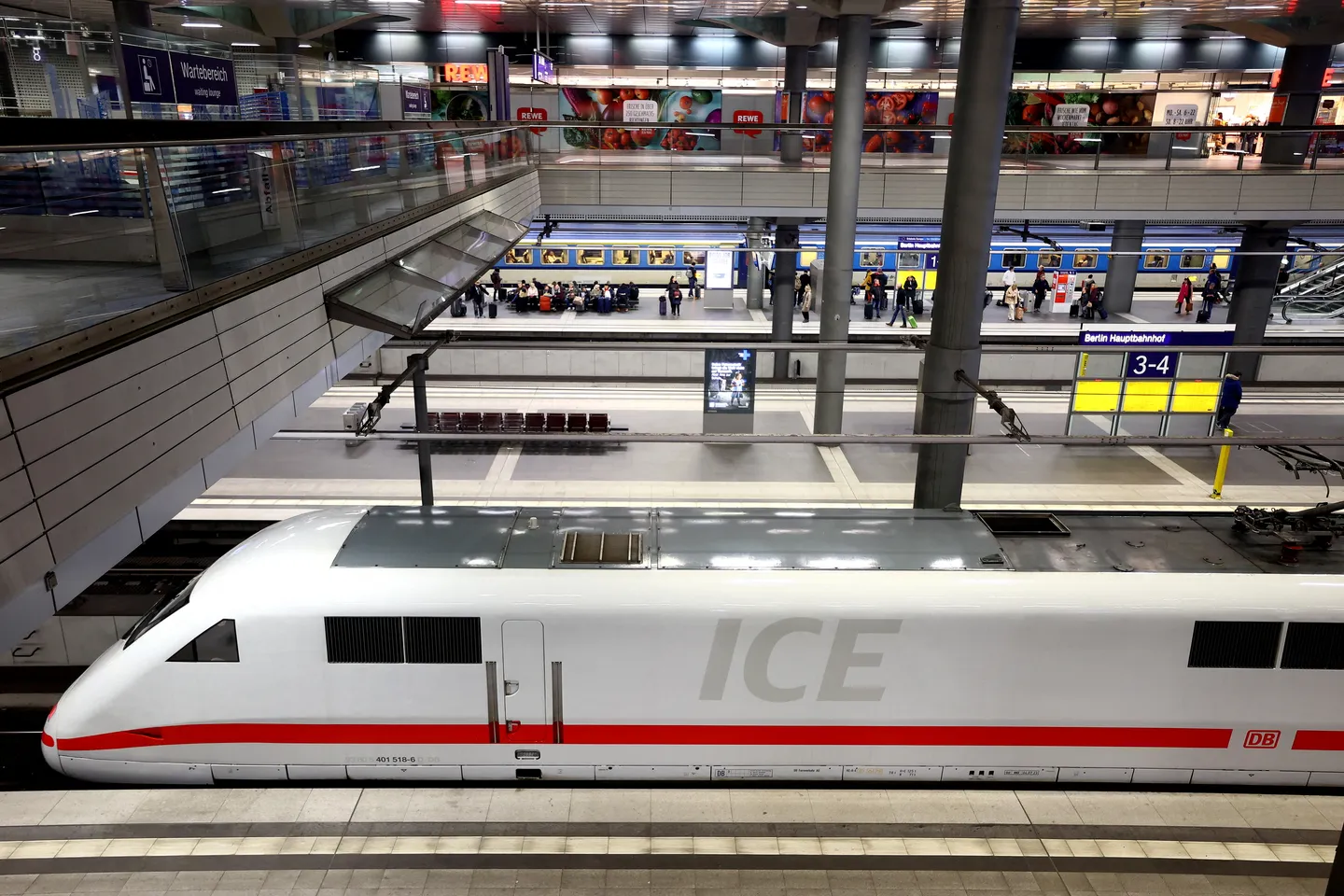
An emergency drill simulating a fire aboard a high-speed train in central Germany exposed failures in communication and rescue procedures that caused delays and could have cost lives in a real emergency, local media reported on Tuesday.
The exercise was held on Saturday on the Intercity Express (ICE) rail route between Nuremberg and Erfurt in the state of Thuringia's Ilm district, simulating a fire aboard a train carrying around 100 passengers inside a tunnel. About 250 personnel took part, German broadcaster Tagesschau reported.
The drill, however, encountered several problems, including delays in alerting emergency services and difficulties opening the train's doors.
Thuringia Interior Minister Georg Maier said it took around 15 minutes for Deutsche Bahn's emergency call centre to notify the responsible emergency dispatch centre in the Ilm district. The centre then alerted fire departments, also with a delay.
‘Faxing outdated’
Ilm district administrator Petra Enders told German outlet FOCUS Online that information about the simulated train disaster and mass-casualty incident was transmitted between emergency centres by fax.




"Sending orders via fax. I consider faxing outdated. Urgent action is needed here. We live in the age of digitalisation," Enders said.
Emergency crews were also initially unable to open the train's doors from the outside, causing further delays.
Enders said the doors would normally be unlocked with a special railway key after the train was completely powered down. In a real emergency, rescuers could break windows or use specialised equipment to gain access, she added.
Communication problems were also reported between rescue teams, incident commanders and emergency dispatch centres.
A technical failure at one dispatch centre further disrupted communication with neighbouring centres that would normally be called on for additional assistance.
The malfunction was not immediately detected because emergency services were simultaneously responding to two serious real-life traffic accidents in the Ilm district, according to Enders.
Maier warned that in a real emergency, the problems uncovered by the exercise could have resulted in a significantly higher number of casualties, according to Tagesschau.