Five European countries and Rwanda have announced that they are exploring the establishment of the first return hub outside Europe, aiming to reach an agreement and begin transferring rejected asylum seekers by 2027.
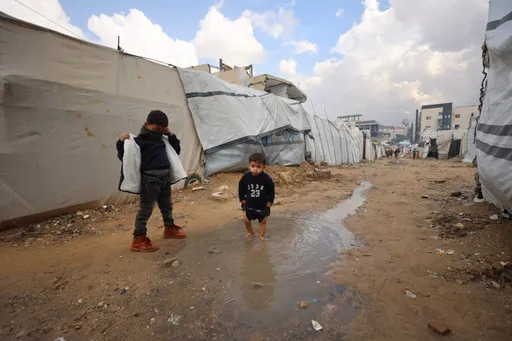
Austria, Denmark, Germany, Greece, and the Netherlands said in a joint statement published by Denmark's Immigration Ministry that the proposed facility would accommodate irregular refugees without legal permission to remain in the participating EU countries and who are subject to enforceable return decisions.
The initiative would allow transferred migrants to integrate into Rwandan society or voluntarily travel to their countries of origin or other countries where they can legally reside, with international support, according to the statement.
Speaking at a press conference in Vienna, Danish Prime Minister Mette Frederiksen called the announcement a turning point.
"For me today marks a crucial step towards a new migration system, a system that safeguards the cohesion of our societies and answers the concerns of our citizens," she said.
Frederiksen said the participating countries are seeking fundamental changes to migration policy, arguing that human smuggling networks are profiting from dangerous journeys to Europe.
Rwandan Interior Minister Vincent Biruta said the partnership would provide a "safe, legal and dignified solution for migrants," while addressing economic inequalities driving irregular migration.
Danish Minister of Immigration and Integration Morten Bodskov called the announcement "a huge breakthrough," saying the proposed hub would help address difficulties in returning migrants without legal residence.








‘Return hubs could reduce irregular migration’
Return hubs offer "a positive approach for people without the right to stay and with no prospects in Europe," German Interior Minister Alexander Dobrindt said, particularly when their countries of origin do not cooperate on repatriation.
Greek Minister for Migration and Asylum Athanasios Plevris said "combating illegal immigration and dismantling human trafficking networks is one of our key priorities," adding that return hubs could reduce irregular migration and increase returns.
Lastly, Dutch Minister of Asylum and Migration Bart van den Brink said the initiative aimed to "increase returns and provide a new chance for migrants to settle in Rwanda.
"This is how the Netherlands, with its partners, will contribute to a modern, effective and well-functioning asylum system," he said.
The joint statement said the proposed arrangement would comply with EU, Rwandan and international law, while the UN refugee agency (UNHCR) is providing advice on human rights standards.
Austrian Interior Minister Gerhard Karner said concrete negotiations with the East African country would begin on Monday.
Karner described the initiative as a pilot project intended to curb irregular migration, disrupt smuggling networks and reduce pressure on the population.