 Murat Sofuoglu
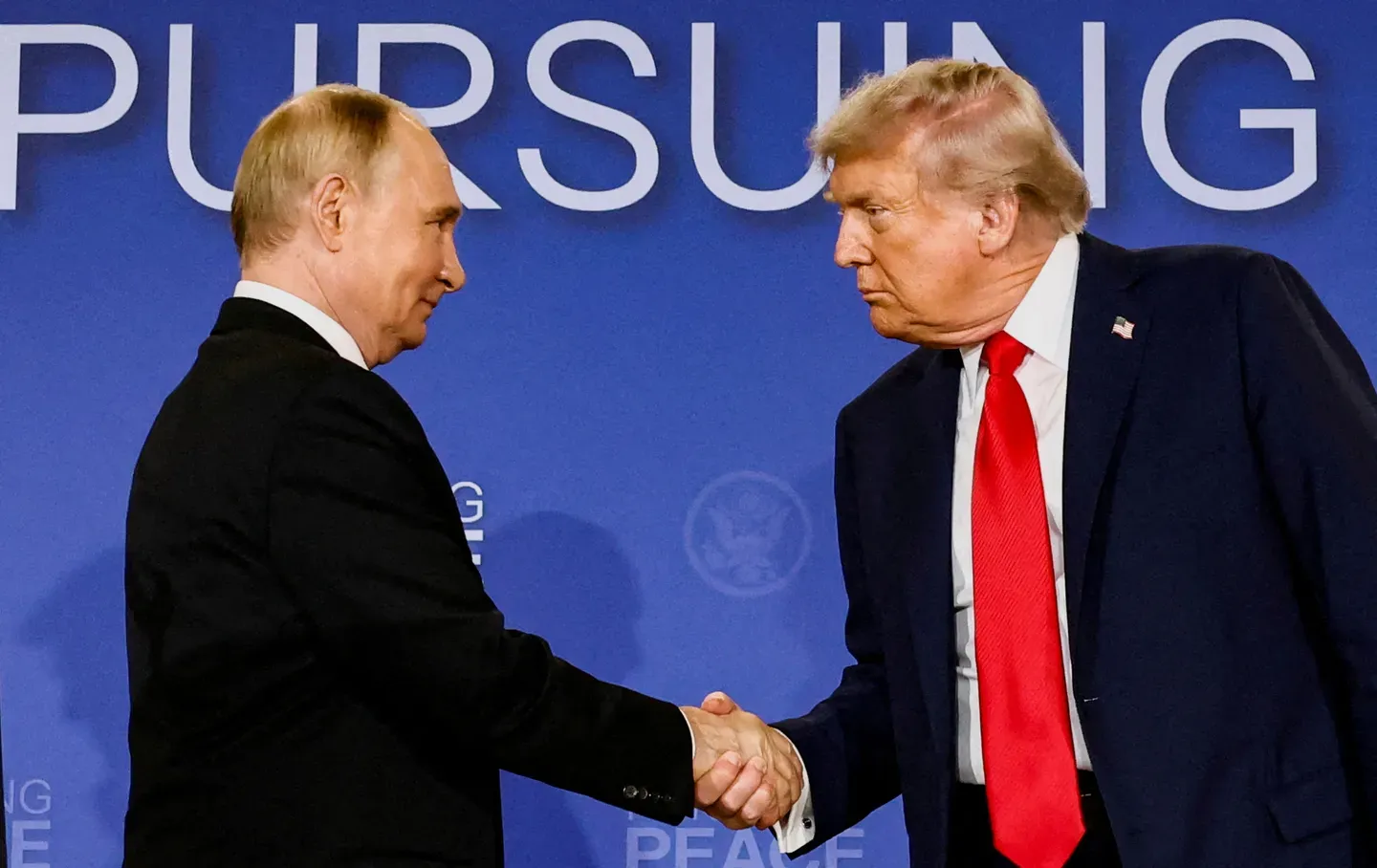
US President Donald Trump and his Russian counterpart Vladimir Putin have publicly expressed their admiration for each other and often showcased their veneration in high-profile summits and one-on-one meetings.
But, as repeated attempts by the US to broker a truce between Russia and Ukraine falter of late, the bromance has come under strain, setting off a new battle of attrition between Putin, a former top KGB operator, and Trump, a billionaire real estate developer.
As the face-off escalated, Trump cancelled a proposed meeting in Budapest with Putin, which was planned after a rare two-and-a-half-hour phone call between the two, saying that he was not going to be “wasting” his time.
Trump scaled up his tirade soon after, slapping sanctions on two top Russian oil companies – Rosneft and Lukoil – even as Russia continued to strike Ukrainian cities, and going as far as testing its “unique” nuclear missile.
While the Kremlin denounced the fresh US sanctions, it has still adopted a conciliatory tone toward the White House, saying that the Budapest meeting has not been called off completely but needs more time for preparations.
Despite the Kremlin’s softer tone and Trump’s openness to future talks with Putin, geopolitical analysts feel that the two leaders might actually take more rigid stances to increase pressure on one another.
The imposition of sanctions against Lukoil and Rosneft shows that Trump, “at least for now, is willing to actually play the cards he holds” against Russia, says Rafael Loss, a policy fellow on defence, security and technology at European Council on Foreign Relations.
Trump's potential moves include approving the US Congress’s extensive sanctions package and supporting American lawmakers to pass a new military aid bill, which will allow Washington to arm Ukraine directly, according to the Berlin-based analyst.
Though Trump had ruled out sending long-range Tomahawk missiles to Ukraine, Loss believes that this could change following the postponement of his meeting with Putin.
Like several military analysts, Russian officials have also warned that providing Tomahawks to Ukraine will escalate US-Russia tensions to a new level.
"It is impossible to use Tomahawks without the direct participation of American military personnel. This will mean a completely new, qualitatively new stage of escalation, including in relations between Russia and the United States," said the Russian leader.
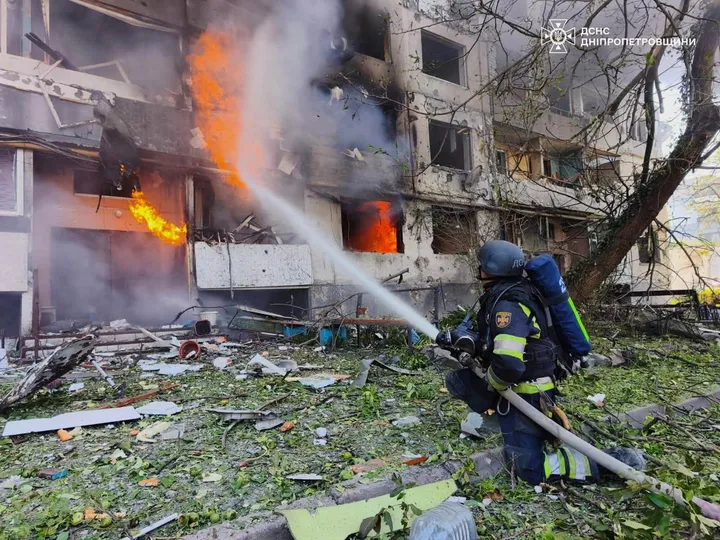
Throughout the Putin-Trump talks – from the much-hyped Alaska summit until now, Russia has continued to pound Ukrainian cities with its missiles and drones, showing no break in its military campaign against Kiev.
While the Kremlin has made positive statements toward Trump’s peace initiatives from Gaza to Ukraine and elsewhere, some powerful Russian figures like former Russian president and Putin ally Dmitry Medvedev have been very critical of Trump’s threats against Moscow.
Medvedev, who is now the deputy chairman of the Russian Security Council, called the US president “the talkative peacemaker” and accused him of having “fully embarked on the war path against Russia” with his recent sanctions.
Have Western sanctions worked?
While Trump’s main escalation card against Putin is more sanctions, official data show that the financial measures have not plunged the Russian state into a recession.

According to a recent news report in a leading Western publication, titled Russia’s besieged economy is clinging on, the Russian economy shows no real sign of a collapse.

While no country other than Russia is facing more sanctions in the current period, “predictions of collapse have repeatedly proved wide of the mark,” said the article.
While the EU has imposed 18 different sanctions packages on Moscow so far, barring a brief period of recession, the Russian economy has done exceptionally well between 2022, the year the Ukraine war started, and 2024, the magazine reported.
Westerners believe that their biggest weapon against the Kremlin is their sanctions, but these embargoes “do not work properly” against Moscow, says Sergei Markov, a leading Russian academic who once advised Putin.
While the Russian economy grew more than 4 percent in the previous two years, the EU as a bloc slumped to a 1.2 percent growth in the same period. At least 11 member states did even worse than this average. Seven EU states suffered from negative growth between 2022 and 2024.
This year, Russia’s economic growth will decrease according to various data, including the country’s central bank authorities, but this slowing rate will still be better than Europe, Markov notes.
The question of whether economic sanctions and restrictions on technology exports are affecting Russia’s economy and ability to sustain its war against Ukraine invites another question, according to Loss.
“What would the Russian war machinery look like if there had been no sanctions? Surely, Russia’s public finances would be in much better shape,” he tells TRT World.
How is Russia doing better?
The response is partly hidden in Russia’s energy sector based on its rich oil and gas resources, which fuel the country’s economic growth.
Despite many sanctions, Moscow is able to sell its oil and gas in international markets to countries like China and India, the world’s two biggest eastern populations, which account for nearly 85 percent of Russian fossil fuel exports.
“This is why the Russian economy is doing well,” Markov says, adding that the country’s shadow fleet is enabling Moscow to outmanoeuvre sanctions.
The Economist article also draws attention to difficulties in monitoring Russian-made goods across different markets and routes due to factors like “multi-port re-exporting”, saying that “a vibrant transhipment industry, moving goods from the West to Russia via non-aligned countries, is hard to police.”
Also, the ‘Fortress Russia’ policy – which prepared Moscow for a war economy prior to the attack on Ukraine by accumulating over $600 billion in foreign exchange reserves – played a critical role in keeping the Russian economy afloat, according to experts.
“(W)hen sanctions hit, the economy was less reliant on foreign financing than it had been a decade earlier,” wrote Timothy Ash, a leading economist and an associate fellow in the Russia and Eurasia programme at Chatham House.
But Eugene Chausovsky, a defence expert at New Lines Institute, sees that Western sanctions will begin biting the Russian economy if countries like India “lessen its imports of Russian energy, which has been an important lifeline for the Kremlin”.
While Moscow has adapted to US and EU sanctions over many years and they have not been effective in changing Moscow’s decision-making over Ukraine, there are growing economic challenges within Russia that could test Putin's ability to withstand increased restrictions, the analyst tells TRT World.
“It's important to watch if this hybrid escalation by the West will be met with tit-for-tat escalations by Russia, or whether it will prompt a new round of diplomatic activity,” he says.