Washington, DC — A preliminary US military investigation has found that American forces were responsible for the devastating February 28 Tomahawk missile strike that tore through an elementary school in southern Iran, killing 175 civilians, mostly children and staff.
The attack on Shajarah Tayyebeh elementary school in the town of Minab, southern Iran, appears to have been the result of a targeting fiasco during the opening hours of the US-Israeli war on Iran, New York Times reported on Wednesday, citing US officials familiar with the early findings.
Investigators believe officers at US Central Command generated strike coordinates using outdated intelligence, NYT added.
The data came from the Defense Intelligence Agency, people briefed on the inquiry told NYT.
Officials stressed that several questions remain unanswered, including why the outdated information had not been verified before the deadly strike was carried out.
"Striking a school full of children is sure to be recorded as one of the most devastating single military errors in recent decades," the New York Times report said, citing officials familiar with the investigation.
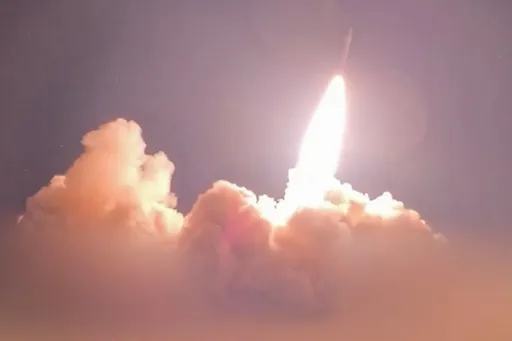
The United States is the only country involved in the war known to deploy Tomahawk cruise missiles, a fact that quickly drew scrutiny to Washington’s role in the strike.
Satellite imagery, verified videos and social media posts reviewed by investigators showed the school was hit by a precision strike.
Layers of verification
A visual investigation by The Times revealed that the building had many entrances that opened to the campus. Sports fields were painted onto the asphalt. The walls were coloured bright blue and pink.
The designation to target the school travelled through the military system until it reached US Central Command, which oversees operations in the region and ultimately generated the strike coordinates.
People familiar with the investigation say officials are still trying to understand how the outdated data was passed along without being corrected.
Military targeting normally involves several layers of verification.
In addition to the Defense Intelligence Agency and Central Command, investigators are examining the role of the National Geospatial-Intelligence Agency, which provides satellite imagery used to confirm potential targets.
"Military targeting is very complex and involves multiple agencies," NYT said, adding, "Many officers would have been responsible for verifying that the data is correct."
US officials have also examined whether artificial intelligence tools used in military intelligence systems could have played a role in the attack.
Dr Craig Jones, senior lecturer in political geography at Newcastle University, told The Times: "At this point we can’t rule out that AI may have … failed to identify the school as a school and instead identified it as a military target."
Fatal chain of assumptions
The strike quickly became one of the most controversial moments of the war, which drew global outrage.
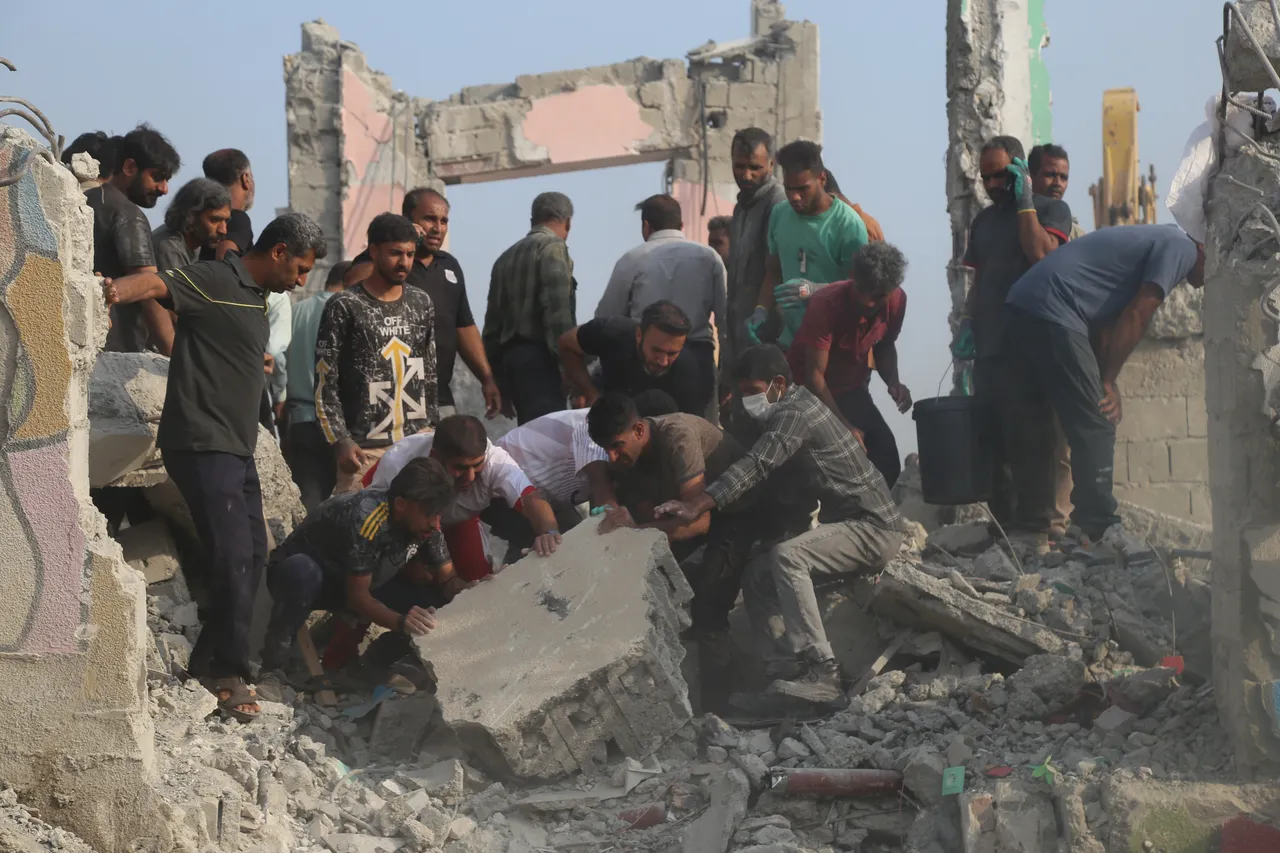
Footage verified by the New York Times showed desperate scenes outside the shattered school building, with rescuers searching through rubble as smoke rose from the ruins.



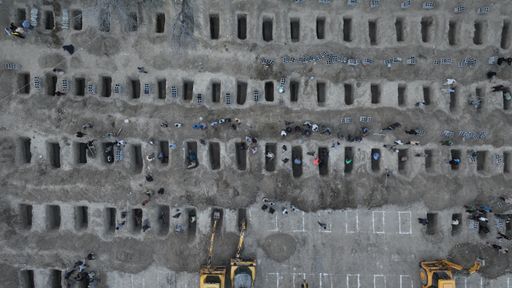
Rows of small graves were later dug at a cemetery in Minab ahead of funerals for children and teachers killed in the missile strike.
The incident has also exposed tensions inside Washington over how the attack was publicly described.
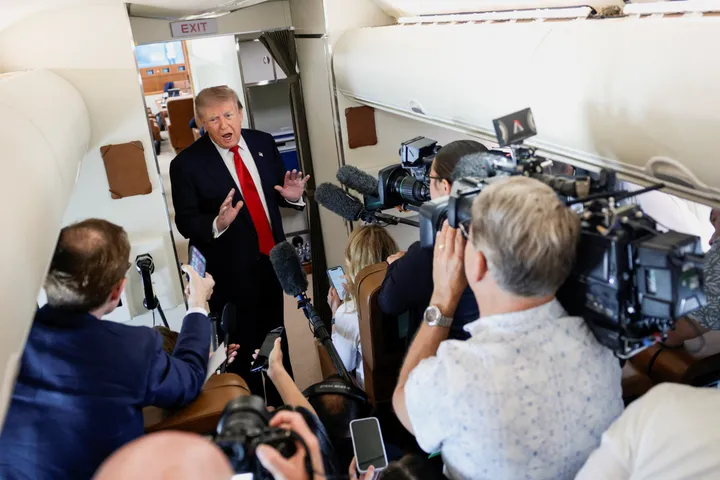
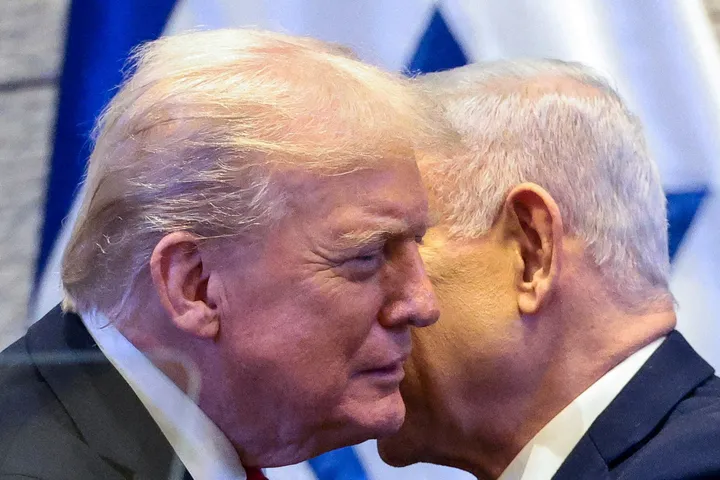
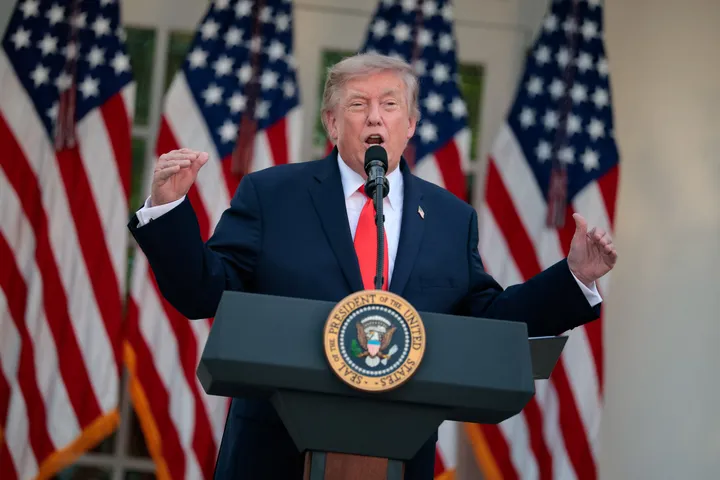
US President Donald Trump initially blamed Iran for the strike.
"In my opinion, based on what I’ve seen, that was done by Iran," Trump told reporters on Air Force One.
"They’re very inaccurate, as you know, with their munitions. They have no accuracy whatsoever. It was done by Iran."
Days later, however, the president acknowledged he did not know enough about the incident to draw firm conclusions.
"Because I just don’t know enough about it," Trump said when asked why he was the only official blaming Tehran.
Karoline Leavitt, the White House press secretary, said on Tuesday the administration would accept the findings once the inquiry is complete.
"As The New York Times acknowledges in its own reporting, the investigation is still ongoing," she said in a statement.
The attack on a school has cast a shadow over the wider US military attacks on Iran.
The strike came during the first wave of US-Israeli attacks across the country, as Washington moved to hit Iranian strategic targets.
AI-driven or human-driven attack?
Military investigators are now working to piece together how a site that was clearly a civilian school remained in a military database as an active target.
The episode has echoes of a notorious intelligence failure from the Kosovo war.
In 1999, flawed intelligence led US forces to bomb the Chinese embassy in Belgrade, killing three Chinese citizens.
"Database maintenance is one of the basic elements of our intelligence effort," then CIA director George Tenet later told Congress.
"But it is also one that has suffered in recent years as our workforce has been spread thin."
For now, the full investigation into the Minab strike continues.
"Whatever ends up being the case — and the facts will remain obfuscated for some time — the strike was a catastrophic intelligence failure, whether AI-driven or human-driven with some AI component," Dr Jones said.