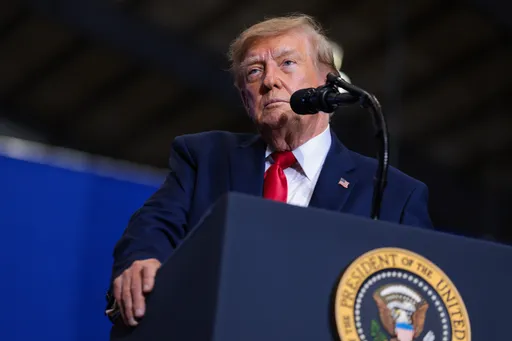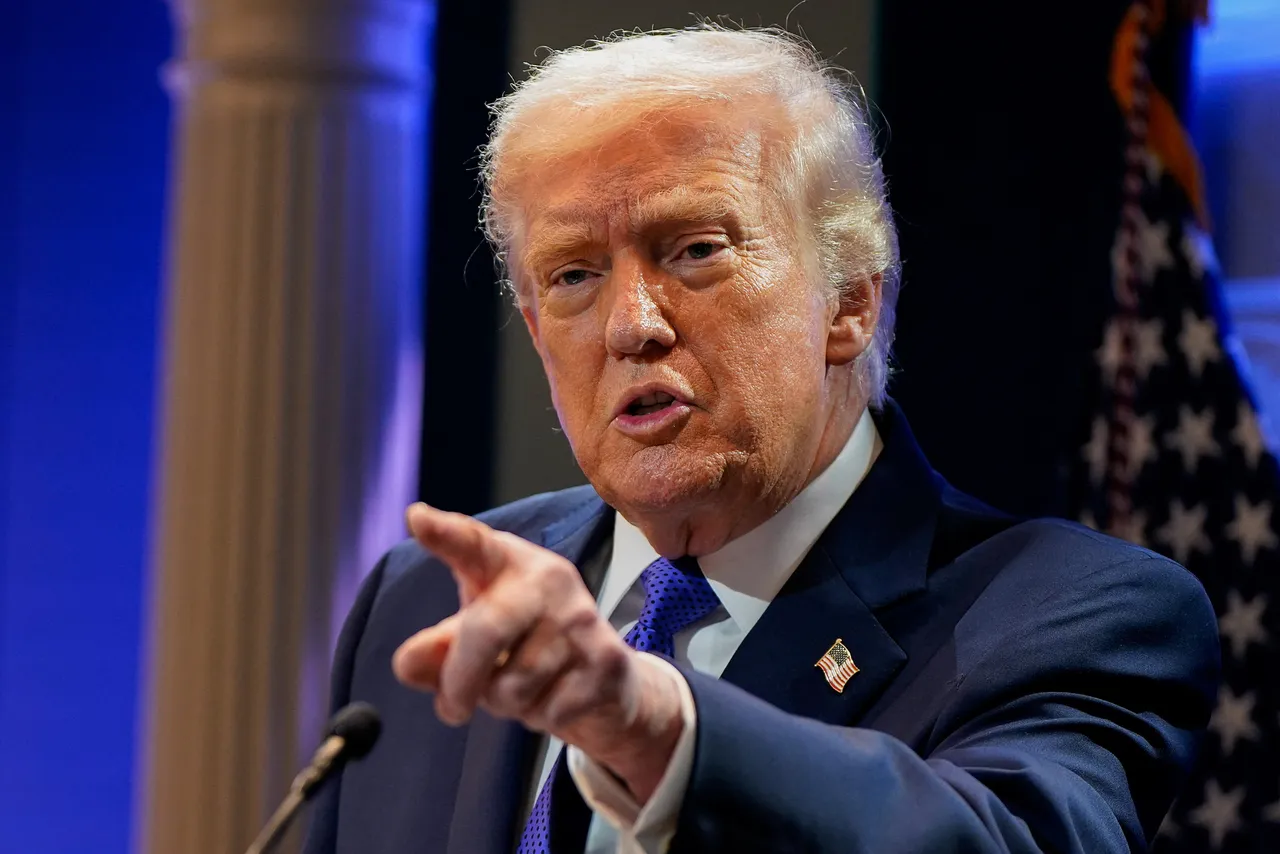
US President Donald Trump has suggested that most trade deals negotiated under the threat of his tariffs remained valid, mentioning specifically India, despite the Supreme Court ruling those levies illegal.
"The India deal is on," Trump told reporters in response to a question, while suggesting tariffs under separate authorities would replace the ones overturned by the Supreme Court.
"All the deals — we're just going to do it a different way."
Trump also said it may take years to resolve the legal issue of whether some $133 billion taken in from his tariffs must be refunded.
Trump said the issue was "not discussed" in the US Supreme Court's ruling declaring his global tariffs to be illegal, adding: "We'll end up being in court for the next five years."
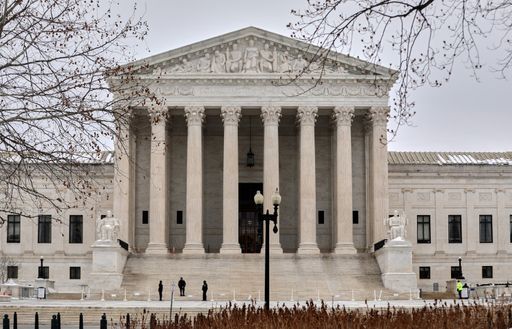
The top court's 6-3 decision severely cuts down on a tool Trump has used to pursue his economic and foreign policy agendas after he spent much of his first year in office using the levies to push nations to cut new trade deals, and saying tariffs were one of several tools he used to pressure countries into halting wars.
The court dismissed the president's rationale that a 1977 law, known as the International Emergency Economic Powers Act (IEEAPA), allows him to impose the import duties on an emergency basis.
India-US trade deal
India and US agreed an interim trade agreement framework announced on February 6, 2026, by Trump and Indian Prime Minister Narendra Modi.
This agreement aims to balance trade relations, boost bilateral commerce, and address geopolitical concerns like India's oil imports.
It's has been positioned as a precursor to a broader Bilateral Trade Agreement (BTA), with negotiations ongoing and expected finalisation in the coming months.





The interim deal is slated to be signed in March 2026 and become effective in April 2026.
Under the deal the US will apply a reciprocal tariff rate of 18 percent on certain Indian goods, including textiles, apparel, leather, footwear, plastics, rubber, organic chemicals, home décor, artisanal products, and machinery.
This represents a reduction from previous levels, which reached up to 50 percent in some cases or included a 25 percent punitive tariff imposed over India's purchases of Russian oil, now withdrawn as part of the deal.
In exchange, India will eliminate or reduce tariffs on a range of US industrial goods, food, and agricultural products, such as dried distillers’ grains, red sorghum for animal feed, tree nuts, fresh and processed fruit, soybean oil, wine, spirits, and more.
India will also buy over $500 billion worth of US goods over the next five years, including energy products, aircraft and parts, precious metals, technology, and coking coal.
As part of the deal, India has committed to halting purchases of Russian crude oil, shifting imports toward US sources and potentially Venezuelan oil, with US facilitating negotiations.
Critics in India contend the deal favours the US, branding it a "humiliating cave-in" due to tariff threats and diplomatic pressure from Trump.
A major flashpoint is the potential flooding of India's market with subsidised US agricultural products, which critics say could devastate millions of small and medium farmers who employ over 700 million people.
Opposition leader Rahul Gandhi deems the deal a "trap", alleging it will harm the textile industry and cotton farmers via cheap US imports, triggering protests and parliamentary opposition.
Defending the deal with India and calling it in the US's interest, Trump called India’s Modi "a great gentleman", adding that the Indian prime minister was "much smarter than the people that he was against in terms of the US. He (Modi) was ripping us off."
"So we made a deal with India, it’s a fair deal. We did a little flip."
"Our deal with India is they pay tariffs… India is now paying tariffs and we are not paying tariffs," said Trump.