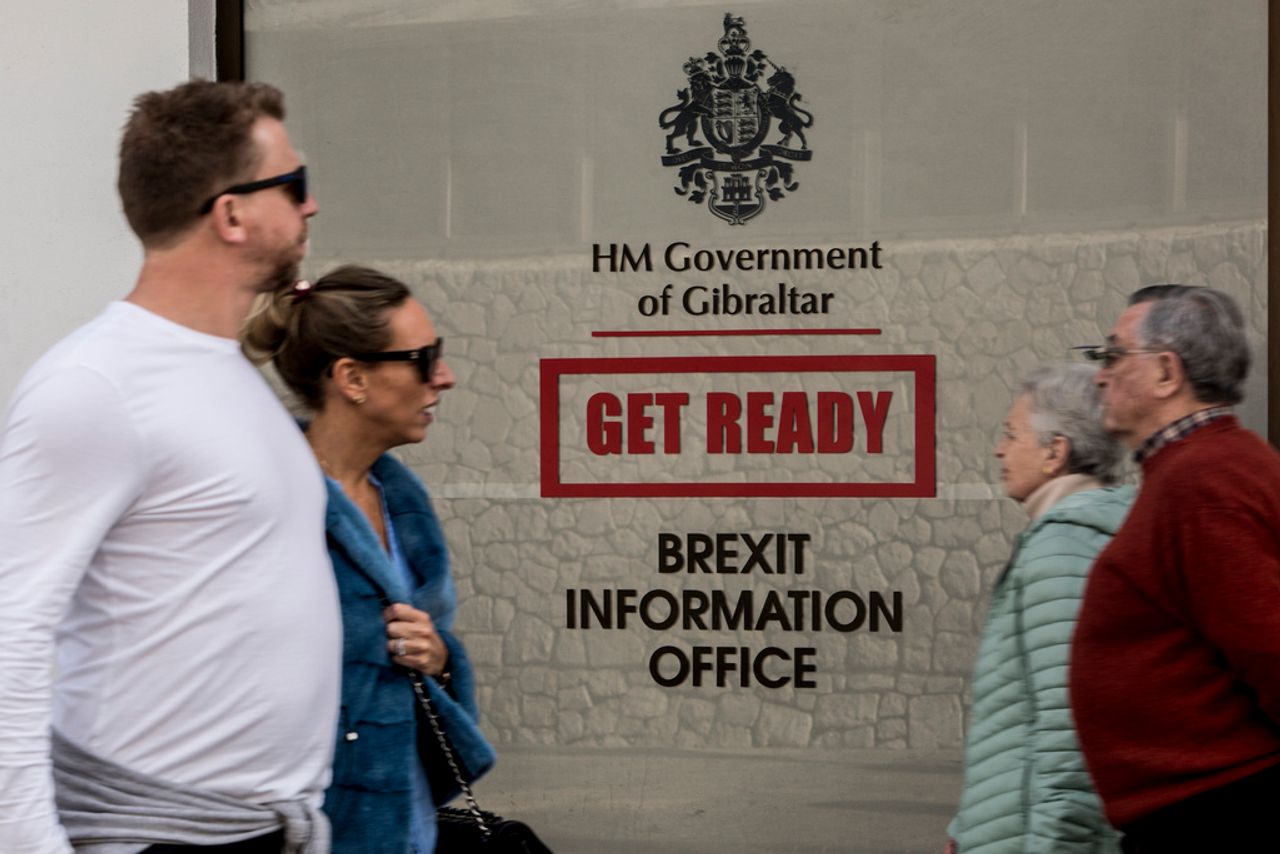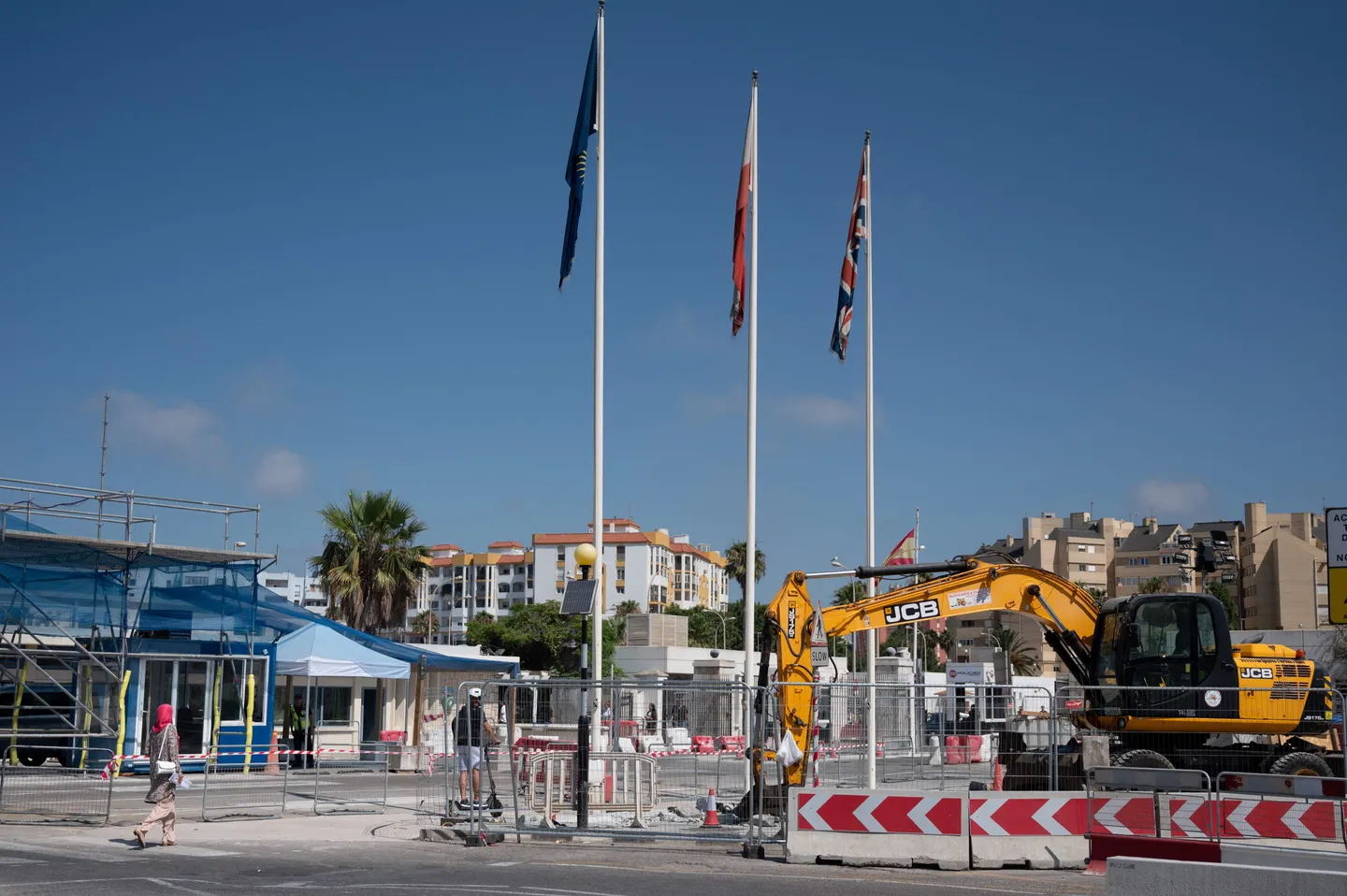
Thousands of workers crossing daily between Spain and Gibraltar will enter a new era of easier travel, as border checks that have long been a source of tension are lifted.
Home to only around 40,000 people, the tiny self-governing British overseas territory at the southern tip of the Iberian Peninsula relies on about 15,500 daily cross-border workers from Spain, who make up nearly half of its workforce.
During rush hours, long lines can form at the land border, and documents are checked, especially during periods of tension between Britain and Spain, which claims sovereignty over Gibraltar.
But under an agreement reached between Brussels and London following Britain's exit from the European Union, border controls between Gibraltar and Spain will be eliminated from Wednesday.
The deal was signed on Tuesday in Brussels.
EU trade chief Maros Sefcovic took part in the signing ceremony alongside British and Spanish ministers as well as Gibraltar Chief Minister Fabian Picardo.
In a radio interview ahead of the signing, Spanish Foreign Minister Jose Manuel Albares said the agreement "opens a new era" for Gibraltar and the adjoining region of Spain that will create "enormous opportunities".
Easier life
A smoother border will make it easier for Gibraltar businesses to recruit and retain workers who live in Spain, as the "hassle" of crossing the frontier can be "significant", said Owen Smith, head of the Gibraltar Federation of Small Businesses.
"It's been a big factor in retention, and certainly a fluid border is going to make life much easier," he said, calling it "very, very positive".
The agreement will align Gibraltar with the rules of Europe's passport-free Schengen travel area.
It was reached after years of talks between Spain, Britain, and the EU.
Travellers arriving from outside the Schengen zone will still have to show their passports to officials at Gibraltar's airport and port.

Spanish Prime Minister Pedro Sanchez is set to visit the frontier zone on Wednesday, where workers have in recent weeks taken down the old chain-link fencing between Gibraltar and Spain.
He has hailed the new arrangements as bringing down "the last wall" inside the EU, saying they would create a zone of shared prosperity.
Picardo has described the agreement as removing "the physical barriers of a bygone era of friction" while keeping "the keys to our own front door".
Disputed control
The border was closed by Spanish dictator Francisco Franco in 1969 after Gibraltar, which relies on London for defence and foreign policy, voted overwhelmingly in a referendum to remain British.
The closure, which lasted 13 years, cut off the daily movement of workers from Spain into Gibraltar and separated families.
Since then, long queues have repeatedly formed at the Gibraltar-Spain border when diplomatic tensions over the territory's sovereignty have led to tighter controls by Spain.
"It is important that this sword of Damocles disappears," said Manuel Triano Paulete, secretary general of the CCOO trade union in Spain's Campo de Gibraltar region, which surrounds the British territory, saying cross-border workers often did not know how long it would take them to get to work.
With an economy based on financial services and online gaming, Gibraltar, which covers just under seven square kilometres, has one of the highest per capita incomes in the world.
It has long been a lifeline for people who live in Campo de Gibraltar, which has historically had one of Spain's highest jobless rates.
London and Madrid have disputed control of Gibraltar since the tiny territory was ceded to Britain in the 1713 Treaty of Utrecht.