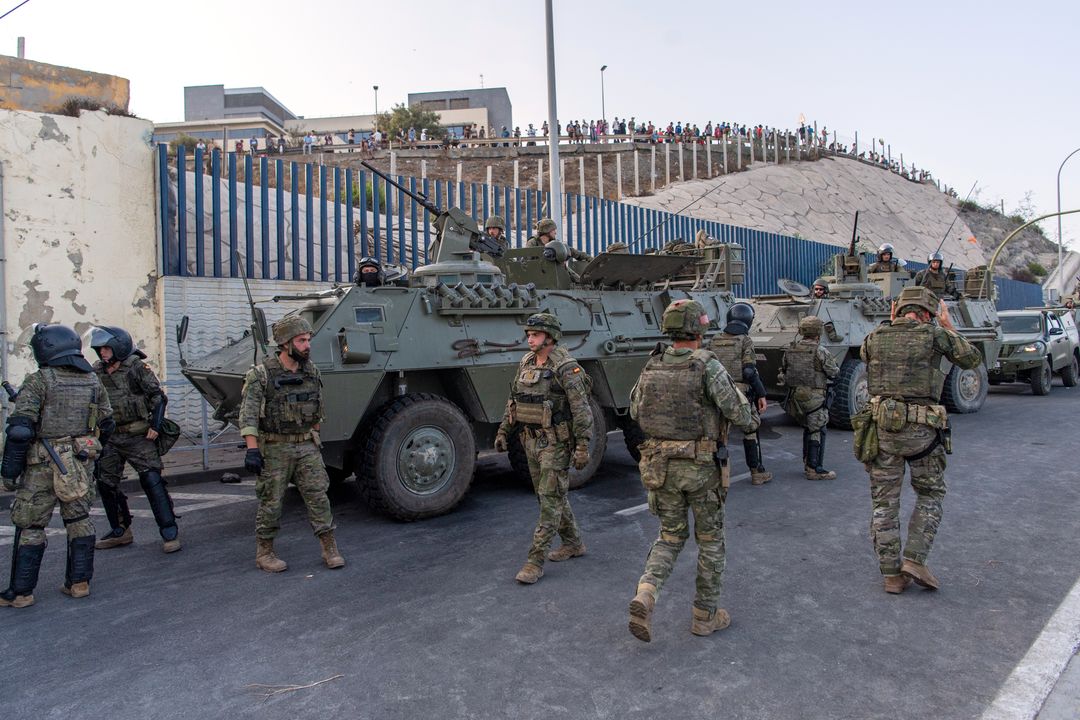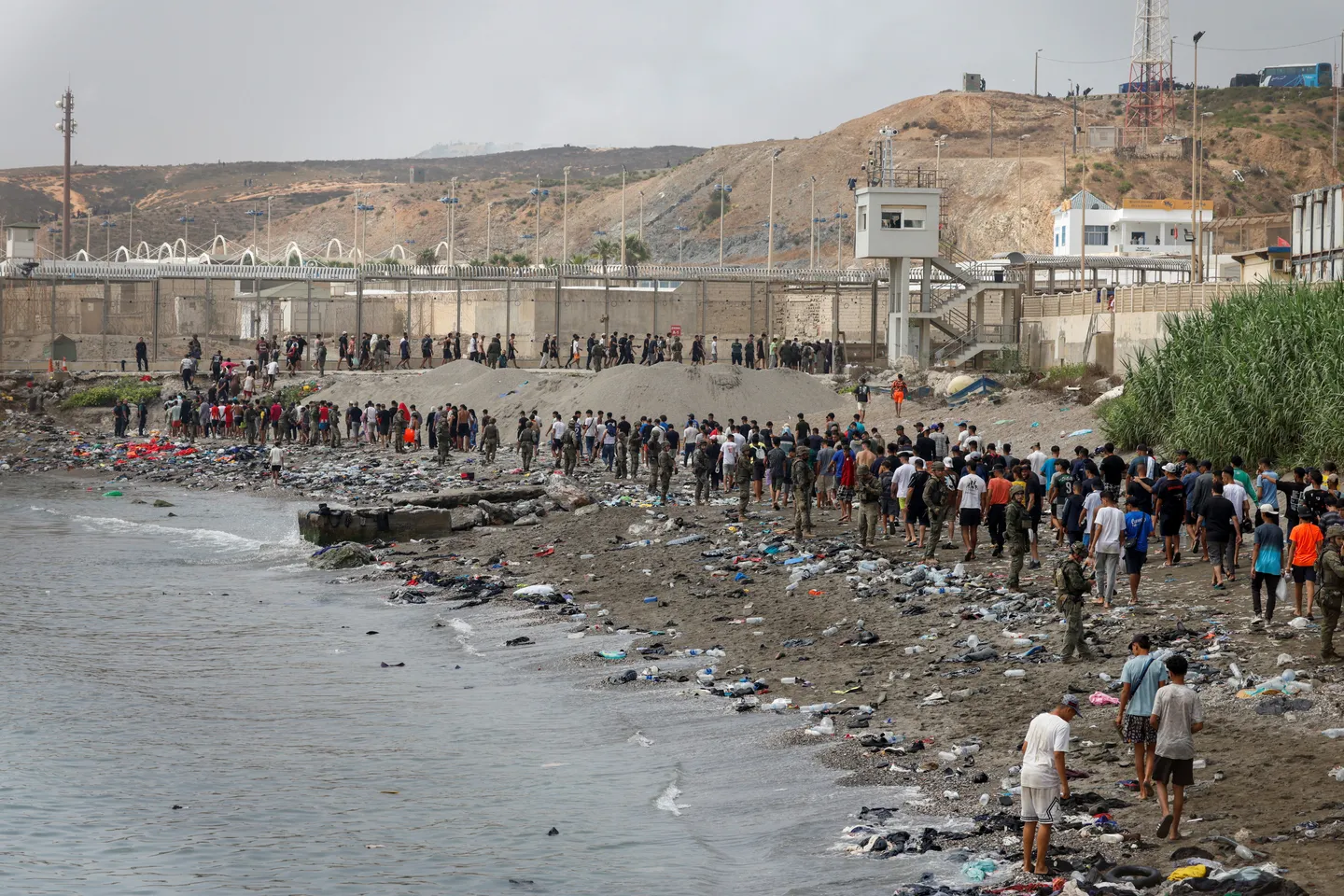
Spanish Prime Minister Pedro Sanchez has described the mass influx of migrants into the Spanish enclave of Ceuta as "an attack" and "a violation of Spain's territorial integrity", as the EU doubles down on a hardline migration stance.
Speaking in Ceuta on Friday, Sanchez said the government stands with residents following the migrant influx, calling the situation an unprecedented disruption to a broader trend of declining irregular migration.
"What happened yesterday deserves all our reproach, all our condemnation at the strongest possible level of rejection and condemnation of the violation and attack on the territorial integrity of a Spanish city such as Ceuta," he said.
Sanchez said Spain is expediting the processing of migrant files and repatriations for those who entered Ceuta irregularly, adding that "many of these migrants are already leaving."
He said the government's asylum commission had met urgently to facilitate expulsion procedures.
He also pledged to mobilise "all state resources" to restore normality in Ceuta "as soon as possible", saying defending security and coexistence in the city is an "urgent" matter.
Europe concerned
EU chief Ursula von der Leyen on social media called the scenes at Ceuta "unacceptable", adding, "We cannot allow anyone to come to our (European) Union without abiding by our rules."
Italy on Thursday called for Spain to be suspended from Europe's open-borders Schengen zone, prompting Spain to summon Italy's ambassador and accuse Rome of using the crisis for political gain.
Finland and Denmark backed Italy's call, while German Chancellor Friedrich Merz demanded that Morocco "take back illegal migrants immediately".
France and Britain said they stood ready to help Spain with the sudden surge, but France also said it was tightening its border checks with Spain.
UK Prime Minister Andy Burnham said Friday the government had offered help to Spain tackling a surge of migrants crossing from Morocco into its Ceuta enclave.
The crisis was "a matter for the Spanish government first and foremost, but it is a cause for concern," Burnham told reporters.
"And we are making contact with the Spanish government, the Spanish authorities, to provide support but also to understand the implications of that situation."
Legislative changes
According to Sanchez, the criminal smuggling networks exploited a recent Supreme Court ruling on border returns, spreading misleading interpretations through social media that triggered the mass movement toward Ceuta.
He said the government plans to install floating buoys near the breakwater to create a visible physical barrier.
The prime minister also said the government would examine whether legislative changes are needed to make border returns more effective.
Sanchez also said Spain is coordinating closely with Morocco to accelerate repatriations and combat human trafficking networks, while expressing regret over deaths that occurred during the crisis.
Initial estimates from security forces showed that more than 40,000 migrants had entered Ceuta from Morocco in recent days, most of them on Thursday, according to Spanish daily El Pais.







Returned to Morocco
More than 25,000 migrants have returned to Morocco from Spain's Ceuta enclave after a recent surge of tens of thousands crossing the border, Spain's interior ministry said.
"Departures from Ceuta to Morocco on the morning of July 31, up to 1100 GMT, are 25,000. Departures from Ceuta are taking place at a rate of 150 people per minute," the Interior Ministry said.
Moroccan police arrested about 30 young people on Friday during disturbances on the border with Spain's territory of Ceuta, AFP reported.
Security forces deployed tear gas and water cannon to disperse a thousands-strong crowd of mainly young men gathered to attempt a border crossing.
Despite the clashes, hundreds of would-be migrants continued to arrive in the area, climbing the steep hillsides overlooking the border crossing.
Deaths
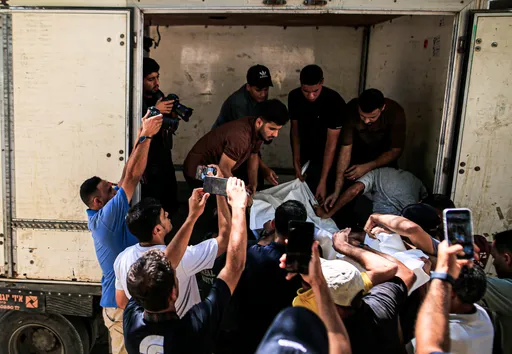
At least 34 people died trying to cross from Morocco into Spain's Ceuta enclave during a massive surge this week in illegal migration, local regional president Juan Jesus Vivas told reporters.
Vivas said around 60,000 people had crossed into Ceuta during the influx, many by swimming around a border barrier stretching into the water. He did not give details about how the victims died.