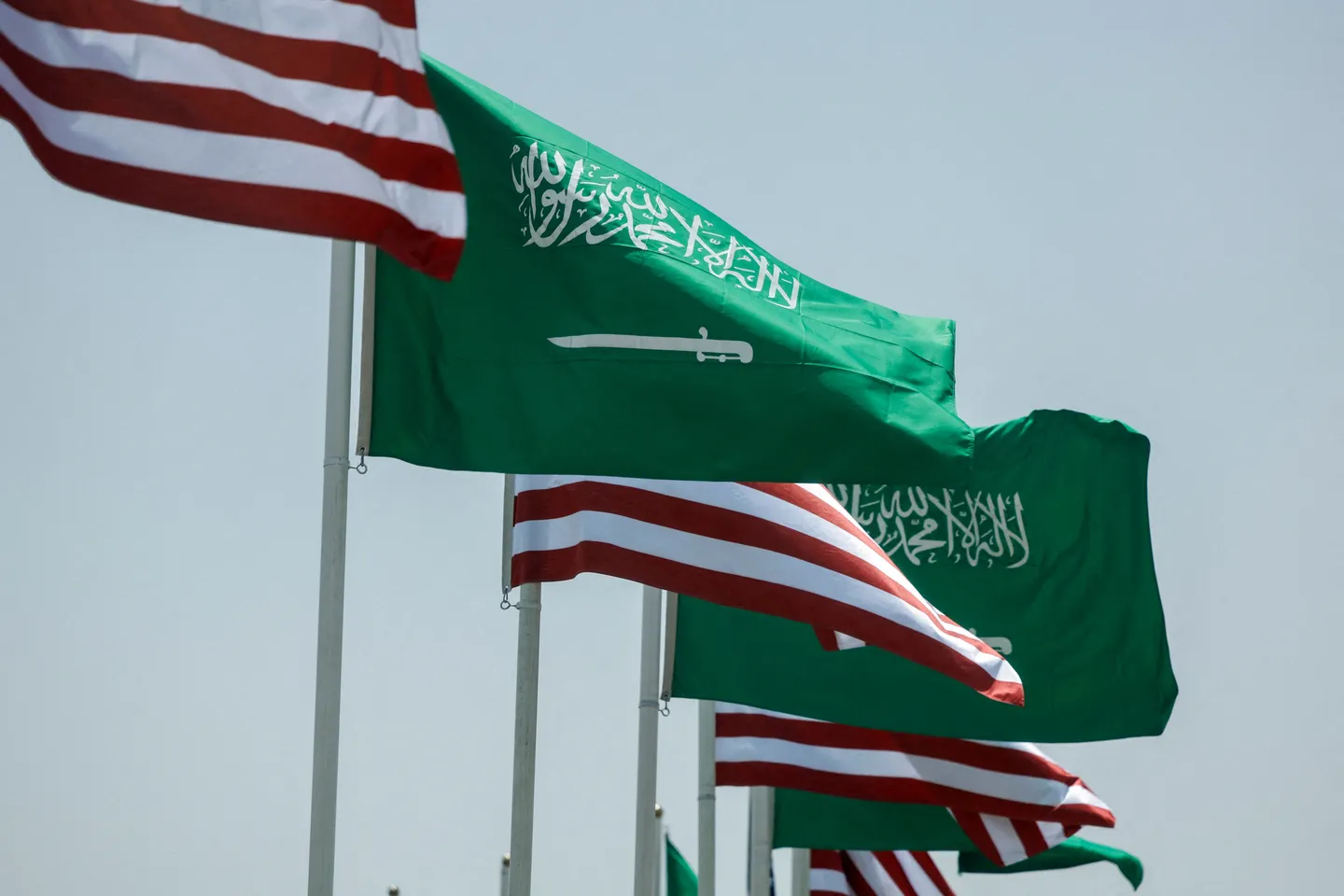
The United States has announced that it had reached a civilian nuclear cooperation deal with Saudi Arabia, with Energy Secretary Chris Wright signing the pact and a separate bilateral safeguards deal alongside Saudi Energy Minister Prince Abdulaziz bin Salman.
"Together, these two agreements lay the legal foundation for a decades-long, multi-billion-dollar partnership that advances several priority economic and strategic objectives, including nuclear non-proliferation," the US Energy Department said in a statement on Wednesday.
Washington and Riyadh have for years been discussing a nuclear cooperation deal that would give Saudi Arabia access to US technology and American companies a chance to win big contracts for Saudi atomic energy facilities.
As always with nuclear technology, worries about security, weapons proliferation and political complications in a tinderbox region have been central concerns.
Like all signatories to the nuclear Non-Proliferation Treaty (NPT), Saudi Arabia has already committed to not developing an atomic bomb and consented to international inspections.
But Washington has traditionally sought extra protections.

A key issue is whether Washington might agree to build a uranium enrichment facility on Saudi territory, when it might do so, and whether Saudi personnel might have access to it or it would be run solely by US staff in a "black box" arrangement.
Without rigorous safeguards built into an agreement, Saudi Arabia, which has uranium ore reserves on its territory, could theoretically use an enrichment facility to produce highly enriched uranium, which, if purified enough, can yield fissile material for bombs.
A source told Reuters news agency the US-Saudi agreement provides a legal pathway for cooperation on the nuclear fuel cycle, which includes uranium enrichment, but does not oblige Washington to transfer any related technology or capabilities to the kingdom.
There are diplomatic issues too: Washington's top regional ally Israel has repeatedly voiced opposition to the idea of a Saudi civil nuclear programme.
Trump's administration has said the agreement would provide billions of dollars for the US nuclear industry.
A provision in the 30-year deal would potentially see US companies build a uranium enrichment facility in Saudi Arabia, the Wall Street Journal reported.
The deal is expected to be submitted to Congress in the coming days, but its approval is not required for it to go through.