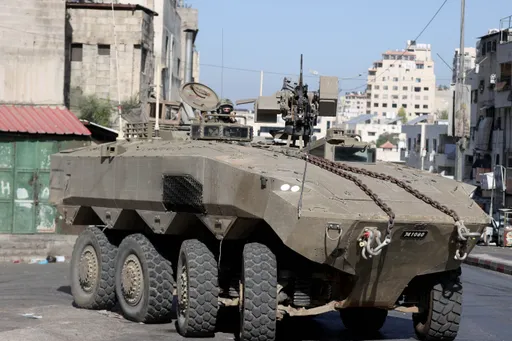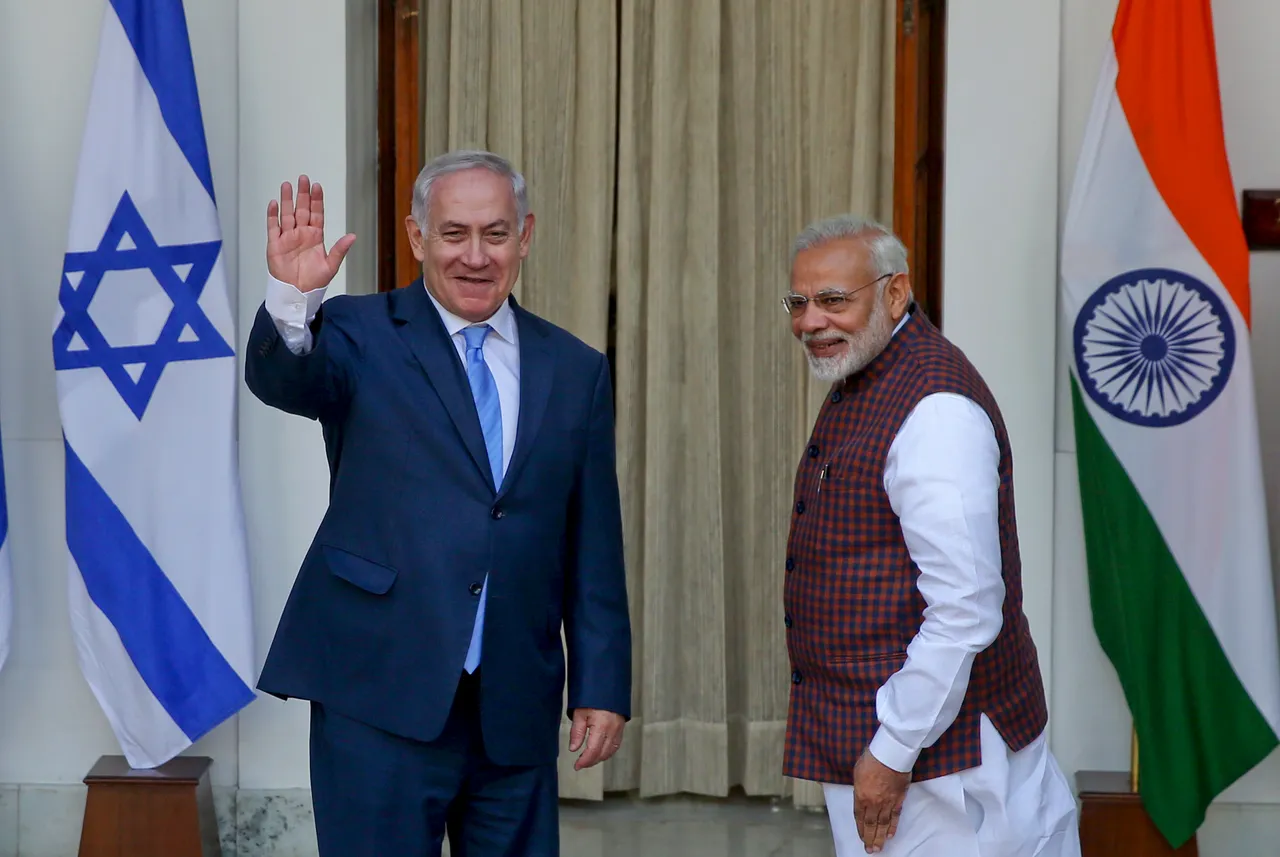
Israeli Prime Minister Benjamin Netanyahu has said Israel is facing "complex and very difficult" days amid mounting tensions with Iran, as he simultaneously advances plans for a new strategic alignment he describes as a "hexagon" bloc that would include India and a range of regional and global partners.
Speaking before the Knesset on Monday, Netanyahu signalled growing concern over the prospect of escalation with Tehran, warning that the coming period carries significant uncertainty.
"These are days that touch the life of the nation,” he said. “No one knows what tomorrow holds."
He called for political unity as Israel prepares for a possible confrontation, warning that Iran would face a "severe response" if it attacked Israel and would make "the biggest mistake in its history" by doing so.
Israeli media reported that Netanyahu convened a limited security consultation attended by Defence Minister Israel Katz, Chief of Staff Eyal Zamir, Mossad chief David Barnea and Military Intelligence head Shlomi Binder.
Public broadcaster KAN said Israel was preparing for scenarios linked to potential US military action, including the possibility that Washington could impose restrictions on Israeli moves in the initial hours of a strike.
The same report said that if Iran were to launch ballistic missiles towards Tel Aviv, Israel would receive a "US green light" to respond immediately.
Channel 12 described the next round of US-Iran talks, scheduled to take place in Geneva, as a critical juncture.
The United States has increased its military presence in the region amid reports of a potential strike aimed at curbing Iran's nuclear and missile programmes.
Israeli media reported that US refuelling aircraft had landed at Ben Gurion Airport near Tel Aviv.
Israel's war Cabinet met on Sunday for more than three hours to assess the risk of war with Iran.

'Hexagon' alliance vision
Against this backdrop of rising regional tension, Netanyahu has also outlined an ambitious diplomatic initiative centred on closer cooperation with India and other states.
He confirmed that Indian Prime Minister Narendra Modi will visit Israel on Wednesday and deliver a speech before the Knesset.
"The fabric of relations has grown tighter, and he is coming here so that we can tighten it even more," Netanyahu said at the opening of a cabinet meeting, pointing to expanding cooperation in economic, diplomatic and security fields.


He said Israel intends to build "an entire system — essentially a kind of hexagon of alliances — around or within the Middle East".
According to Netanyahu, the proposed framework would include India, Greece, the Greek-administered Cyprus, as well as other countries.
He said the goal is to establish an alignment of states that share similar strategic assessments.
"The intention here is to create an axis of nations that see eye-to-eye on the reality, challenges and goals against the radical axes," he said, referring to what he described as a "radical Shiite axis" and an "emerging radical Sunni axis".
Both are facing criticism
Netanyahu and Modi, both are facing significant scrutiny at home and abroad.
Netanyahu is currently the subject of an arrest warrant issued by the International Criminal Court in November over war crimes and crimes against humanity in Gaza.
Israel also faces a separate genocide case at the International Court of Justice over its military aggression in the enclave.
Modi, meanwhile, faces growing criticism from activists and rights groups over India's expanding defence and technology ties with Israel during the Gaza genocide.
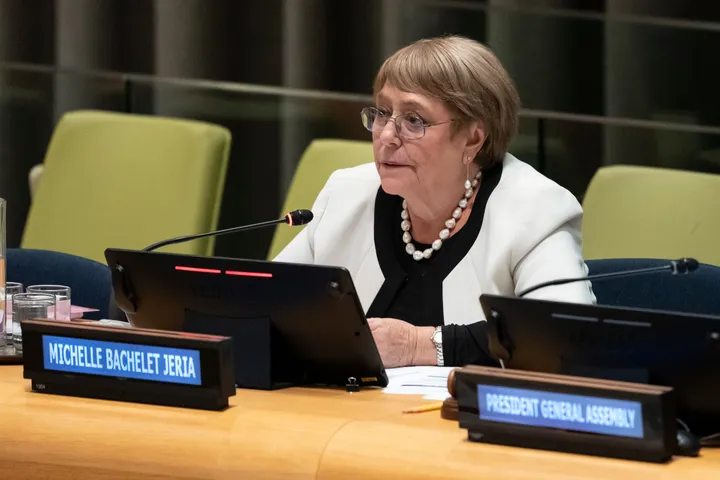
India is among the largest buyers of Israeli arms, and UN Special Rapporteur Francesca Albanese has recorded that India was among states exporting arms and ammunition to Israel during the conflict.
A recent report by US-based collective Salam described Indian conglomerate Tata Group as deeply integrated into Israel's defence supply chain, alleging that its subsidiaries provide components used in fighter jets, missile systems and surveillance infrastructure.
Critics argue that India's defence cooperation risks entangling New Delhi in the Gaza genocide, while the Modi government has maintained that its ties with Israel are part of longstanding strategic cooperation in security and technology.
Modi, said he was "looking forward" to discussions during the visit and emphasised that India "deeply values the enduring friendship with Israel, built on trust, innovation and a shared commitment to peace and progress".
Modi visited Israel in 2017, marking the first trip by an Indian prime minister to the country, and Netanyahu travelled to New Delhi the following year.