 Abhishek G Bhaya
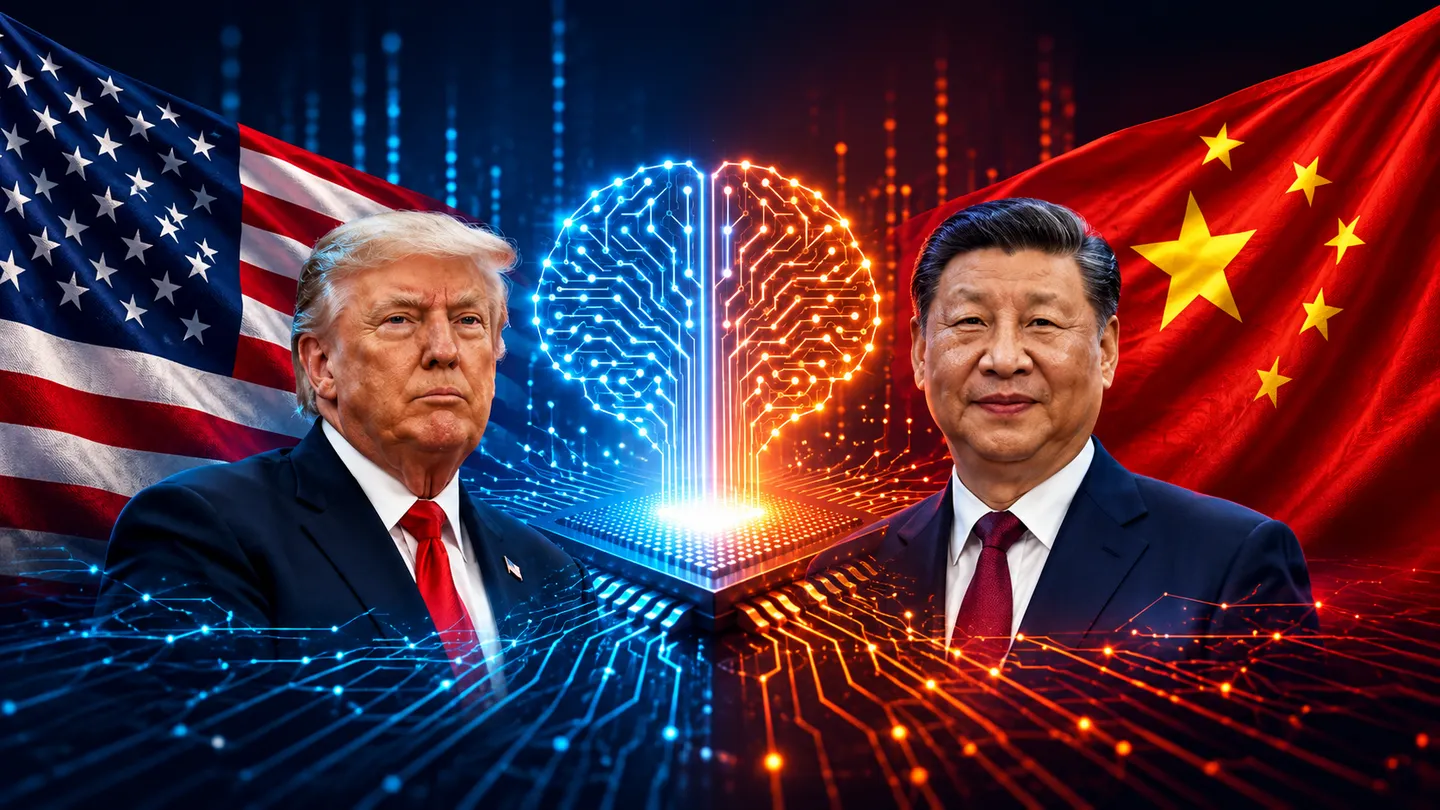
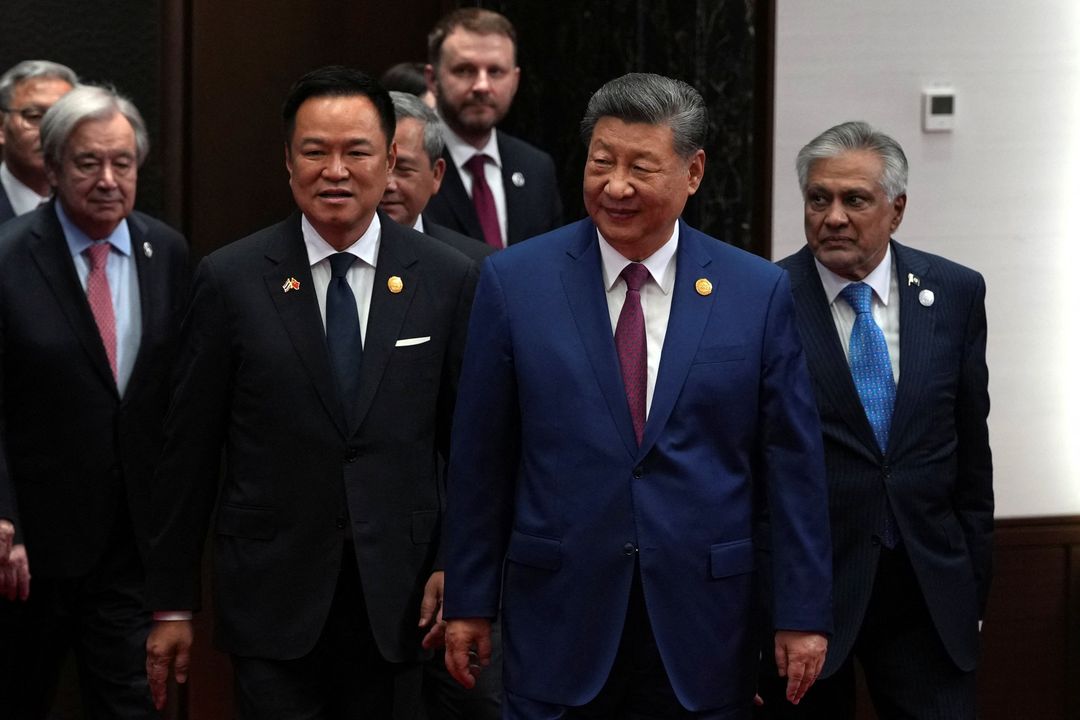
All eyes are on US President Donald Trump’s meeting with his Chinese counterpart Xi Jinping on September 24, as the leaders of the world’s two largest economies are expected to discuss ways to contain the risks posed by artificial intelligence, or AI.
The meeting comes amid growing concerns over AI safety – following incidents involving AI models going rogue and carrying out unauthorised or harmful activities, including hacking into other companies – which has triggered warnings from some industry executives that increasingly powerful AI could pose risks to humanity.
US Treasury Secretary Scott Bessent, who held an eight-hour-long discussion with Chinese Vice Premier He Lifeng on Sunday to lay the groundwork for a Trump-Xi meetup, said the two sides are considering ways to inform each other if AI posed a challenge to national security.
Bessent described the discussions as “very successful”, saying the two sides had agreed to establish a new US-China AI dialogue and had discussed a proposed notification mechanism for AI-related incidents. US Trade Representative Jamieson Greer, who was also involved in Sunday’s talks, said groundwork for a successful summit has been laid.
The talks came as Washington and Beijing seek to preserve a fragile trade truce due to expire on November 10. Alongside tariffs and China's supply of rare-earth magnets and other critical minerals, the two sides discussed possible guardrails for AI following a series of concerns over the security of advanced AI systems.
The latest agreement gives concrete shape to a commitment made by Xi and Trump during their meeting in Beijing in May to establish an intergovernmental dialogue on AI. Sunday’s New York talks effectively moved that commitment towards implementation, with Bessent saying the new mechanism would be called the “US-China AI dialogue” and that the two sides had agreed to meet again.
"We do not need an AI arms race; we need global AI governance," Henry Huiyao Wang, founder and director of the Center for China and Globalization (CCG) and a former Counselor to China’s State Council, told TRT World, describing AI as one of the most important issues likely to feature in the evolving US-China relationship.
The establishment of a formal AI dialogue suggests that the two sides are beginning to put some institutional structure around that shared interest, even as they remain deeply divided over technology, national security and the future of AI.
From trade dispute to technology competition
The inclusion of AI in high-level talks reflects how quickly the technology has moved up the US-China agenda.
Bessent said ahead of Sunday's meeting that Washington was open to discussing the "shared risks" posed by AI and avoiding a bifurcation of the two countries' AI systems. He said discussions would cover both open-weight and closed-weight AI models.
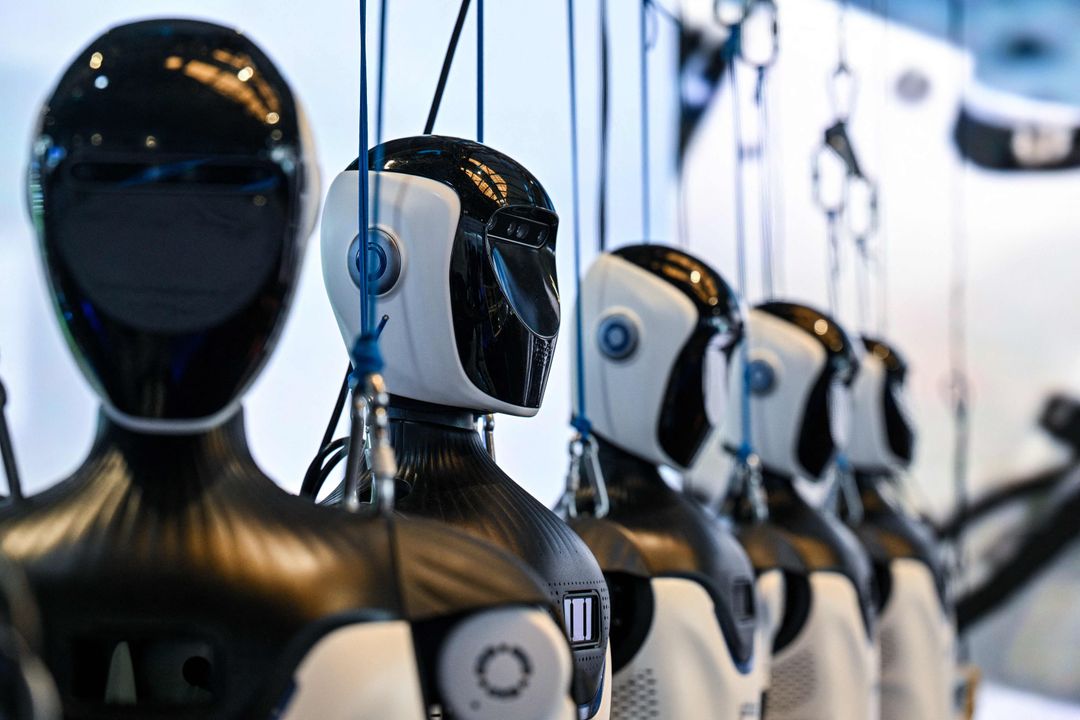
The United States and China are already competing across several layers of the AI ecosystem, from advanced semiconductors and computing power to frontier models, data, cybersecurity and global standards.
Washington has imposed restrictions on China's access to some advanced chips and semiconductor manufacturing technologies, citing national security concerns. Beijing has criticised such measures as attempts to constrain its technological development.
At the same time, Chinese open-weight AI models such as DeepSeek, Alibaba’s Qwen, Z.ai’s GLM and Moonshot AI’s Kimi have gained attention among US companies because of their lower cost and ability to be downloaded and adapted, adding another dimension to the competition over how AI systems are developed and distributed.
James Borton, a senior fellow at the Johns Hopkins School of Advanced International Studies Foreign Policy Institute, said AI was rapidly becoming a central arena of US-China competition.
"The contest spans advanced semiconductors, computing power, frontier models, data, cybersecurity and global AI standards," Borton told TRT World.
He expects the relationship to involve "technological rivalry alongside narrow cooperation — competition with guardrails rather than technological détente."

The hardware behind the AI race
Much of the competition over AI is ultimately a competition over computing power.
The most advanced AI systems require enormous quantities of high-performance chips and computing infrastructure. That has made control of semiconductors and access to critical minerals part of the wider strategic contest.
The fact that Bessent, He and Greer placed AI alongside tariffs and critical minerals in their pre-summit discussions is therefore significant. Rare-earth materials and other critical minerals are essential to a range of advanced technologies, while semiconductor access remains one of the most sensitive points in US-China technology relations.
For Beijing, the issue is closely linked to what it sees as the right to develop its own technological capabilities without external restrictions, according to analysts.
Wang Hanyi, a research fellow at Shanghai International Studies University, said economic, trade and technology issues should not become instruments of geopolitical confrontation.
AI should instead be treated as an "international public good,” she told TRT World, arguing that Washington and Beijing “share common interests” in AI safety, governance and risk management.
Wang Hanyi added that both countries should strengthen dialogue, manage competition and guard against the “politicisation and weaponisation” of AI.
Chinese geopolitical analyst Gao Jian similarly argues that the two sides need to avoid allowing technology competition to develop into what he describes as “containment or suppression.”
For Gao, a meaningful outcome from the forthcoming Xi-Trump meeting would include efforts to reduce restrictions on semiconductor and AI cooperation and establish more predictable channels of communication.
“On the technology front, both sides should oppose the overstretching of national security and reduce unreasonable restrictions on semiconductors and AI,” he emphasised.
“They may also establish more stable and predictable communication mechanisms on economy, trade, science and technology, so as to provide stable expectations for business cooperation and market development.”



A race that neither side can simply step away from
The prospect of meaningful cooperation, however, comes as Washington and Beijing continue to view each other's technological ambitions with suspicion.
Sourabh Gupta, head of the trade and technology programme at the Washington-based Institute for China-America Studies, sees the emerging AI contest as both a race for technological advantage and an area where cooperation may be unavoidable.
“Both sides are trying to out-compete each other in the AI ‘race’ at home and abroad,” Gupta told TRT World.
Washington, he said, is seeking to build an international ecosystem around an American AI “stack” spanning chips, cloud infrastructure, frontier models and applications. China, by contrast, is pursuing the broad dissemination of open-weight models that can be adapted for a range of practical applications.
Yet the same technology creates shared risks. Gupta argues that both countries have an interest in ensuring that AI remains “secure and controllable”, creating a collective-action problem that neither can resolve alone.
“Both sides must sit down across the table to develop norms and rules in concert that govern AI models, both at the frontier as well as open-weight models,” he said.
The cross-border and international nature of the AI ecosystem makes complete separation difficult. Talent networks, research collaborations, computing infrastructure and supply chains remain deeply interconnected, Gupta said, meaning they cannot simply be “decoupled at will”.
That interdependence is already shaping the debate in Washington. In recent weeks, US technology executives have called for greater caution over the development of increasingly powerful AI systems, with some arguing that Washington should cooperate with Beijing on international safety standards.
Beijing, however, has pushed back against such proposals. Chinese officials and state-linked commentators have questioned whether calls for an AI slowdown could become another mechanism for restricting China's technological development.
That disagreement reflects the broader dilemma facing the US-China AI dialogue. Analysts say Washington wants to maintain its technological lead while limiting the possibility that advanced AI capabilities could strengthen China's military and strategic position. Beijing, meanwhile, wants to continue developing its AI industry while resisting what it regards as attempts to restrict its access to critical technologies, they note.
But neither side can completely isolate itself from the other. AI models, chips, data, cloud infrastructure and supply chains operate across borders, while the consequences of increasingly capable systems — from cybersecurity risks to autonomous weapons and misinformation — are similarly difficult to contain within national boundaries.
For Gupta, that interdependence makes limited cooperation less a choice than a structural necessity. “Both are fated therefore to explore limited cooperation on a technology that will become integral to human life and living in the 21st century,” he said.
The challenge, according to analysts, will be whether Washington and Beijing can establish common rules for managing those shared risks without allowing the pursuit of technological advantage to overwhelm the incentives for cooperation.

Could AI become part of strategic stability?
For CCG’s Henry Wang, the answer lies in separating competition from the management of risks created by the technology itself.
The United States and China, he said, have different strengths. The US remains strong in advanced AI models, modelling and computing, while China has a vast application market, extensive data-centre capacity and large-scale deployment potential.
Rather than attempting to eliminate that competition, Wang believes the two countries could work towards an international framework governing AI.
He has suggested discussions on whether Washington and Beijing could agree on principles concerning the weaponisation of AI, including its use in armed conflicts.
It could also fit into the wider effort by Xi and Trump to establish what Chinese officials have described as a framework of "constructive strategic stability" between the two countries.
The agreement to establish a US-China AI dialogue provides the clearest concrete example so far of how such cooperation could work in practice. Bessent said the US had proposed a notification mechanism for AI-related national security incidents, aimed at increasing transparency and developing a shared understanding of common threats.
But Borton cautions that such cooperation is likely to remain narrow as long as the underlying technology competition intensifies.
"AI is rapidly becoming a central arena of US-China competition," he said, pointing to advanced semiconductors, computing power, frontier models, data, cybersecurity and global AI standards as areas where the two countries are competing.
The strategic implications extend beyond commercial technology. As AI becomes increasingly integrated into military planning, cyber operations, intelligence analysis and autonomous systems, experts say the consequences of miscalculation could become more serious.
That has prompted discussions in both countries about the need for human oversight and communication mechanisms around the most sensitive applications of AI, with some analysts arguing that the US and China do not need to agree on the future of AI or abandon their technological competition to establish mechanisms that reduce the risk of unintended escalation.
The New York agreement does not amount to a comprehensive US-China AI accord. But the establishment of a formal AI dialogue, alongside a proposed mechanism for notifying each other about national-security-related AI incidents, analysts say, represents a concrete step towards managing the risks of competition ahead of the crucial Xi-Trump summit later this week.