 Murat Sofuoglu
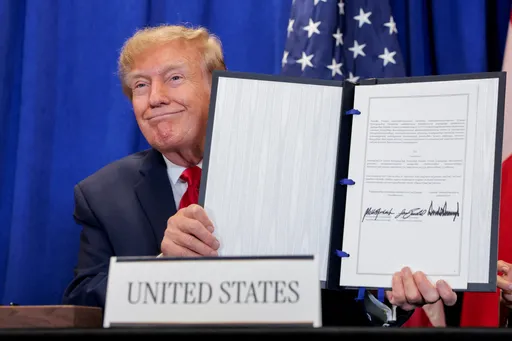
United States President Donald Trump threatened last week that if Iran did not open the Strait of Hormuz within the next 48 hours, the US would target the country’s infrastructure, including its power plants, triggering renewed debate over which side holds escalation dominance.
For decades, escalation dominance has served as a cornerstone concept in military and political strategy, used to measure not only the intensity of conflict but also the capacity of adversaries to escalate, sustain, or end hostilities.
According to RAND’s description, escalation dominance theory refers to a situation where “one party is believed to have an advantage at a higher intensity of conflict” while its adversary “is likely to have a strong disincentive to pursue more-escalatory activities”.
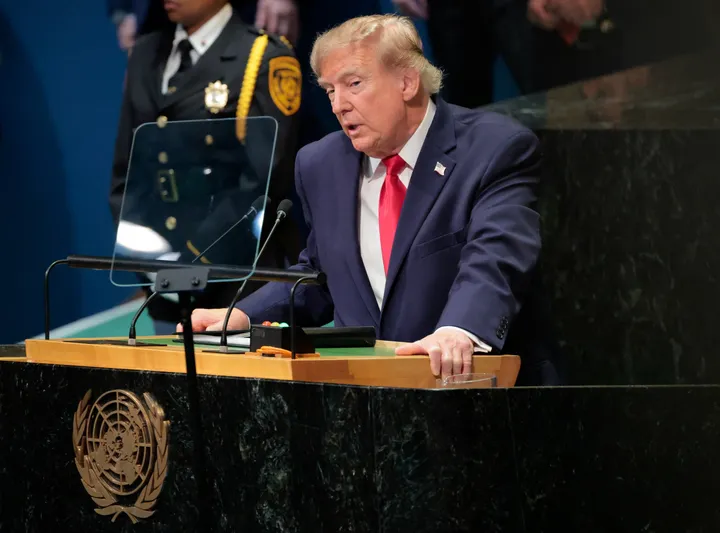
With his recent threat against Iran, the US president seemed to assume that he held the upper hand in escalation. He appeared to believe that Tehran would hesitate to retaliate.
The rationale behind this was straightforward: damaging Iranian infrastructure could diminish military strength while also undermining national morale and resilience across the country.
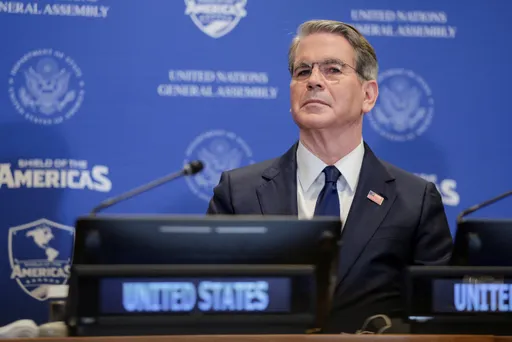
“Sometimes you need to escalate to de-escalate,” said Trump’s Treasury Secretary Scott Bessent in a recent remark, referring to the Iran war and the US president’s recent threat, indicating that he believes Washington has a better hand than Tehran in the escalation ladder.
But Tehran responded strongly to Trump’s threat, stating that if the US attacked Iranian infrastructure, Tehran would retaliate equally against Israel and Gulf countries with American bases.
Where is the escalation ladder going?
On Monday, Trump appeared to suspend his threat to target Iranian infrastructure for five days, citing what he described as “very good and productive conversations” toward a “complete and total resolution” of hostilities in the Middle East.
Iranian leaders, however, once again denied that Tehran had engaged in any talks with the Trump administration.
The contradictory claims prompted analysts to question which side truly holds the upper hand in escalation.
While an attacker may enjoy tactical superiority due to advanced weapons and intelligence, such advantages do not necessarily translate into strategic success, said Robert Pape, an American academic and leading expert on escalation dominance.
In Iran’s case, neither the US nor Israel has achieved its core strategic objective of forcing Tehran’s capitulation, according to Pape.
As the conflict risks entering a dangerous phase with the possibility of US ground troops being deployed to Iranian territory, experts note that there are too many variables in the current war, which calls for a thorough analysis to understand the constantly evolving dynamics of escalation dominance, and its various stages throughout the conflict.
“Escalation dominance is not just a product of superior capabilities but also endurance and thresholds of pain,” Andreas Krieg, an associate professor at King's College London and director of MENA Analytica, tells TRT World.
“In the conventional space the US and Israel are dictating the tempo of the operations but strategically Iran has found an asymmetric domain where they can dictate the tempo as they can sustain current attrition indefinitely, can disrupt energy markets and freedom of navigation as they please, and have far more endurance to keep pressure up than the US,” Krieg says.
Krieg describes an asymmetric domain as Iran’s attacks across Gulf countries targeting US military bases and its blockade of the Strait of Hormuz, which accounts for one-fifth of global oil trade.
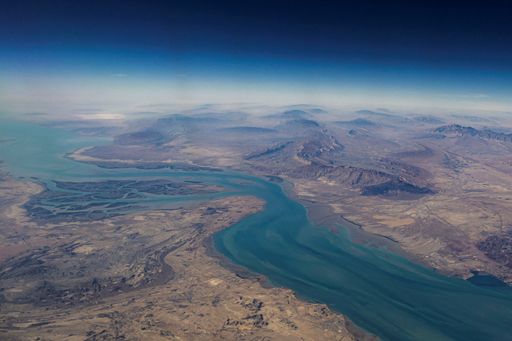
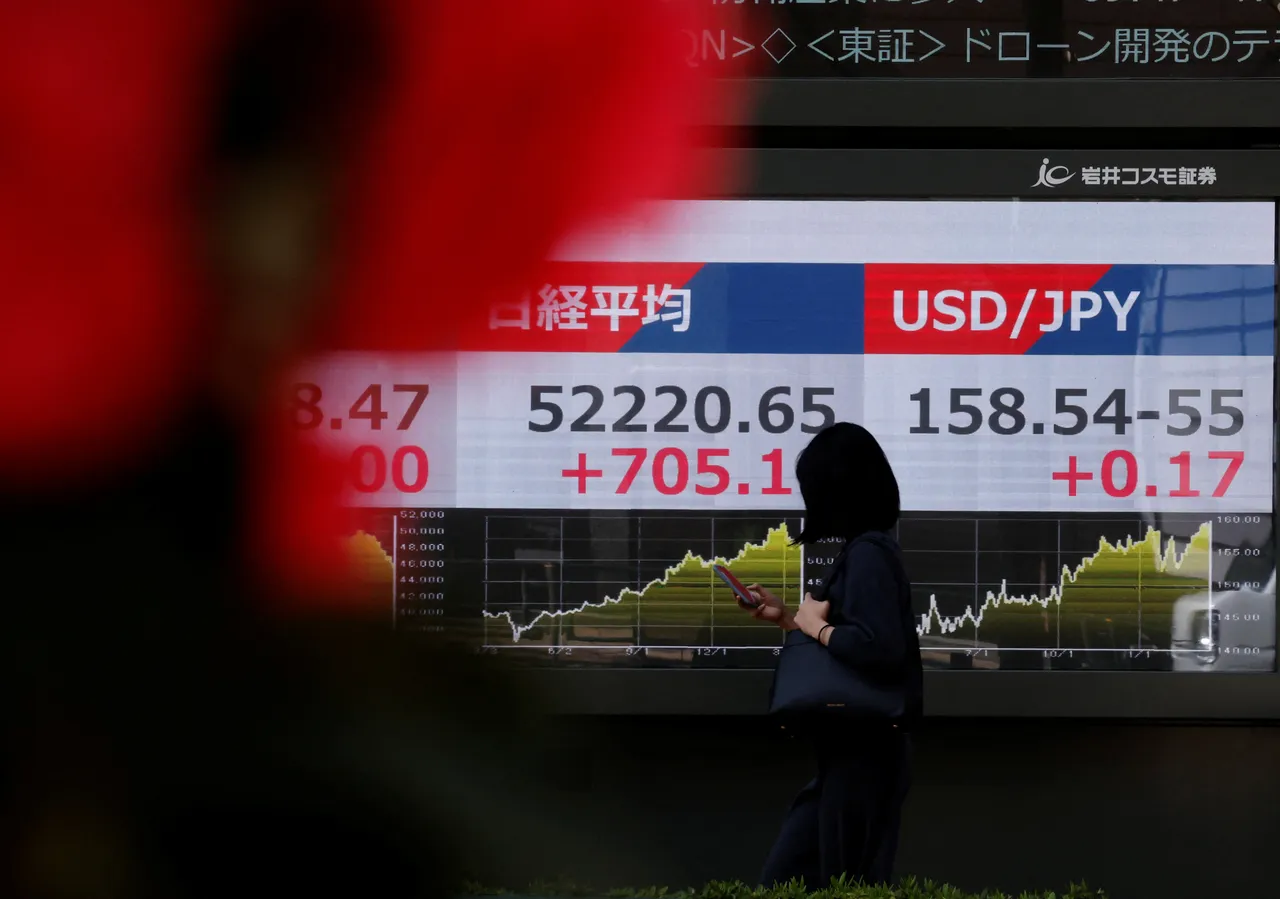
It has caused energy prices to soar, as many states dependent on oil and gas for their economies face the serious risk of shortages.
Ozgur Korpe, a former Turkish military officer and an academic at the National Defence University, shares a similar view to Krieg, stating that “No one appears to possess a clear advantage at every stage of the escalatory ladder”.
“This conflict produces not superiority on a single axis as in classical theory, but comparative advantages and vulnerabilities on multiple axes”, from intelligence to air superiority, decapitation strikes, asymmetric warfare, economic vulnerabilities, energy security and domestic politics, Korpe tells TRT World.
While the US and Israel have advantages in areas from intelligence to air superiority, decapitation strikes, Iran holds cards on asymmetric warfare as the country, which has gone through decades of sanctions, will probably handle economic pressure better than the attacking duo, says Korpe.
He also highlights that, unlike anti-war US public opinion, the Iranian leadership’s rhetoric of "resistance" alongside “internal repressive mechanisms” may offer Tehran greater resilience domestically in the short to medium term than Washington. However, he notes that economic fragility could also lead to long-term weaknesses for Iran.
But economic vulnerability also affects both the US and Israel, which lost $57 billion—equivalent to 8.6% of their annual GDP—in various wars over the past two years, he says.
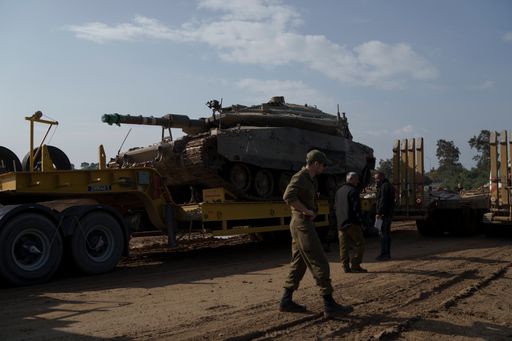
From a pure military point, “true superiority sometimes lies not with the strongest, but with the one that has the cheapest and most scattered escalation capabilities,” according to Korpe.


Iran's inexpensive drones and missiles have already created a price disparity against US-Israeli forces, which have to rely on more costly air defence systems to neutralise them.
There are various reports that both the US and Israel might run out of their interceptors to prevent ceaseless Iranian attacks, which Tehran claimed yesterday that it launched its 77th attack on Israel.
While the US possesses the strongest navy globally with 11 nuclear-powered aircraft carriers, which account for more than 40 percent of the world’s total, Iran has managed to block the Strait of Hormuz.
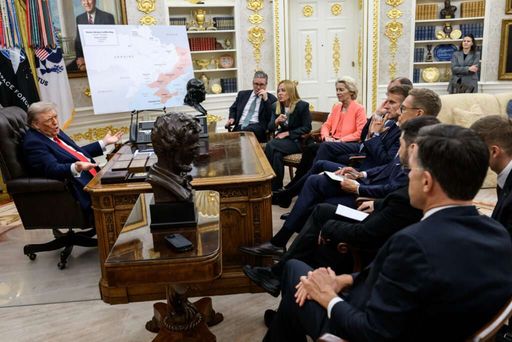
In a recent move, Trump called NATO allies to join with the US to open the Strait of Hormuz, but no European nations explicitly committed to sending warships to help the American-Israeli coalition unblock the strategic waterway.
The UK, however, agreed to allow the US to use British bases to launch strikes on Iranian sites targeting the Strait of Hormuz.
Analysts pointed out that Iran, a country without a single aircraft carrier, most of whose naval assets Trump claimed he destroyed, can still keep the Strait of Hormuz closed.
Simple measures, such as mining the waters or using short-range missiles against commercial and military vessels, could make any escort mission extremely dangerous.
Horizontal vs vertical
While the United States and Israel enjoy air superiority over Iran with their advanced aircraft and vertical advantage, Tehran still wields influence through a network of allied militias and partners across the Middle East.
These include Shia militant groups in Iraq and Lebanon, as well as aligned forces in Yemen, which Tehran can leverage to pressure Washington and Tel Aviv and complicate military attacks across the region.
Currently, Israel and Lebanon’s Hezbollah, a strong ally of Iran, are clashing as the Netanyahu government’s recent assaults have caused the displacement of more than one million people, which is nearly one fifth of the country’s entire population.
There is also a possibility that Yemen’s Houthis might join the ongoing war on the side of Iran, attacking shipping routes across the Red Sea, another strategic waterway of the Middle East.
In Iraq, after the country’s Shia militants attacked US assets, NATO announced it was withdrawing its forces from the Middle Eastern country, signalling how Iran’s allies can influence the ongoing conflict on a broader scale.
The capacity for spreading “unconventional retaliation" through Shia allies provides Iran the opportunity to create “a regional spillover, allowing to escalate the conflict horizontally” and giving an advantage to Tehran in terms of escalation dominance, according to Korpe.
Nuclear weapon ≠ advantage
While some analysts have argued that Israel and possibly the US might eventually employ tactical nuclear weapons to force an Iranian surrender, demonstrating that they possess the ultimate tool of escalation dominance, analysts regard this scenario as unlikely.
“Using nuclear weapons is currently inconceivable so it is really not a factor that weighs on escalation dominance. I would also suggest that the IRGC could keep pressure up even if the US and Israel were to choose the use of tactical nuclear weapons,” Krieg says.
The Iran conflict has its origins in the country’s pursuit of its uranium enrichment program, which Israel, the Trump administration and some European states claim is aimed at producing nuclear weapons.
“Iran's nuclear status is ambiguous: Iran is considered a state that has reached threshold capacity. This means Iran is very close to possessing nuclear weapons but does not have a proven nuclear arsenal,” says Korpe.
This grey area was instrumental for the US and Israel to employ a "preemptive strike" on Iran, while it also prevented Tehran from fully consolidating its nuclear deterrent against its adversaries, according to Korpe.
As a result, Iran’s current strength in terms of escalation dominance is not laid in its nuclear capabilities, but in asymmetric warfare, he adds.
“Iran's threshold capacity provides deterrence but does not lead to escalation.”
Like Krieg, Korpe does not see that nuclear weapons can play a critical role in the current conflict because “possessing nuclear weapons does not guarantee an absolute competitive advantage”.
Unlike the Cold War’s early years, modern power escalation no longer requires nuclear or conventional force alone; rather, it requires multi-domain supremacy, Korpe tells adds.
“These domains where supremacy must be achieved include cyber, space and electronic warfares, precision engagement, economic pressure and information operations.”