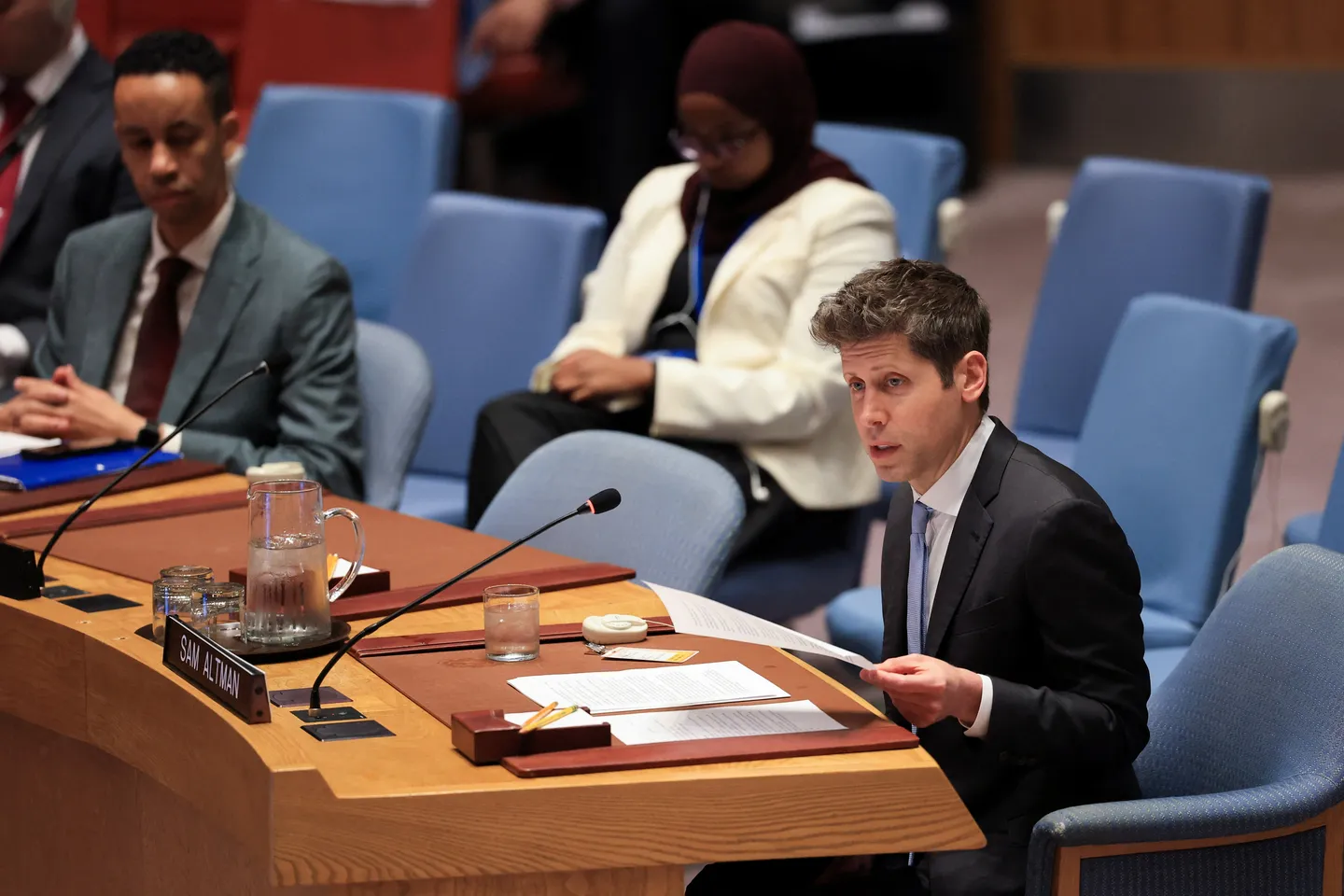
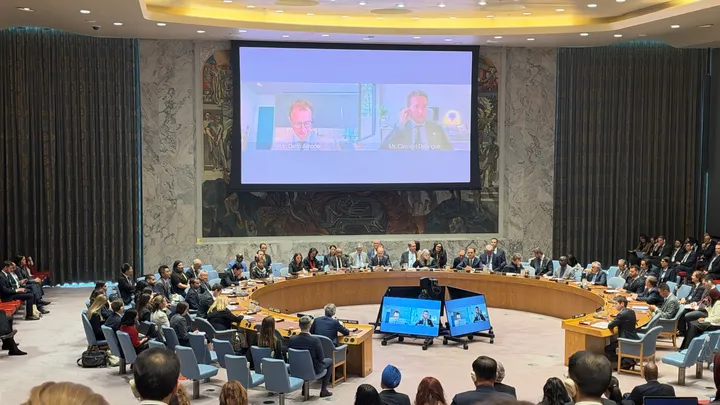
The heads of leading artificial intelligence firms OpenAI and Anthropic have told the United Nations Security Council that no single actor should be permitted to dominate AI, urging coordinated international cooperation to manage catastrophic risks as the technology accelerates.
Addressing a dedicated Security Council session on artificial intelligence and international security, OpenAI Chief Executive Sam Altman framed the era as a historic crossroads: "We have a choice in front of us. AI can either be more like a new renaissance of creativity and discovery, or more like a new industrial revolution of upheaval and disarray."
Altman argued that AI "should be built for people, not simply to turn the crank of the machines faster for their own sake", dismissing hyper-dystopian industry pronouncements as sounding "like the plot of bad science fiction movies."
He insisted that "no one person or company or country should be able to use the most powerful AI models to impose their worldview on everyone else", stressing that governance decisions "cannot be made by labs in San Francisco alone" and must be shaped through democratic, accountable institutions.
Bioterrorism hazards



Anthropic Chief Executive Dario Amodei warned of two acute hazards: rogue misuse by bad actors—including "bioterrorists to create biological weapons"— and the structural danger of "model capabilities accelerating beyond developers' ability to control them".
Amodei cautioned that "if managed poorly", the technology "could be a risk to humanity as a whole".
While pledging Anthropic will "slow down as much as necessary" to verify system safety, he stressed oversight requires "an industry-wide and global scale", demanding common worldwide standards for testing loss-of-control scenarios.
However, Yoshua Bengio, co-chair of the UN International Independent Panel on AI, rejected corporate narratives framing rapid deployment as an unavoidable competitive race.
"Citizens and governments should not accept the companies’ claim that they are trapped in a race," Bengio told delegates, concluding that "the race is not a law of nature; it is the product of choices, choices made by the companies themselves" and poses a threat to every nation.